
12 Unexpected Details That Make Your Home Look More Custom
Introduction: What Actually Makes a Home Feel Custom?
A custom-looking home isn't necessarily filled with expensive furniture or elaborate architectural details. Often, it's the less obvious decisions—the ones you barely notice—that make a room feel thoughtful, layered, and intentionally designed.
There's a difference between a home filled with beautiful individual pieces and a home that feels designed as a whole.
As an interior designer, I've found that some of the details that make the biggest difference aren't necessarily the most expensive or dramatic. They're the thoughtful choices that make you wonder whether something was specifically designed for that room—even when it wasn't.
If your home feels like it's missing something, these are some of the unexpected details I would look at first.
1. Furniture That Actually Fits the Architecture
Furniture that works with your home's architecture immediately makes a room feel more intentional. Consider how your furniture relates to:
Windows
Doorways
Ceiling height
Fireplace
Built-ins
Wall lengths
Traffic patterns
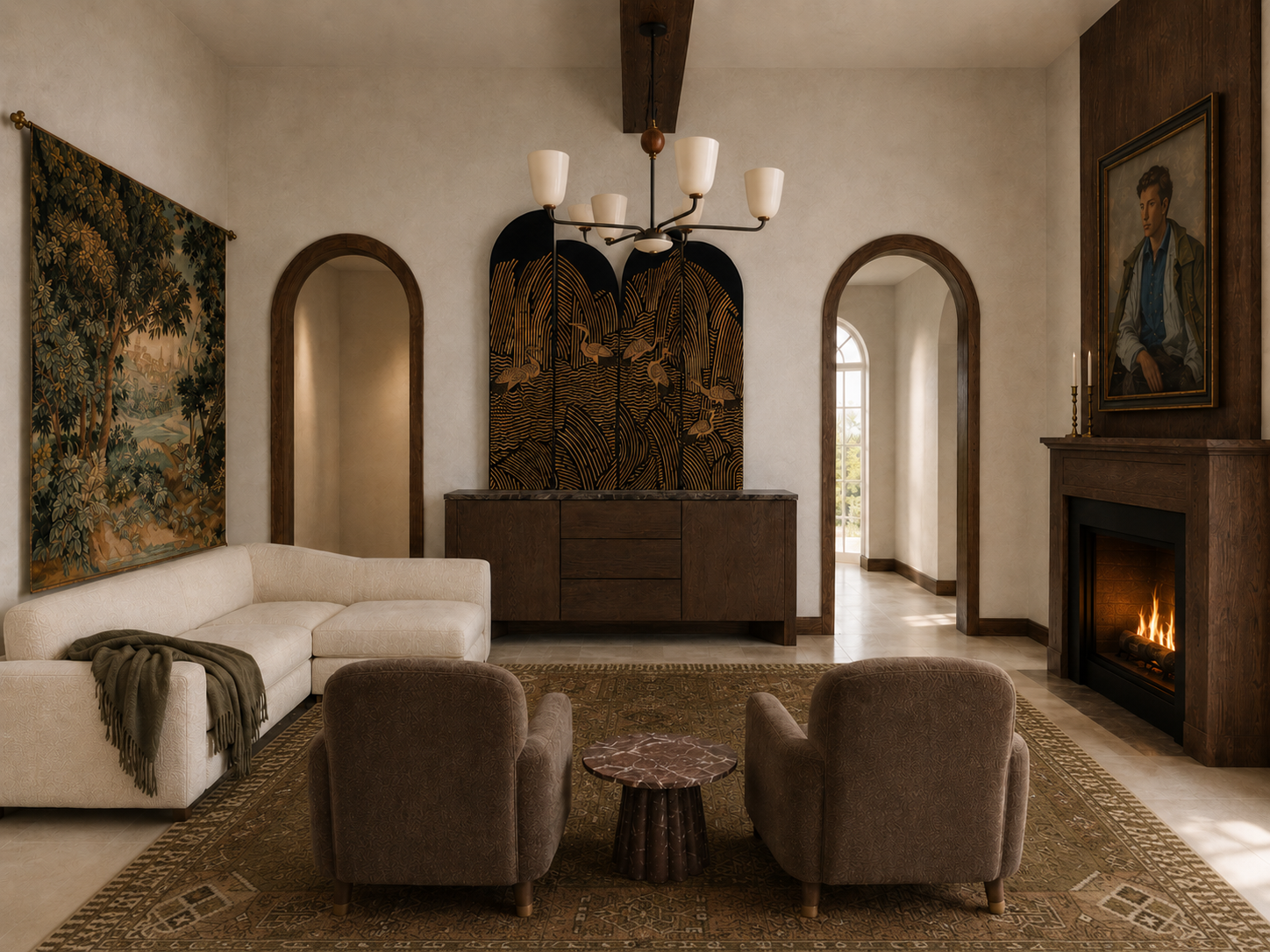
A digital rendering showing an organic modern living room with a curved ivory sectional, two neutral green accent chairs, dark wood fireplace, arched openings, large landscape artwork, vintage rug, and warm neutral finishes. Fully Designed by Jessica Nicole Interiors, LLC.
In the example photo above, you can see how we designed the credenza to tie in with both the stained trim and the stain on the fireplace. I also chose artwork that ties back to the antique look of the trim in the mantle and the windows in the home’s original architecture.
One question I always ask myself is:
"What can I enhance about what's already here, and what can I add to make this home feel unique?"
If you are currently planning to refurnish your home, be sure to check out this post on how to create your own furniture plan.
2. Lighting
Idea 1: Change out your lampshades
Most people buy a lamp and never consider changing the shade. But swapping a generic shade for one with the right:
Shape
Scale
Material
Pleating
Trim
can completely change how the lamp feels. This can be done fairly inexpensively as well. I found some of my favorite go-to lamp shades at Target and now I use them everywhere.
Idea 2: Change out your fixtures & layer your lighting.
Custom-feeling homes don't rely solely on recessed lights or one central ceiling fixture. They layer light at different heights:
Ceiling fixtures
Sconces
Table lamps
Floor lamps
Picture lights
Cabinet lighting
I am personally a big lamp light person, I like to leave the overheads for special tasks only. It allows me to control the mood of a room much more easily.
Changing out fixtures is something I have noticed many homeowners are afraid to do. I understand the intimidation of buying something that has to be hardwired, especially if you aren’t electrically savvy and don’t plan to hire a contractor. It really does make the biggest difference though overall. I am a big advocate for supporting contractors and hiring out when possible, but if that is not something that is feasible for you, consider rechargeable lights or rechargeable bulbs. This will prevent you from having to wire anything yourself but still let you benefit from the light fixture upgrade.
Absolutely all of my designs always have custom lighting when possible.
The example below provides a great example for both custom and layered lighting. We have both a pendant and wall sconces in this design, and it creates a really cozy atmosphere.
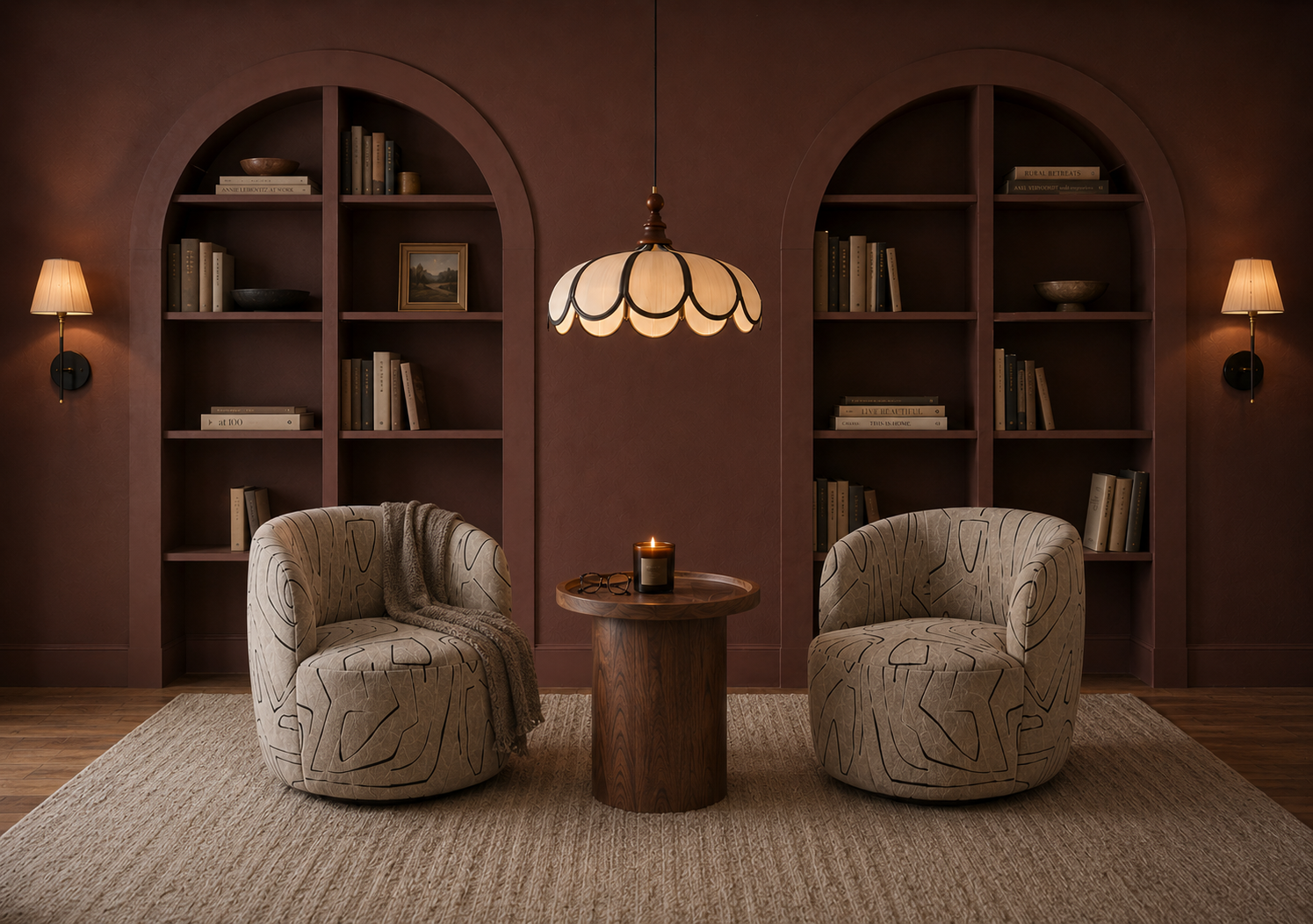
A digital rendering of a cozy reading nook with two upholstered swivel chairs, arched built-in bookshelves, warm wood paneling, a round wood side table, and a sculptural pendant light in an organic modern library. Design by Jessica Nicole Interiors, LLC.
3. Hardware That Doesn't Come With the Furniture
People think about changing cabinet hardware, but they don't always consider changing the knobs and pulls on:
Dressers
Nightstands
Media consoles
Freestanding cabinets
Bathroom vanities
“Designer perspective:
Sometimes the furniture itself is perfectly good—the hardware is simply what gives it away as mass-produced. ”
4. A Mix of Old and New
A room where everything is brand-new and from the same era can sometimes feel more like a showroom than a home.
Mixing old and new doesn't mean filling your home with antiques. . Think about what type of style your room falls into and try to think if you could find anything special to tie back in. Estate sales are some of my favorite places to source unique finds. It’s like a treasure hunt.
Antique side table
Vintage mirror
Old wooden stool
Framed textile
Vintage art
Antique chest
You don't need a room full of antiques. Sometimes one piece with a little age is enough to make everything around it feel more interesting. I typically use some variation of this in all of my designs unless specifically requested otherwise by the client.
5. Interior Doors That Aren't an Afterthought
Most people focus on the walls and furniture while completely overlooking their doors.
These are some ways you can add your doors to your design:
Painting an interior door a contrasting color
Upgrading door hardware
Adding molding to a flat door
Using a vintage or salvaged door
Adding a Dutch door
Replacing a basic closet door
Using glass or reeded glass where appropriate
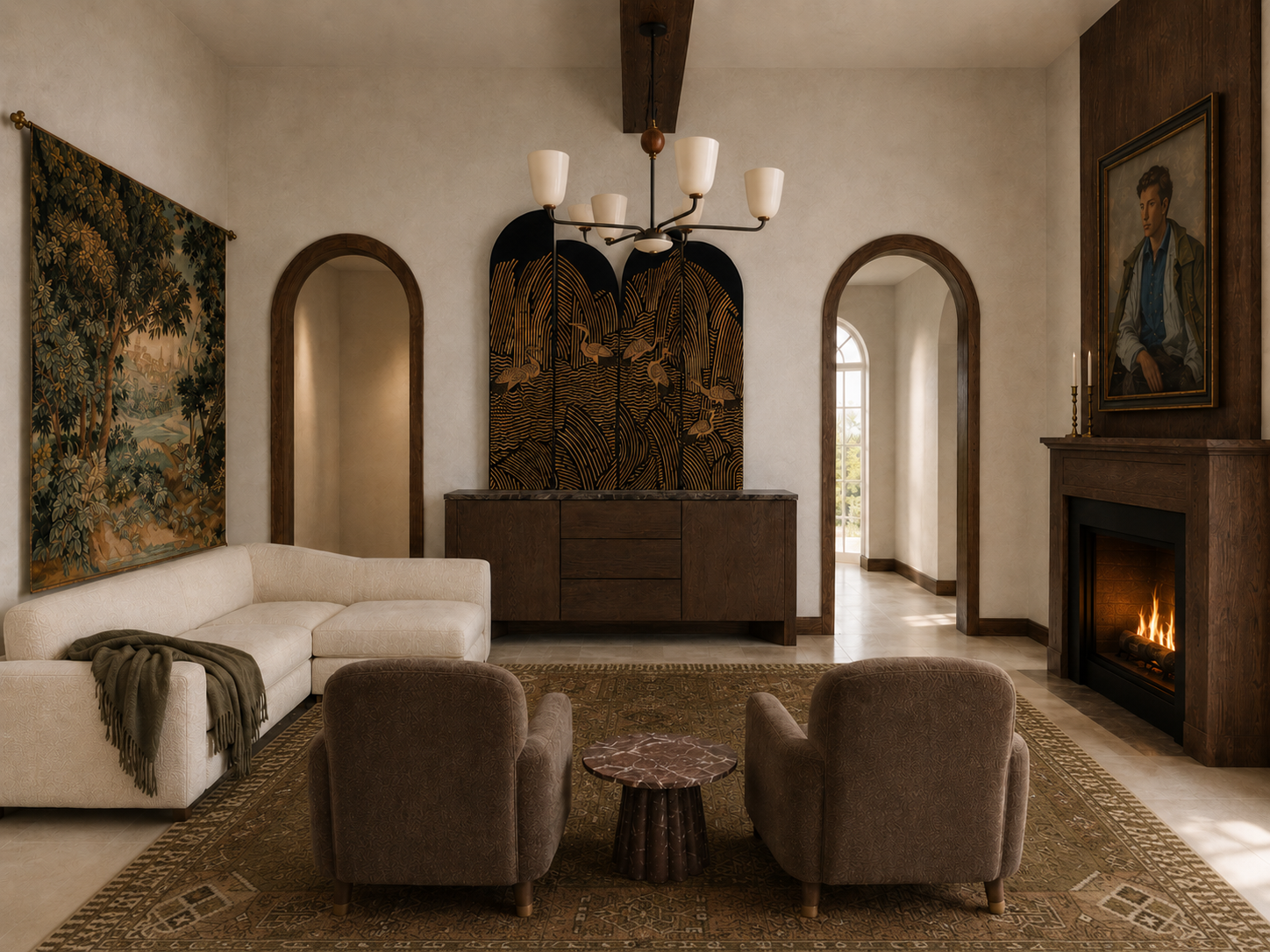
This starts edging into architectural character, but doors are specific and unexpected enough to work beautifully here. I have two examples of the first image in this post shown below. The image at the start shows what we decided was the most fitting direction, but you can see below how doorways can make a big difference in the overall appearance of the room. For this particular design we went with arched openings so that the arched windows could be seen through the room (as shown at the start of the post). That being said, if the client would have rather had the room closed off, custom arched doors stained to match the millwork in the rest of the room would have made a much bigger impact on the design as opposed to standard doors.
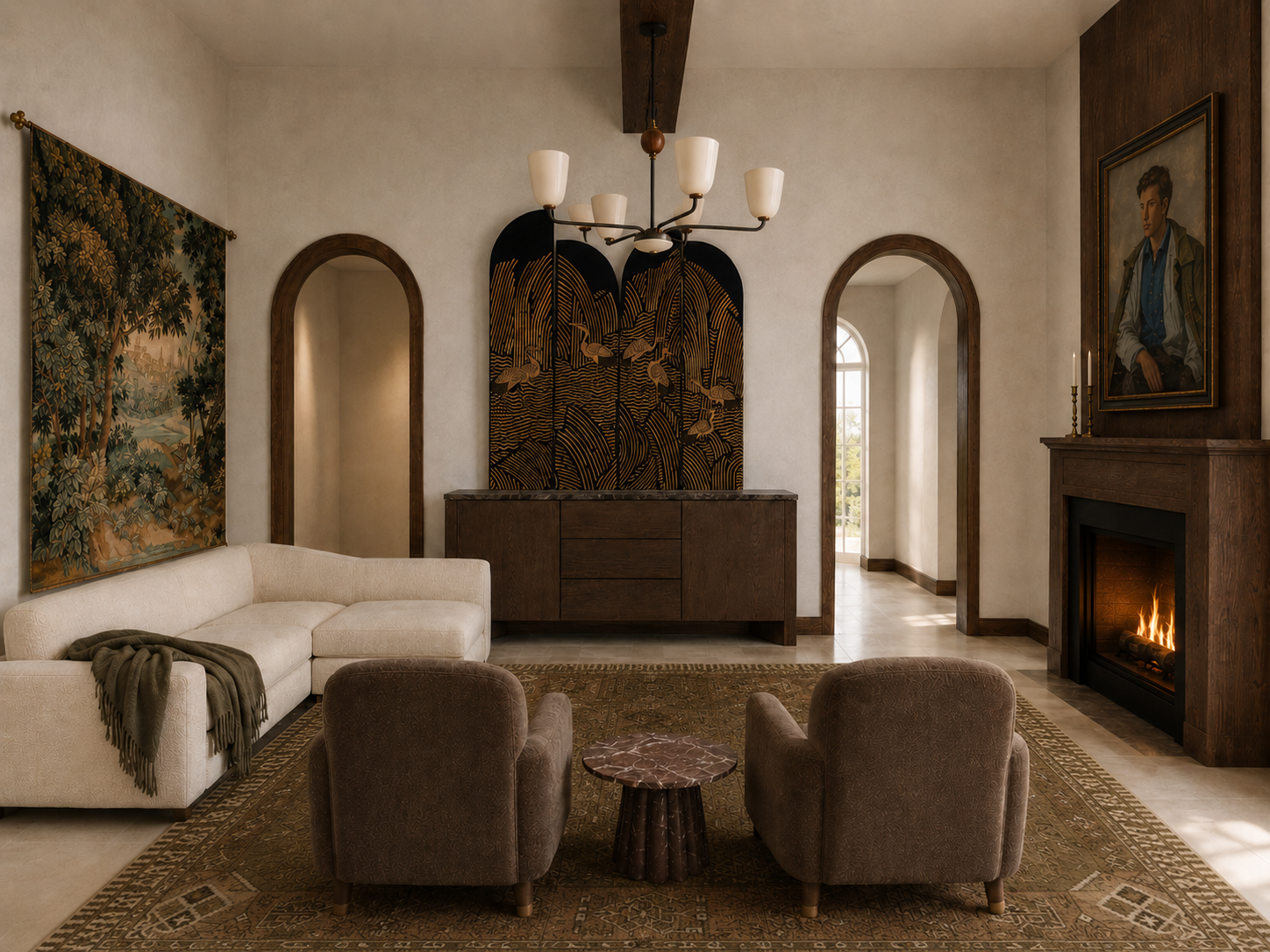
OPTION A:
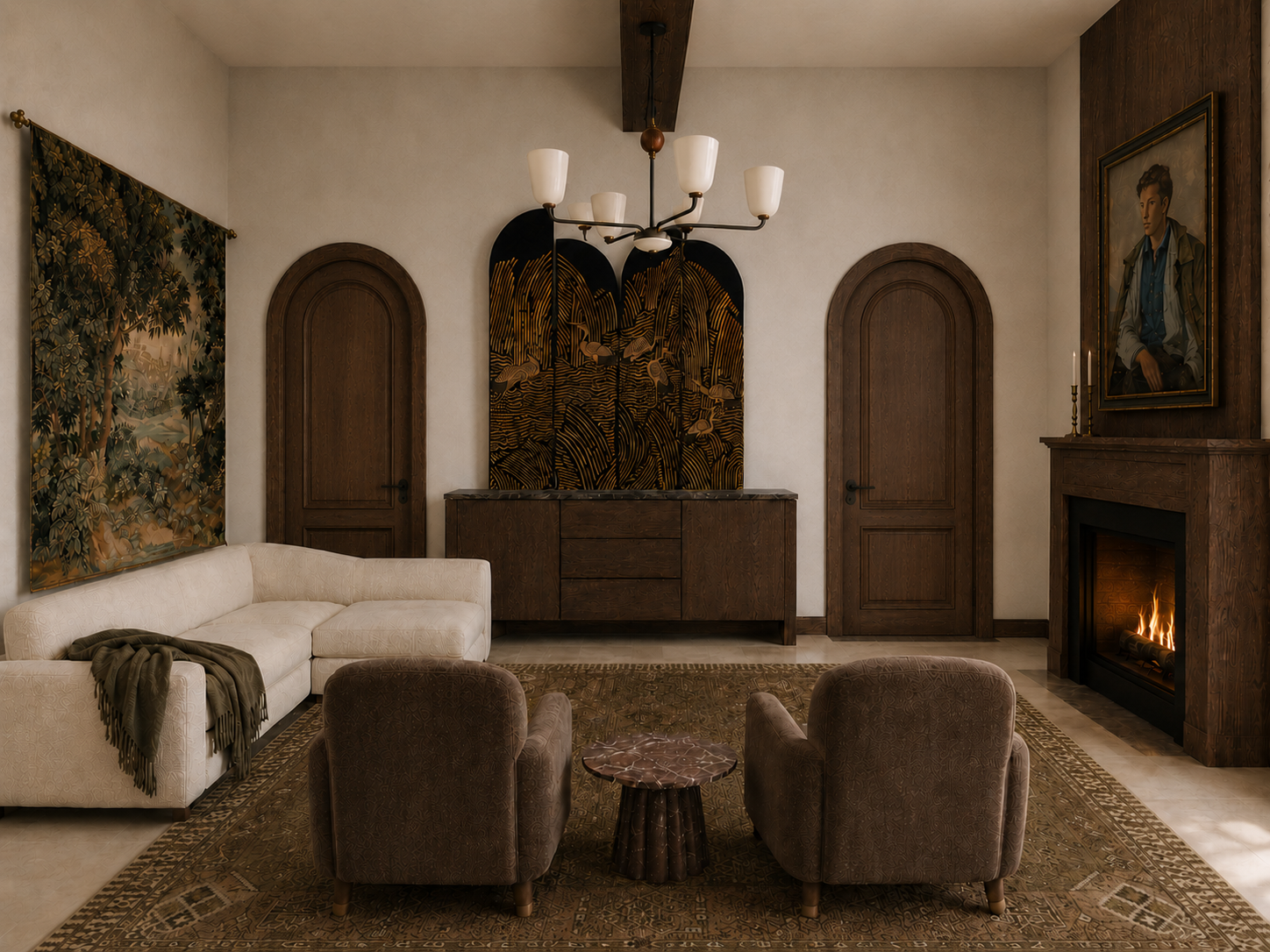
OPTION B:
A digital rendering showing an organic modern living room with a curved ivory sectional, two neutral green accent chairs, dark wood fireplace, arched doorways, large landscape artwork, vintage rug, and warm neutral finishes. Fully Designed by Jessica Nicole Interiors, LLC.
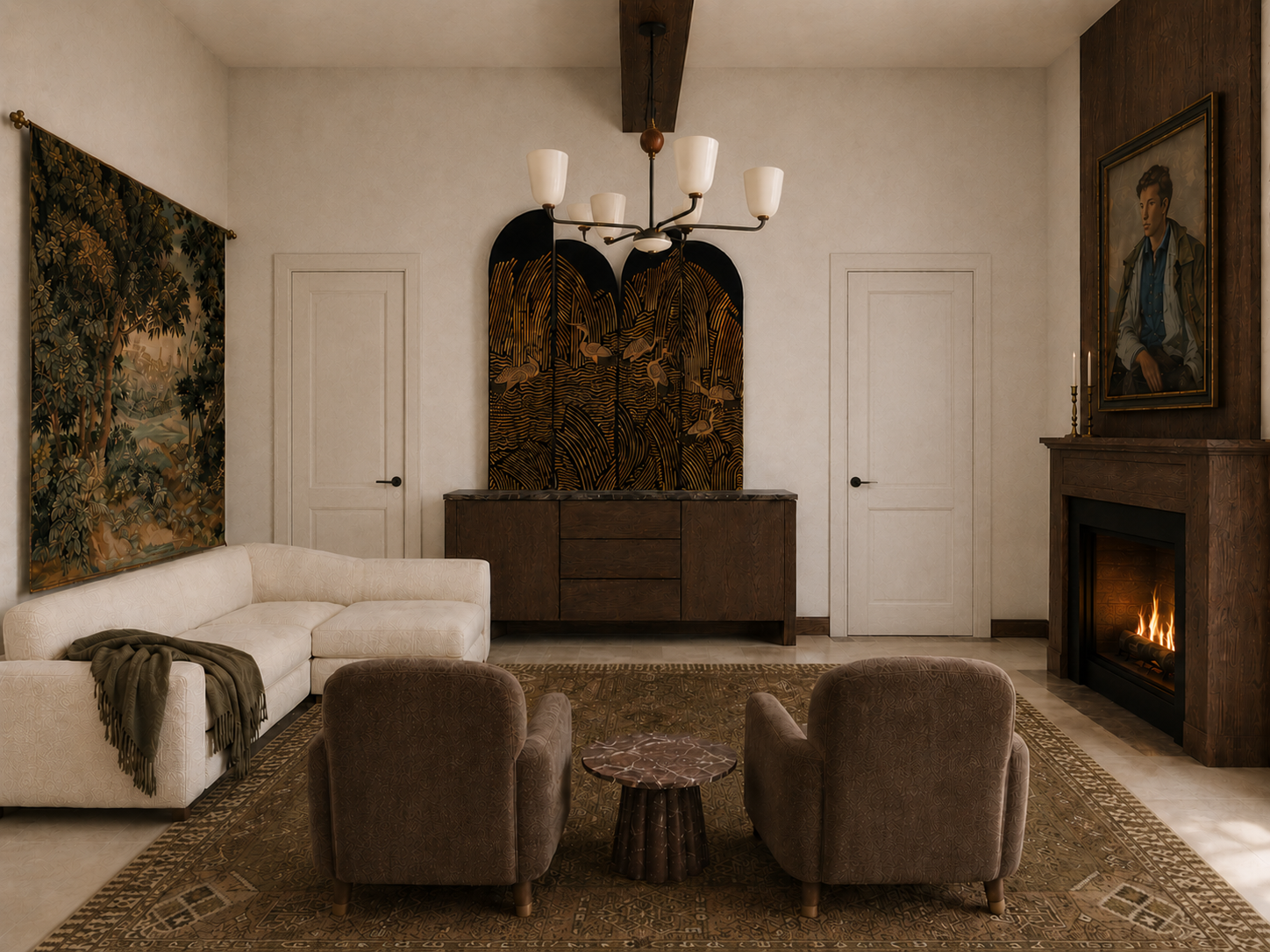
OPTION C:
A digital rendering showing an organic modern living room with a curved ivory sectional, two neutral green accent chairs, dark wood fireplace, standard white doors, large landscape artwork, vintage rug, and warm neutral finishes. Fully Designed by Jessica Nicole Interiors, LLC.
6. A Ceiling That Was Actually Considered
Some common ceiling treatments to consider:
Painting it something other than stark white
Continuing the wall color onto the ceiling
Using a very subtle contrasting shade
Wallpapering a powder room ceiling
Choosing a decorative ceiling medallion for a light fixture
Coffered or paneled ceilings
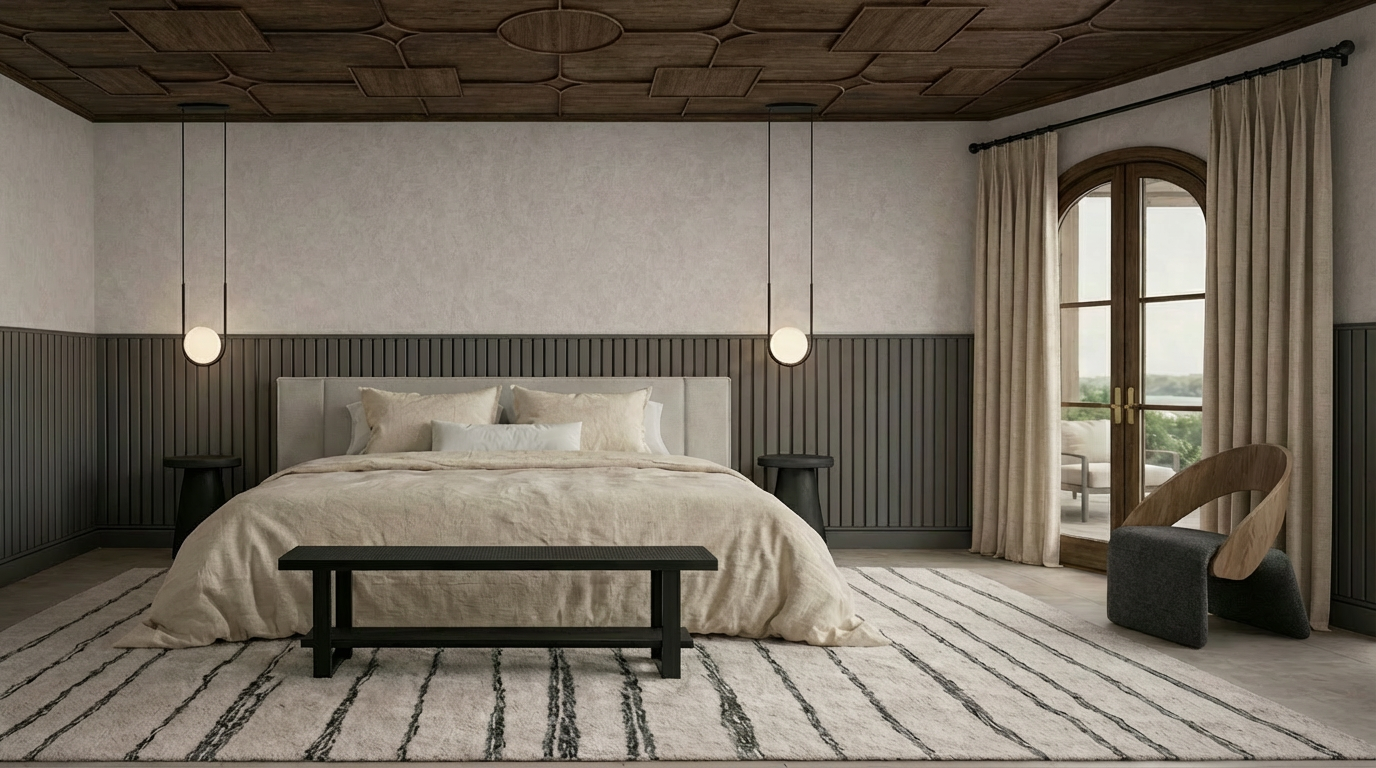
The image above depicts a digital rendering of a neutral, transitional bedroom by Jessica Nicole Interiors, LLC.
The image above shows a design that uses an architectural panel system for the ceiling. Ceiling designs don’t have to be this elaborate, but when thought goes into it, it makes a huge difference.
A room feels more custom when all six surfaces have been considered—not just the four walls and the floor.
7. Unexpected Furniture Used for a Different Purpose
Examples:
A small chest instead of a nightstand
An antique dining table as a desk
A console as a bathroom vanity
A dresser in an entryway
A garden stool as a side table
A vintage cabinet as a bar
This helps a room avoid looking as though every item was purchased as part of a matching furniture collection.
Sometimes the thing that makes a room feel most custom is simply using a piece in a way that wasn't prescribed by a catalog.
8. Curtains That Look Like They Belong to the Room
Instead of generic advice to "hang curtains high and wide," focus on what actually makes them feel custom.
Curtains deserve a post of their own, but here are some items to think about when selecting curtains:
Proper fullness
Thoughtful fabric selection
Lining
The right length
Hardware that relates to the room
Pinch pleats or other intentional headers
Curtains that relate to the architecture rather than simply covering a window
Curtains don't have to be custom-made to look custom, but they do need to look as though they were chosen specifically for that window and that room.
9. Art That Isn't All Framed the Same Way
Instead of matching black frames everywhere, talk about choosing frames based on the individual artwork.
Mix:
Wood
Brass
Painted frames
Antique frames
Floating frames
Mats of different proportions
A thoughtful collection doesn't necessarily match. In fact, choosing each frame to complement the individual artwork can make a collection feel much more personal and collected.
One of my favorite gallery walls used an entire collection of mismatched antique frames. They tied the artwork together while making the display feel collected over time rather than purchased all at once.
The example below shows just how big an impact artwork can actually make in a room.
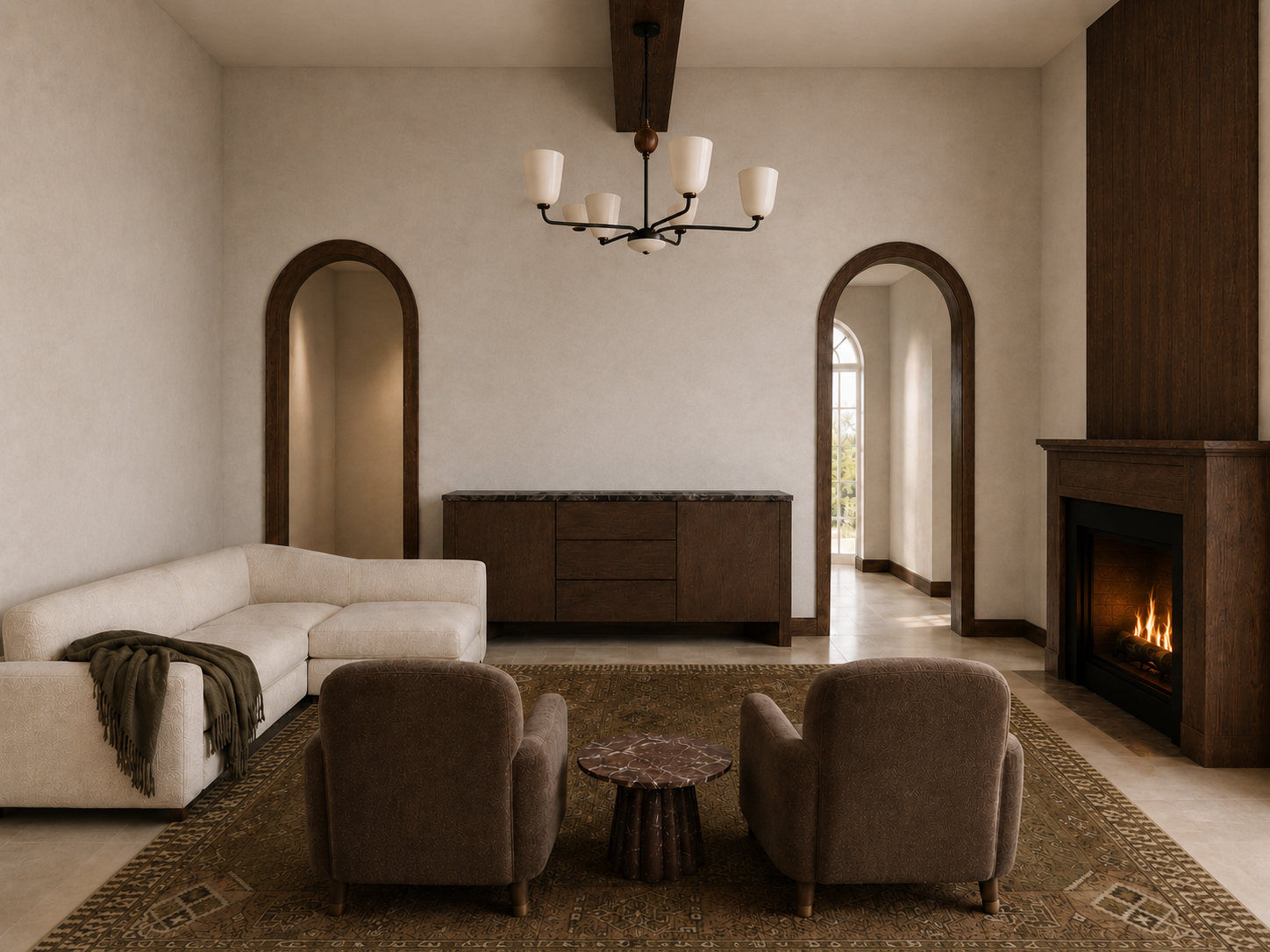
A digital rendering showing an organic modern living room with a curved ivory sectional, two neutral green accent chairs, dark wood fireplace, arched doorways where all the artwork has been removed, vintage rug, and warm neutral finishes. Fully Designed by Jessica Nicole Interiors, LLC.
10. Something Slightly Unexpected
Examples:
An oversized pendant in a small powder room
A dramatic wallpaper inside a closet
A tiny piece of art on an unexpectedly narrow wall
A sculptural chair in a traditional room
A contemporary painting above an antique chest
A whimsical lamp in an otherwise sophisticated space
Here is another example: In this design I used muted colors but opted for more unique patterns and textures in the textiles. The pattern on the chairs provides a playful element, especially paired with the rug. The light fixtures bring a touch of moodiness and the color complements the cooler colors in the room.
The most interesting rooms usually contain at least one thing you wouldn't have predicted. It doesn't need to be loud or strange—it just needs to keep the room from feeling completely expected.
11. Small Areas That Are Treated Like Real Design Moments
Custom homes often feel special because the overlooked spaces aren't overlooked.
Examples:
The end of a hallway
A stair landing
The space beneath the stairs
A tiny entry
The area between two doors
A reading corner
The inside of a glass cabinet
One of the clearest differences between a home that is decorated and one that feels fully designed is what happens in the in-between spaces.
Take a look at this reading nook design with and without designer customizations:
accent paint in a moody color
arched built ins
architectural pendant lighting
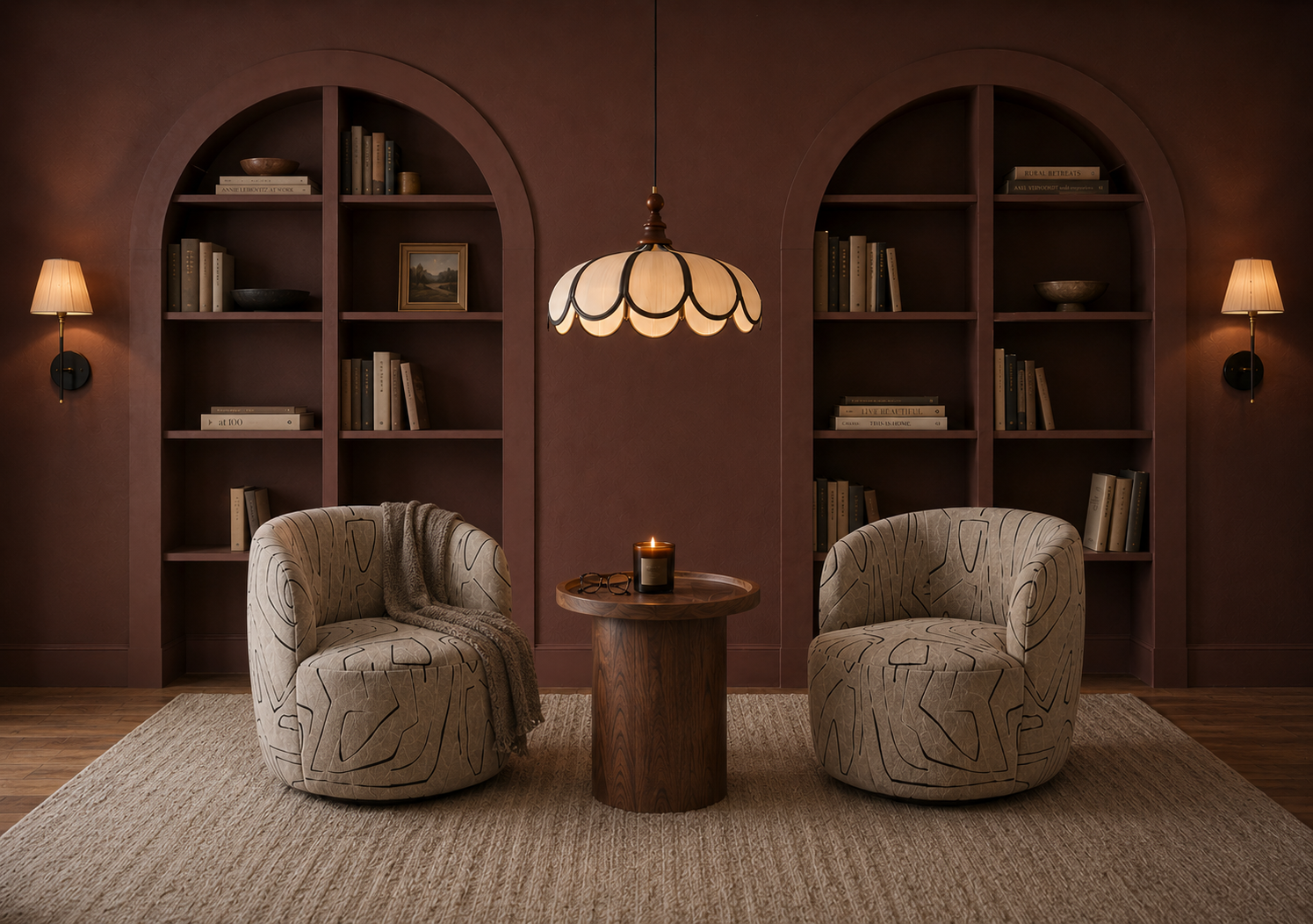
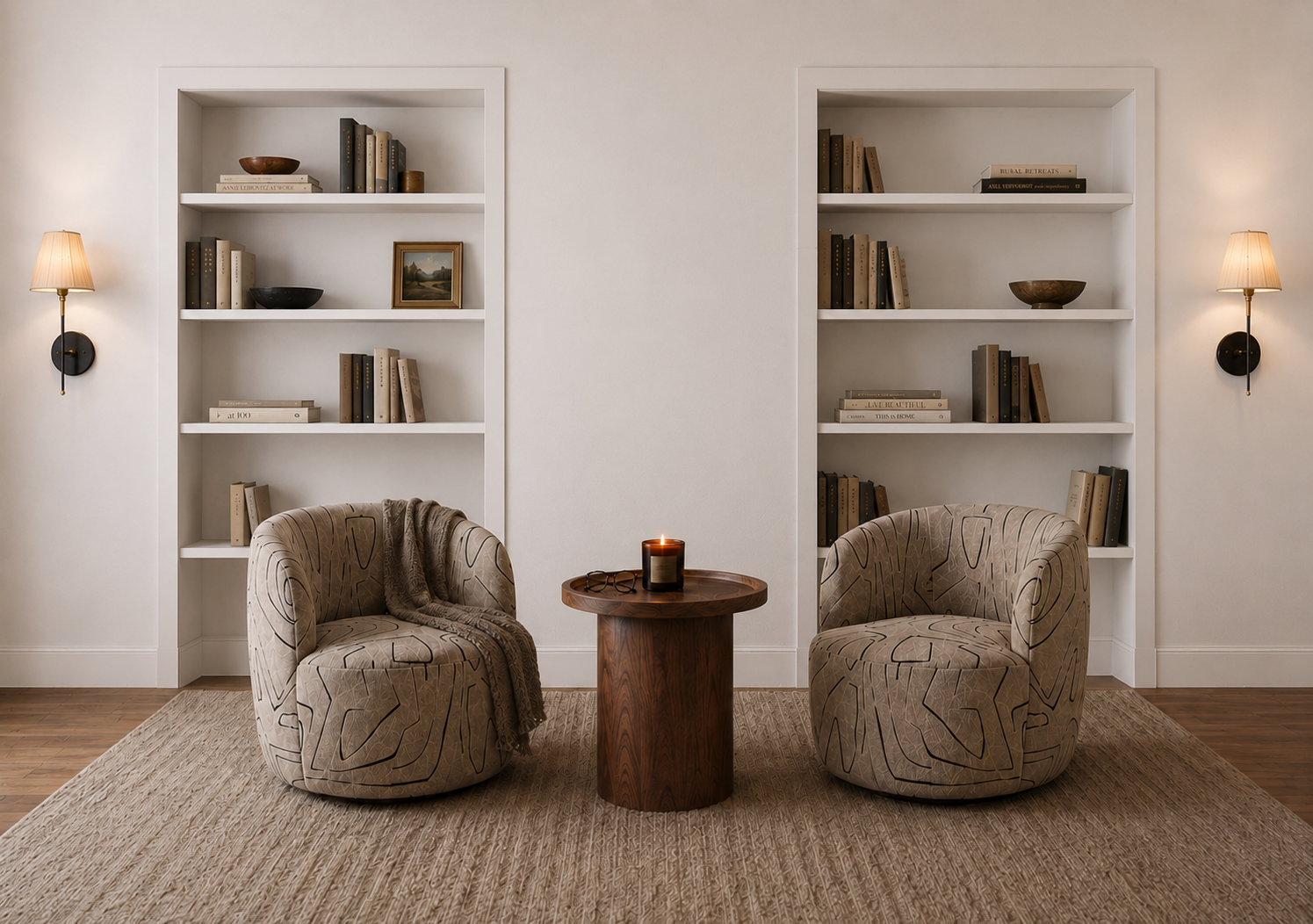
A digital rendering of a reading nook with two upholstered swivel chairs, arched built-in bookshelves, a round wood side table, and white walls. Design by Jessica Nicole Interiors, LLC.
12. Leaving Room for Something You Haven't Found Yet
One of the biggest pieces of advice I can give is that custom homes aren’t finished in a day. It takes time to build and curate a unique set of furniture that works well together and tells a story of who you are.
Sometimes the most custom thing you can do is leave a space empty until you find the right piece rather than filling it immediately with something that's simply good enough.
Conclusion: Custom Doesn't Have to Mean Custom-Made
A home doesn't need to be filled with custom furniture or expensive finishes to feel thoughtfully designed. Often, what makes a space feel truly special is the attention given to details most people overlook: the scale of a lampshade, the hardware on a dresser, the treatment of a forgotten hallway, or the one unexpected piece that gives a room personality.
The goal isn't to make everything match or to make every surface a statement. It's to create a home where the choices feel intentional—where the furniture relates to the architecture, the details feel personal, and the room looks as though it could only belong to the people who live there.
