
7 Places to Add Lighting That Most Homeowners Forget
Introduction: The Best-Lit Homes Don't Just Have More Light
Most homeowners think they need more light. In reality, they usually need better light. Some of the most beautiful homes aren't the brightest—they simply layer light in thoughtful places that create warmth, depth, and ambiance.
A well-designed home considers lighting, and considering lighting doesn’t always mean its surgical level brightness. It’s important to take into consideration the use of the space, the mood in the space, and what type of ambiance you are trying to create. Lighting is one of the best ways to bring ambiance. You will notice this in restaurants, libraries, coffee shops, etc.
When I'm thinking about lighting a space, I don't just ask whether there's enough light. I look at where the light is coming from, what it's illuminating, and how the room will feel at different times of day. Some of the smallest, most unexpected light sources can make a home feel significantly more custom and thoughtfully designed.
Today we are going to scratch the surface on lighting location by discussing 7 places you can add meaningful lighting to your home.
Disclosure: This post contains affiliate links. If you purchase through these links, I may earn a small commission at no additional cost to you. I only recommend products I genuinely love or would use in my own designs. This post is not sponsored, and all opinions are my own.
1. Above Artwork
Picture lights are one of the easiest ways to make artwork feel more intentional and create another layer of ambient light.
Picture lights can be used in several areas. Here are a few examples:
A single large painting
A pair or triptych
A gallery wall
Art above a fireplace
Artwork in a hallway
Even an inexpensive print that you want to give more presence
“Designer perspective:
A picture light doesn’t have to be reserved for expensive original artwork. Adding dedicated lighting above a piece can make even affordable art feel more important and intentional.”
Sometimes the difference between art that simply hangs on a wall and art that feels like a true focal point is the lighting around it.
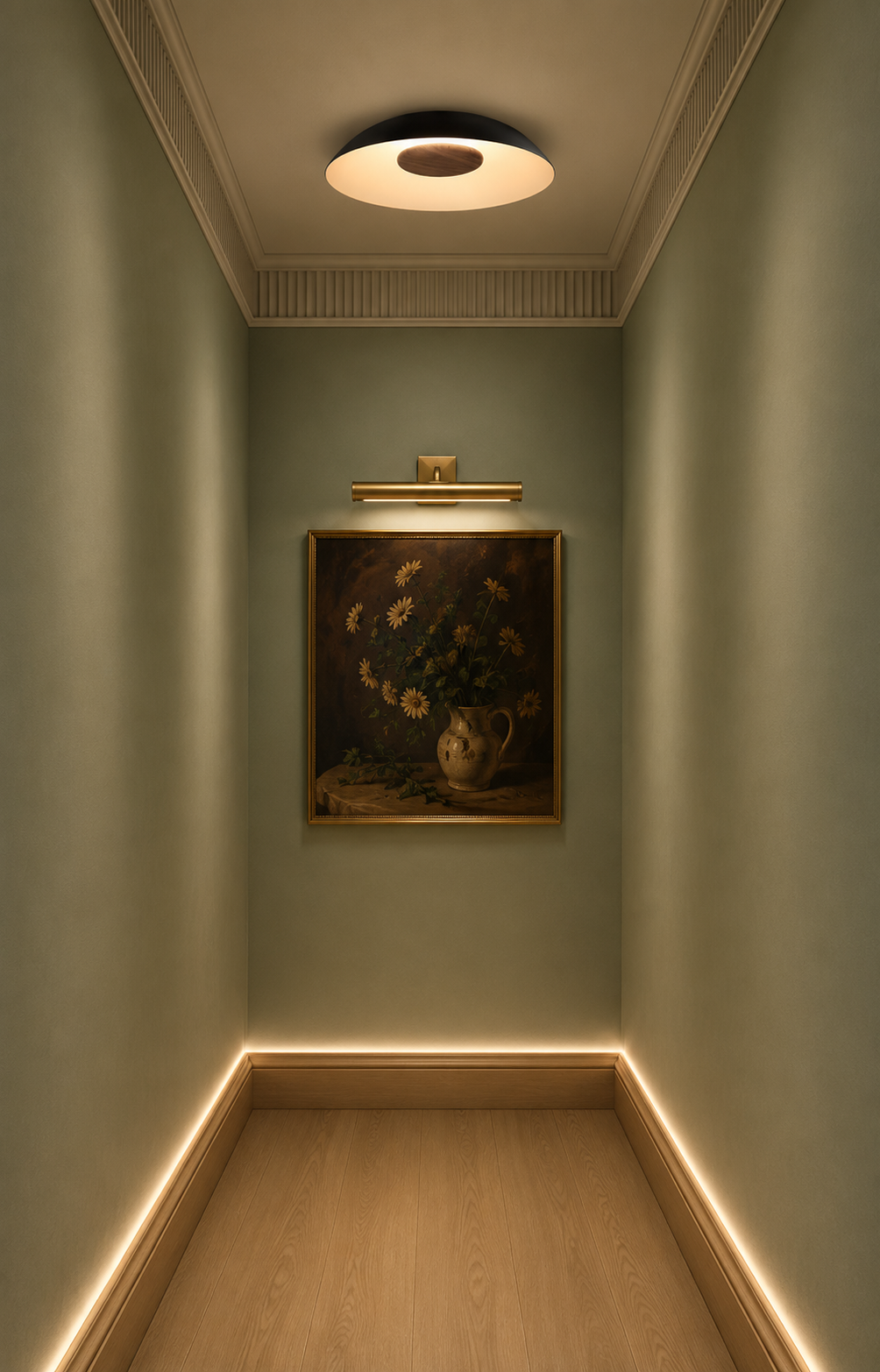
Picture Light
A digital rendering showcasing a variety of different types of layered lighting. For this example we are focusing in on the picture light.
2. Inside Bookcases and Display Cabinets
Did you know you can add lighting in your bookcases and cabinets? There are a few different ways to do this, and when done correctly, it beautifully lights what you are trying to display. My favorite way to go about this is typically an LED strip light.
Here are some examples of where you might add under/inner cabinet or bookcase lighting.
Built-in bookcases
Glass-front kitchen cabinets
China cabinets
Bar cabinets
Display niches
Freestanding bookcases, where feasible
Add undercabinet lighting rendering
Options could include:
Integrated LED strips
Small puck lights
Linear lighting
Tiny adjustable spotlights, sometimes called pin-lights.
I find the least invasive option to be LED strips or small pucks, but it depends on the look you are going for.
Lighting inside shelving creates depth, draws attention to objects you intentionally chose to display, and prevents a large built-in from becoming a dark visual mass at night.
The idea for this type of lighting is not for the light fixture itself to be visible, but for everything around it to benefit from its illumination.
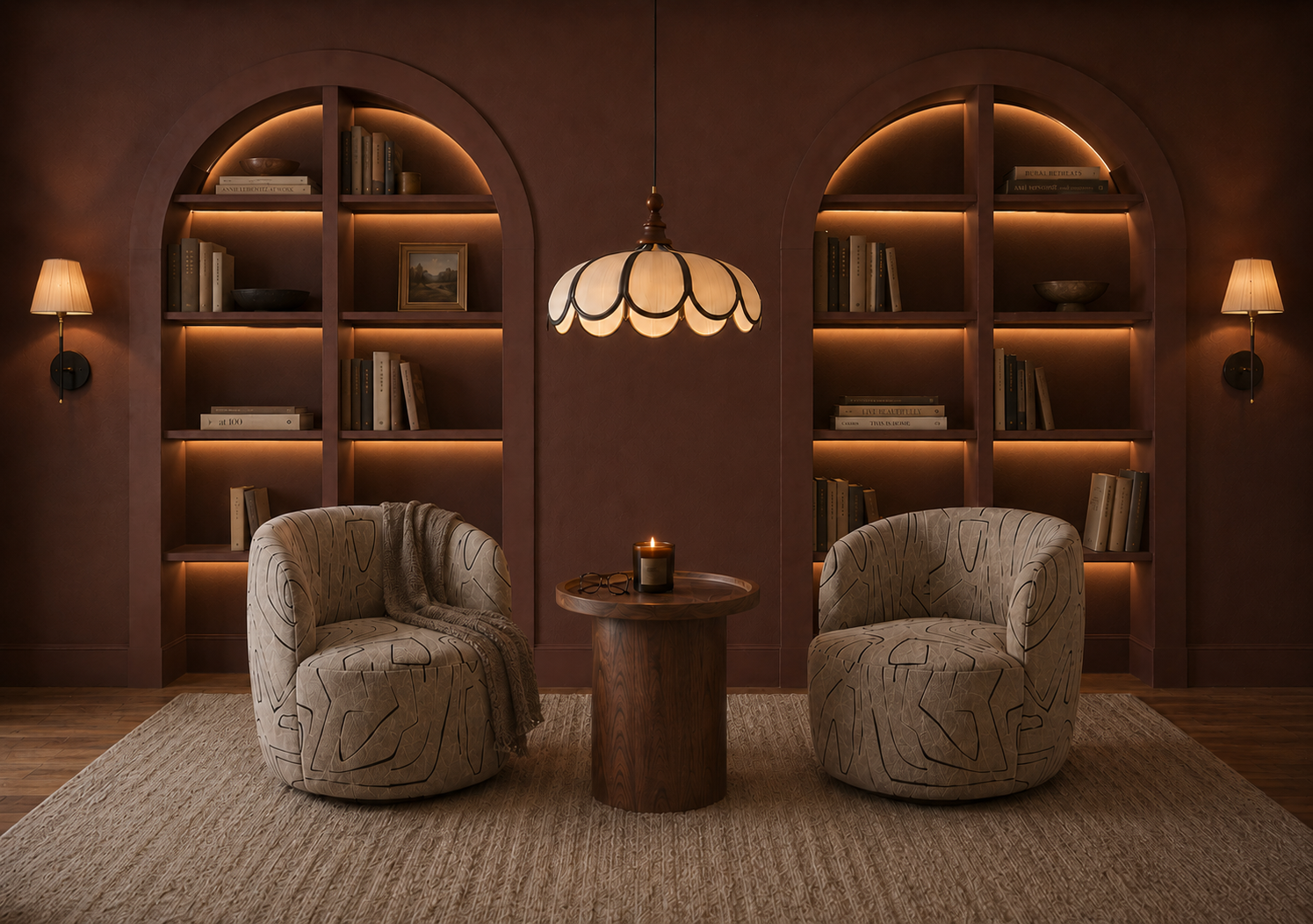
Shelf and Under Cabinet Lighting:
A digital rendering showing cozy reading nook with arched bookshelves, integrated LED shelf lighting, upholstered swivel chairs, and warm layered lighting.
3. At Floor Level
This is generally an overlooked detail. There are several ways to integrate lighting into the floor, and all of these options can provide both illuminance and beauty.
Staircases
Along baseboards
Along floating cabinets
Along a toe kick
Floor level lighting can also be beneficial for wayfinding and navigating when lights are low. These types of lights can sometimes act as an aesthetic nightlight.
This can be particularly useful for:
Nighttime bathroom trips
Stairs
Children's rooms
Guest suites
Homes where people want softer evening lighting
“Designer note:
The goal isn’t to outline every piece of furniture in glowing LED strips. Used selectively and thoughtfully, low-level lighting can feel subtle and architectural rather than decorative or gimmicky.”
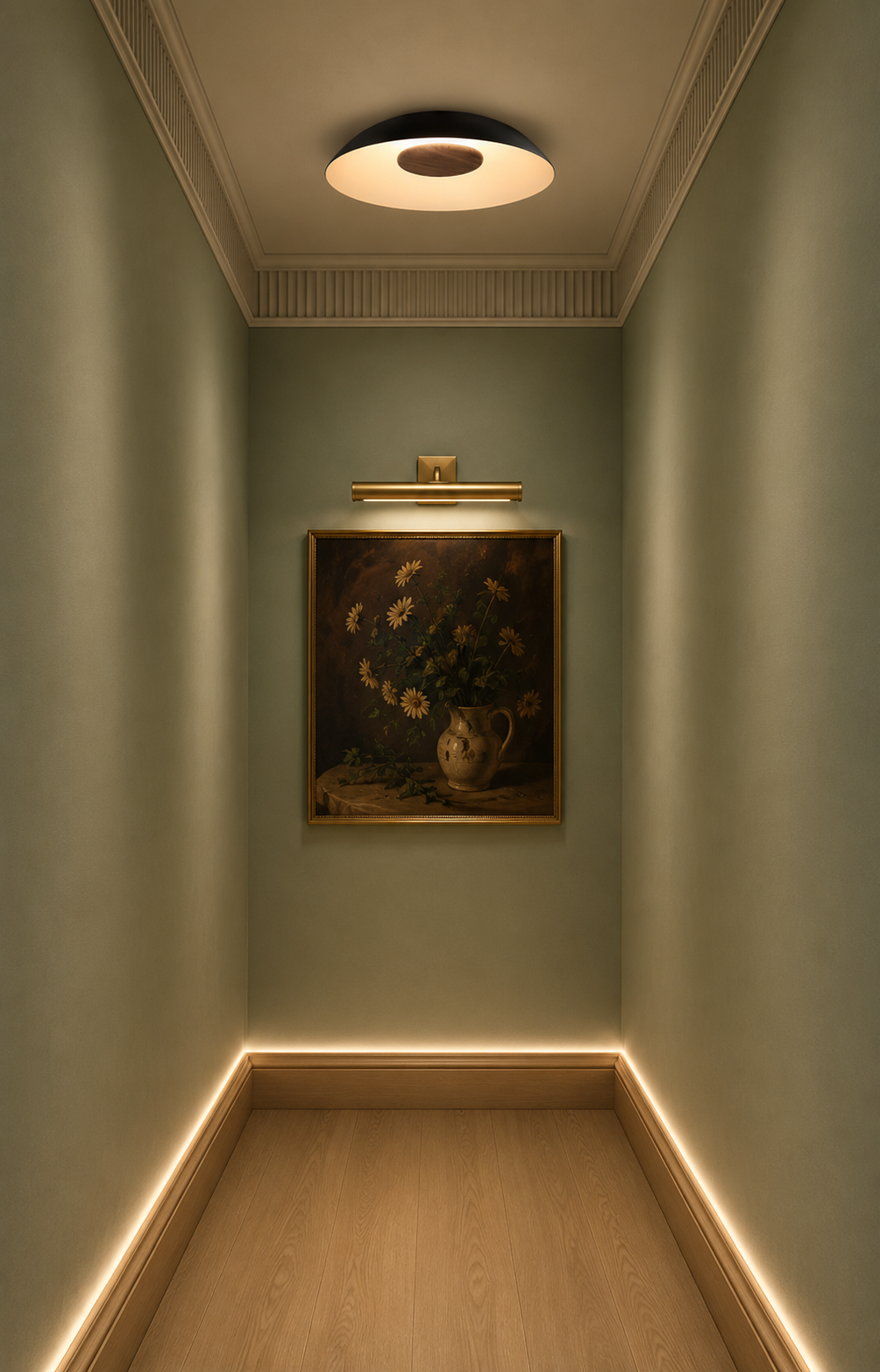
Base Lighting
A digital rendering showcasing our same hallway design looking more specifically at the base lights.
4. In the Corners of a Room
This is one that I love, but use in moderation. You don’t want every corner of the room to look the same, but when a lamp is introduced to a dark space, the room feels much more inviting. Examples of this include:
A floor lamp
A small table lamp on a pedestal
A sculptural uplight
A wall sconce
A lamp integrated into a reading corner
When every light source is concentrated in the center of a room, the perimeter can disappear into darkness at night. Adding light to an overlooked corner helps visually expand the space and creates more depth.
Not every light needs to provide a specific function, or be a task light, some lamps function solely to provide better ambiance to the room. Corners naturally fall into shadow after sunset. Adding a lamp to one forgotten corner gives your eye another place to travel, making the room feel deeper and larger.
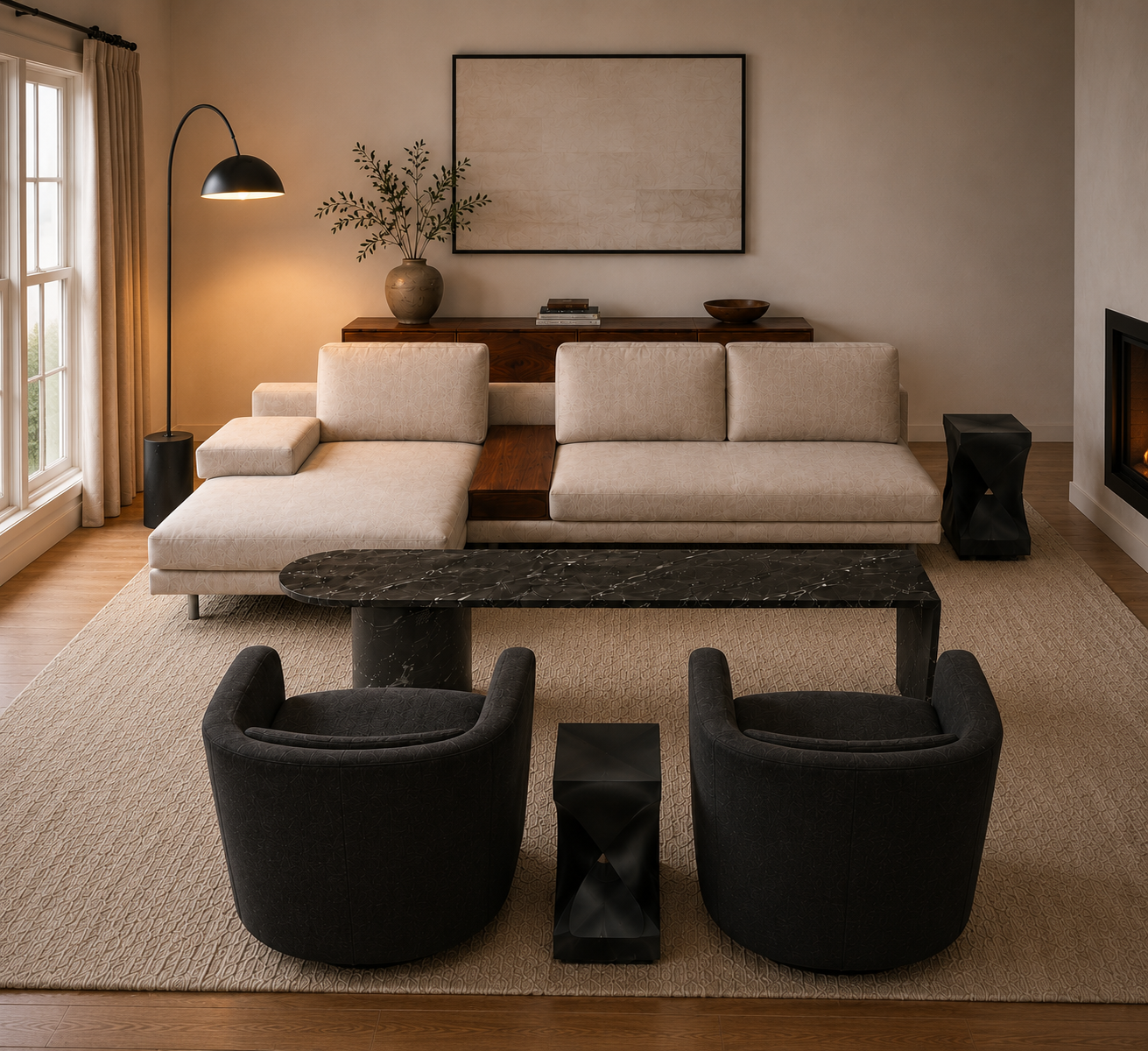
Corner Lamp Light:
Digital rendering showing a modern living room featuring a sectional sofa, black accent chairs, marble coffee table, and warm wood credenza in a neutral color palette.
5. Inside Closets and Pantries
This is a topic that most homeowners wish they had included in their home design at the beginning. Closet and pantry lighting makes a big difference, and it is missed when not included.
Some areas where small area lighting should be considered:
Walk-in closets
Reach-in closets
Linen closets
Kitchen pantries
Butler's pantries
Deep storage cabinets
A beautifully designed closet isn't particularly useful if you can't see what's inside it. This is especially true for deep shelves, dark clothing, or closets without natural light.
Pantry light rendering
Options include:
Ceiling fixtures
Integrated shelf lighting
Vertical LED lighting
Motion-activated lighting
Lighting beneath shelves
“Designer Tip:
Motion sensors and door jamb switches can be particularly useful in closets and pantries because the light turns on exactly when you need it without requiring another switch. ”
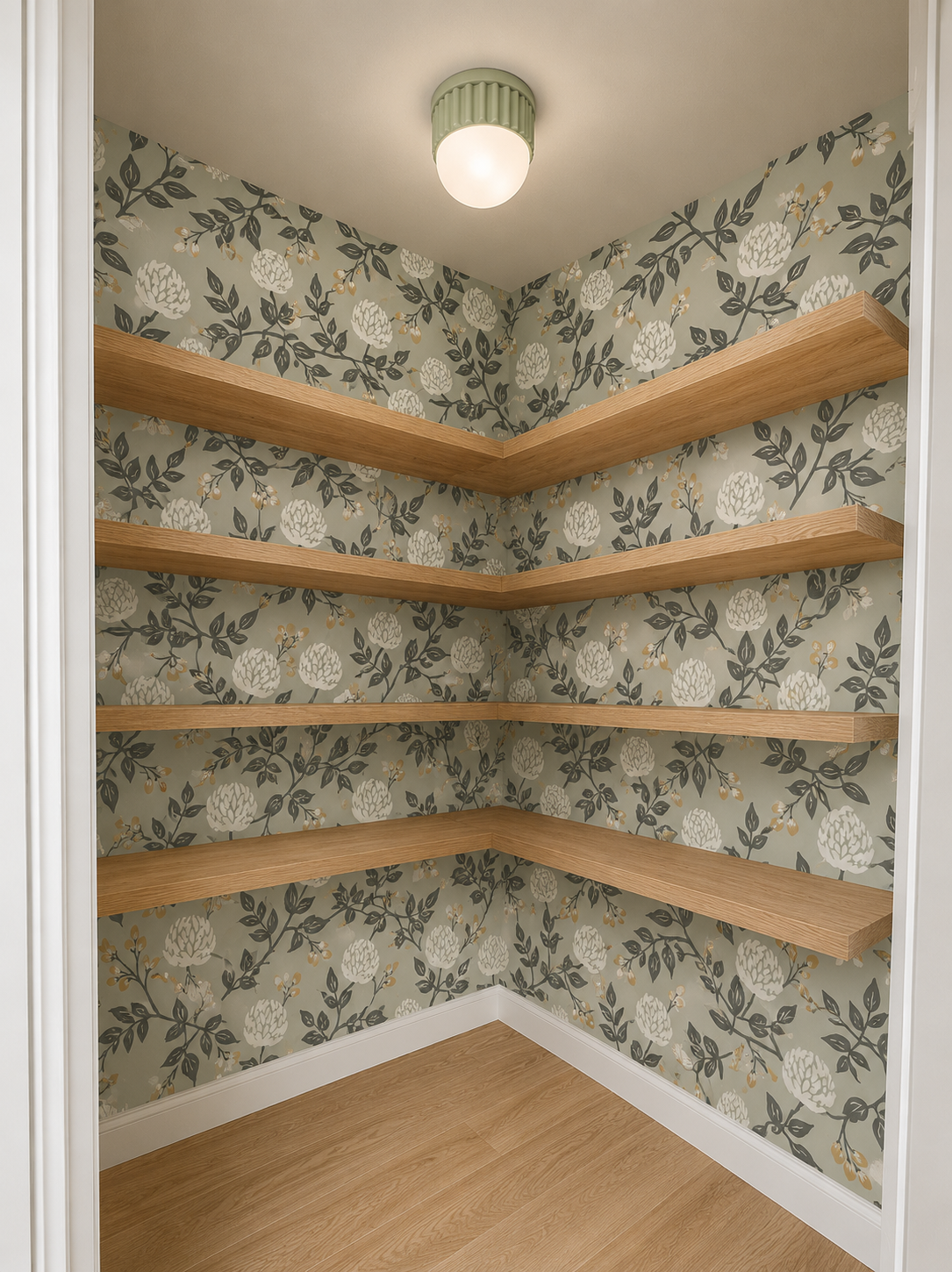
Pantry Lighting:
Digital rendering showing a walk-in pantry with floral wallpaper, floating wood shelves, light wood flooring, and a modern flush mount ceiling light.
6. Over a Kitchen Sink
This is one of those details that can make a kitchen feel far more intentional.
Many kitchens have:
Island pendants
Recessed ceiling lights
Under-cabinet lighting
But the sink itself is often overlooked—particularly when it's located beneath a window.
Options could include:
A pendant
A small chandelier
A decorative flush mount
A wall-mounted light
A pair of sconces, depending on the architecture
The kitchen sink is one of the most frequently used work areas in the home, yet it often relies entirely on general overhead lighting. A dedicated fixture can provide useful task lighting while also creating a beautiful focal point.
And if there's a window:
A light fixture in front of or above a window can work beautifully when the scale, placement, and sightlines are carefully considered.
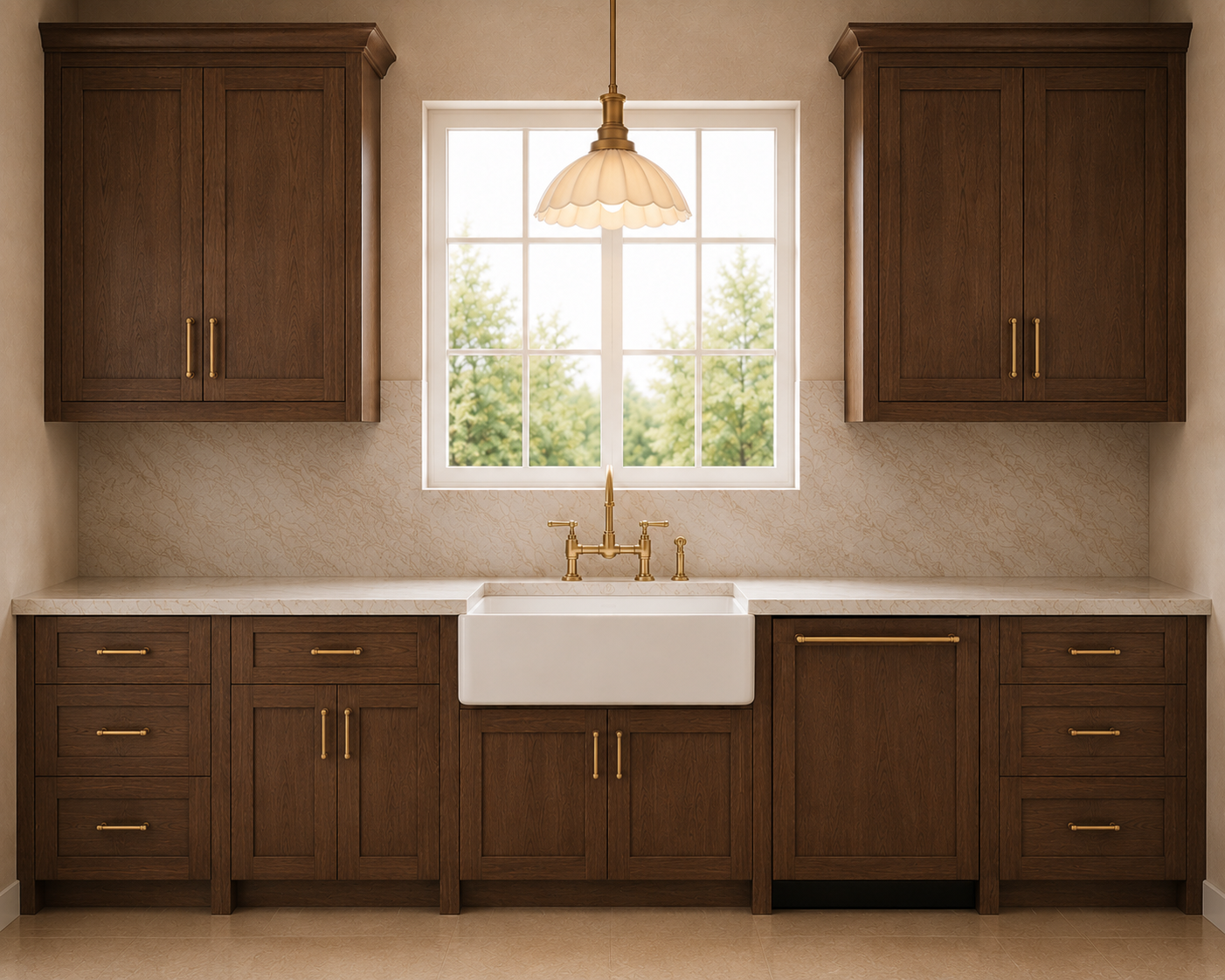
Kitchen Sink Lighting
Digital Rendering of a transitional kitchen featuring rich walnut cabinetry, brass cabinet pulls, marble slab backsplash, farmhouse sink, and custom upper cabinets. Please note this rendering if only for visualization purposes and there may be some inaccuracies. Designed fully by Jessica Nicole Interiors, LLC.
7. At the End of a Hallway
I think this is a particularly good final idea because it combines lighting with the concept of turning overlooked areas into actual design moments.
At the end of a hallway, you might use:
A picture light over artwork
A pair of sconces
A small table lamp on a console
A decorative pendant, if appropriate
An illuminated niche
A long hallway naturally directs your eye toward whatever is at the end of it. Instead of treating that wall as leftover space, use lighting to create an intentional destination.
Lighting the end of a hallway can draw you through the home and make the entire space feel more purposeful.
This is also one of those ideas that really adds to the uniqueness of your home. For more ideas on this check out my post on “unexpected things that make a home look more custom”
Bonus: Places I Would Also Consider
Some other strong ideas for lighting might be:
Under floating shelves
Inside a bar cabinet
Around a bathroom mirror
Above a bathtub, where code and fixture requirements allow
Beneath kitchen cabinets
On either side of a fireplace
On a stair landing
Above a window seat
Inside an architectural niche
Over a game table
In a laundry room
Why Lighting at Different Heights Matters
General lighting provides the room's general illumination.
Task lighting provides focused light for activities like reading, cooking, or applying makeup.
Accent lighting draws attention to artwork, architecture, or decorative objects.
Great rooms provide options for all three of these types of lighting.
If every light in your room comes from the ceiling, the space can feel flat even when it's technically bright enough. Lighting at different heights creates layers, shadows, depth, and a more comfortable atmosphere.
Color Temperature
It’s important to take color temperature into consideration when planning your space. 2700K-6000K+
The lower the number on the Kelvin scale, the warmer the color temperature. So, if you are planning a really warm lit room with cozy accents and soft furnishings, make sure you don’t accidentally purchase your fixtures in 5000K or it will really throw off your ambiance for the room.
One More Thing: Put Your Lights on Separate Controls
This is one of the best pieces of advice in this section, and it can be surprisingly affordable. My personal favorite way to address this, especially after lights have already been switched or in a rental, is to use smart plugs. I use Kasa smart plugs in my own home, and I love how I can set schedules and control everything from my phone. My lights automatically come on when I wake up, turn off when I leave for work, and turn back on when I arrive home. It’s amazing!
If possible, avoid having every light in a room operate from one switch.
Instead, separate:
Recessed lighting
Decorative fixtures
Sconces
Cabinet lighting
Accent lighting
And use dimmers where appropriate.
The goal isn't necessarily to turn every light on at once. The real luxury is having the ability to change the room's atmosphere depending on the time of day and how you're using the space. If you are interested in smart plug options, double check when purchasing for dimmer capabilities.
Common Lighting Mistakes to Avoid
Relying entirely on recessed ceiling lights.
Choosing fixtures before considering what they actually need to illuminate.
Using only one height of lighting throughout a room.
Installing lighting that's too cool or harsh for the space.
Forgetting dimmers and separate controls.
Adding decorative lighting without considering glare.
Using integrated lighting everywhere until it starts to feel gimmicky.
Conclusion: Look Beyond the Obvious Places
The most thoughtfully lit homes aren't necessarily the brightest. They're the ones where lighting has been considered at every level—from the ceiling to the floor and everywhere in between.
Adding a picture light above artwork, illuminating a dark bookcase, placing a lamp in a forgotten corner, or creating a soft glow at floor level may seem like a small decision, but these details can completely change how a home feels after dark.
Before adding more overhead lights, look around your home and ask a different question: What deserves to be illuminated that currently isn't?
Need help creating a lighting plan or making your home feel more thoughtfully designed? I offer professional interior design services to help create spaces that are beautiful, functional, and tailored to the way you live.
