
What to Put on a Large Blank Wall
Introduction: A Large Blank Wall Doesn't Always Need More Stuff
A large blank wall can be surprisingly difficult to decorate. One small piece of art looks lost, a collection of random objects can quickly feel cluttered, and filling the wall just for the sake of filling it rarely makes a room feel more intentional.
The goal here isn’t necessarily to cover every inch of the wall. Instead, we want to create something that feels appropriately scaled both to the wall and the room.
When I'm deciding what to put on a large blank wall, I don't start by asking, "What can I hang here?" I first consider why the wall feels empty, what role it plays in the room, and whether it needs art, furniture, architecture—or perhaps nothing at all.
AFFILIATE DISCLOSURE: This post contains affiliate links. If you purchase through these links, I may earn a small commission at no additional cost to you. I only recommend products I genuinely love or would use in my own designs. This post is not sponsored, and all opinions are my own.
RENDERING DISCLAIMER: The images in this post are digital renderings created to illustrate my original design concepts. They are intended for inspiration and visualization and may not represent exact dimensions, materials, or construction details. See my full Disclosure & Disclaimer Policy for more information.
1. One Oversized Piece of Art
Oversized art can do several things to the overall look of a space. Consider the following:
Create a clear focal point.
Add color and personality.
Feel calmer than a collection of smaller pieces.
Help visually anchor furniture below it.
One of the most common mistakes I see is choosing artwork based on what looks large in a store or online rather than what actually looks large in the room. A 36-inch-wide painting might sound substantial until it's hanging above a 96-inch sofa. You need to consider the whole perspective rather than just the art by itself.
If art is above furniture, it should feel visually related to the furniture rather than floating as a tiny object above it.
The rendering below shows a colorful family room that was designed to feel cozy and fun. I have contrasted this below in another example that completely changes the look.
“Designer perspective:
I would rather see one appropriately scaled piece of art than three smaller pieces added simply because the first one wasn’t large enough.”
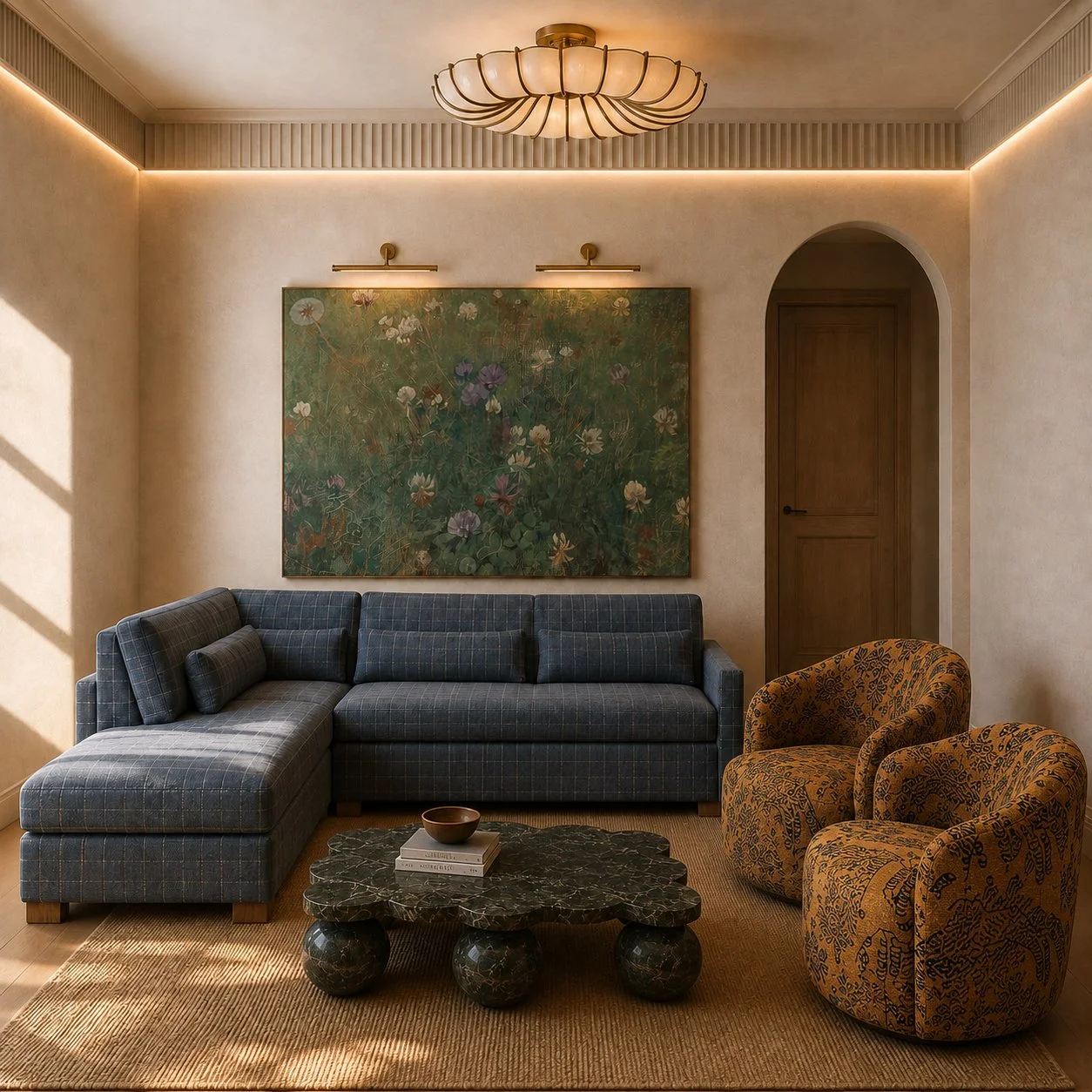
Large Scale Artwork:
A digital rendering depicting a modern living room featuring a blue sectional sofa, patterned accent chairs, sculptural black coffee table, layered lighting, and a large botanical artwork. Designed by Jessica Nicole Interiors, LLC.
2. A Pair or Triptych of Large Art Pieces
Sometimes one enormous piece is difficult to find—or prohibitively expensive.
That's where a pair or series can work beautifully.
Options include:
Two coordinating paintings.
A triptych.
A series of botanical prints.
Large framed photographs.
A collection of antique maps or textiles.
Instead of one large piece, these individual pieces can work together to create the illusion of one large piece.
When I'm using multiple pieces to fill a large wall, I consider the total dimensions of the entire grouping—not just the size of each individual frame.
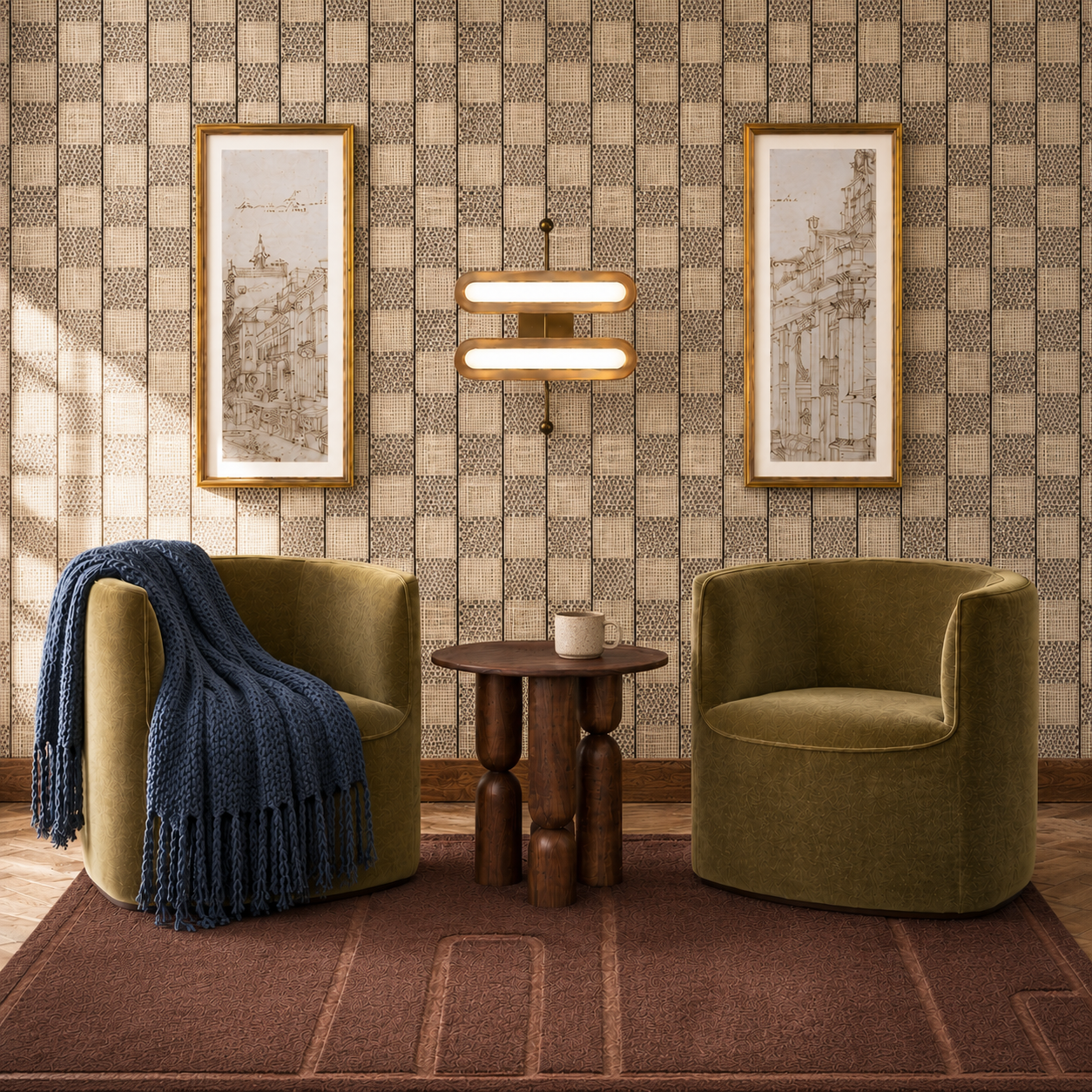
Paired Art:
a digital rendering depicting a cozy reading nook featuring olive green swivel chairs, a sculptural wood side table, patterned wallpaper, framed artwork, and a modern brass wall sconce light. Designed by Jessica Nicole Interiors, LLC.
3. A Large Mirror—or Several Used as One Composition
A large mirror can be especially useful when the room needs:
More reflected natural light.
A greater sense of depth.
Something visually substantial without adding more color or pattern.
Before hanging a mirror, consider what it will actually reflect. A beautiful mirror reflecting a blank hallway, cluttered countertop, or television may not add what you expect to the room.
One oversized floor mirror.
A large antique mirror.
A pair of matching mirrors.
A grid of antiqued mirror panels.
A sculptural or unusually shaped mirror.
I have taken our family room rendering from before and swapped out the large scale art and picture lights for a large brass framed mirror. You can see how this immediately elongates the room and makes it feel more spacious. If you are looking to make a space look and feel larger, a mirror will help greatly. I’m curious which version of this family room you prefer?
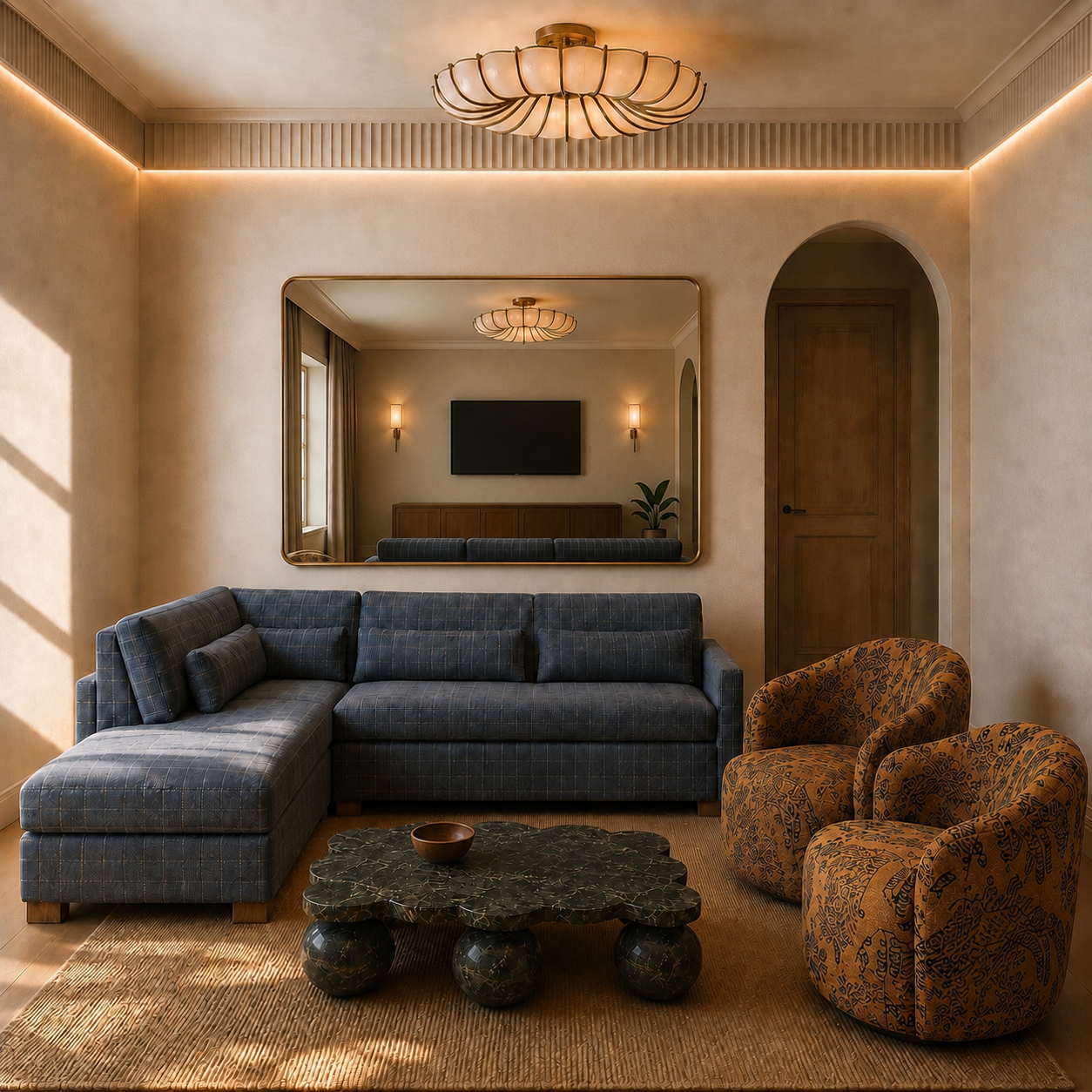
Large Mirror:
A digital rendering showing our previous image, but we have replaced the large art with a large brass framed mirror. Designed by Jessica Nicole Interiors, LLC.
4. A Large Textile or Tapestry
This is a particularly good option because it introduces softness and texture to a room that may already have a lot of hard surfaces.
Ideas include:
Antique tapestries.
Vintage rugs.
Quilts.
Woven wall hangings.
Framed textiles.
Large-scale fabric panels.
A textile can fill a significant amount of wall space without feeling as visually hard as a collection of frames, mirrors, or metal objects. It can also help soften a room with high ceilings or a lot of architectural hard surfaces.
This also gives a home a more collected, one-of-a-kind feeling.
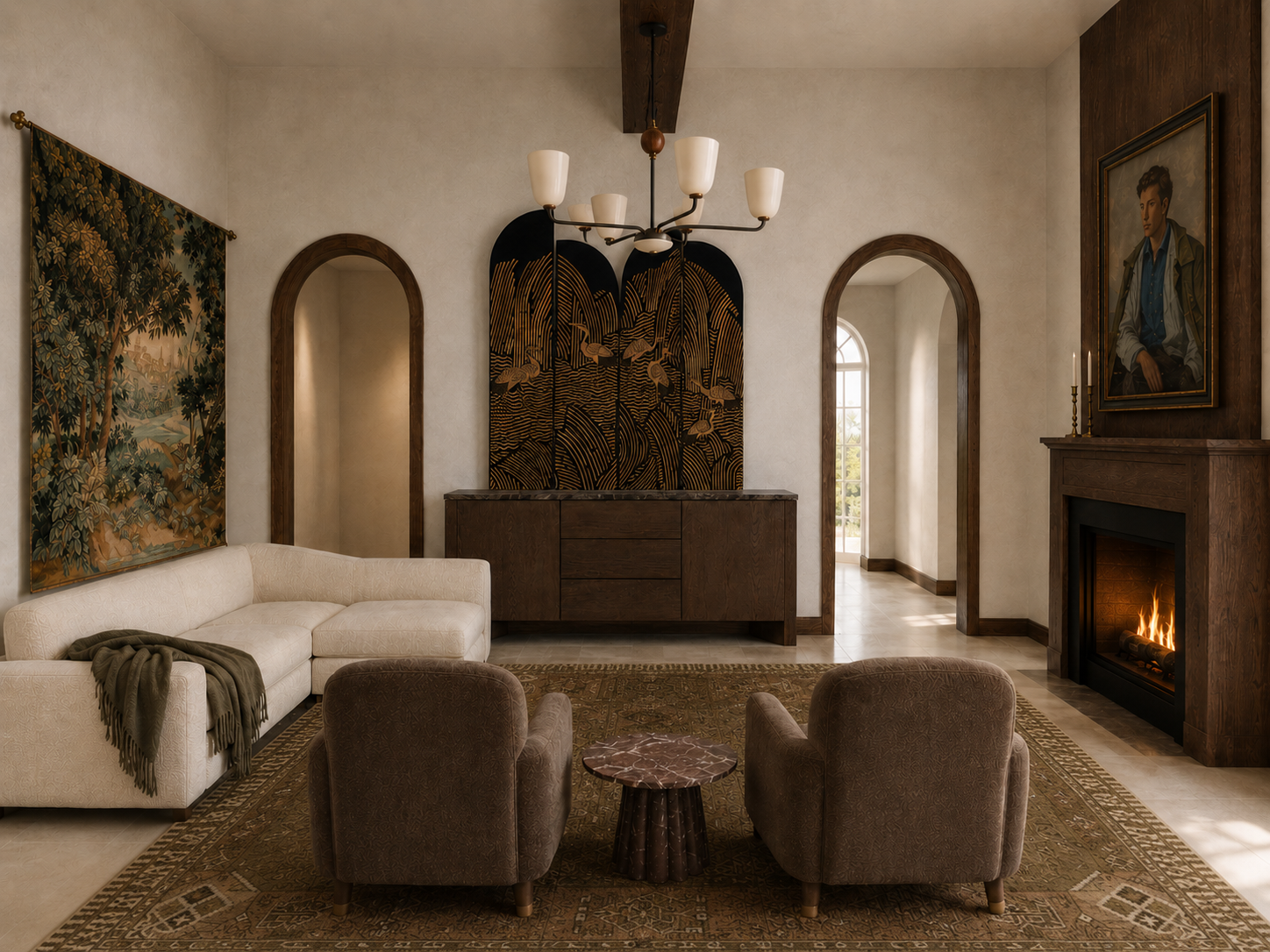
Wall Tapestry:
A digital rendering showing a large botanical wall tapestry displayed above a white sofa, creating a dramatic focal point in a warm contemporary living room. Designed by Jessica Nicole Interiors, LLC
5. A Folding Screen
Did you know you can mount large decorative folding screens on the wall? They make a big impact and can be very beautiful.
A decorative folding screen can be:
Mounted directly to the wall.
Hung slightly above the floor.
Placed in front of the wall as a freestanding object.
Used behind a sofa, console, or bed.
Options could include:
Antique painted screens.
Chinoiserie screens.
Upholstered screens.
Carved wood screens.
Cane or woven screens.
Contemporary sculptural dividers.
A folding screen is one of my favorite ways to fill a large wall because it adds scale, dimension, and architectural presence without requiring permanent construction. You can see an example of a beautiful folding screen on top of a media console in the image above.
If you are interested in learning more about ways to elevate your home, you may want to check out my post on Unexpected details to make your home look more expensive.
6. Picture-Frame Molding or Applied Wall Molding
Sometimes the answer isn't putting something on the wall—it's making the wall itself more interesting. You can do this by adding molding or decorative plaster.
Picture-frame molding.
Full-height panel molding.
Wainscoting.
Applied trim.
Decorative plasterwork.
If a wall feels empty even after you've added furniture and art, the issue may not be a lack of decoration. The architecture itself may need more dimension.
“An important point:
Wall molding doesn’t necessarily eliminate the need for art. In many cases, the molding creates a framework that makes even a smaller piece of artwork feel more intentional.”
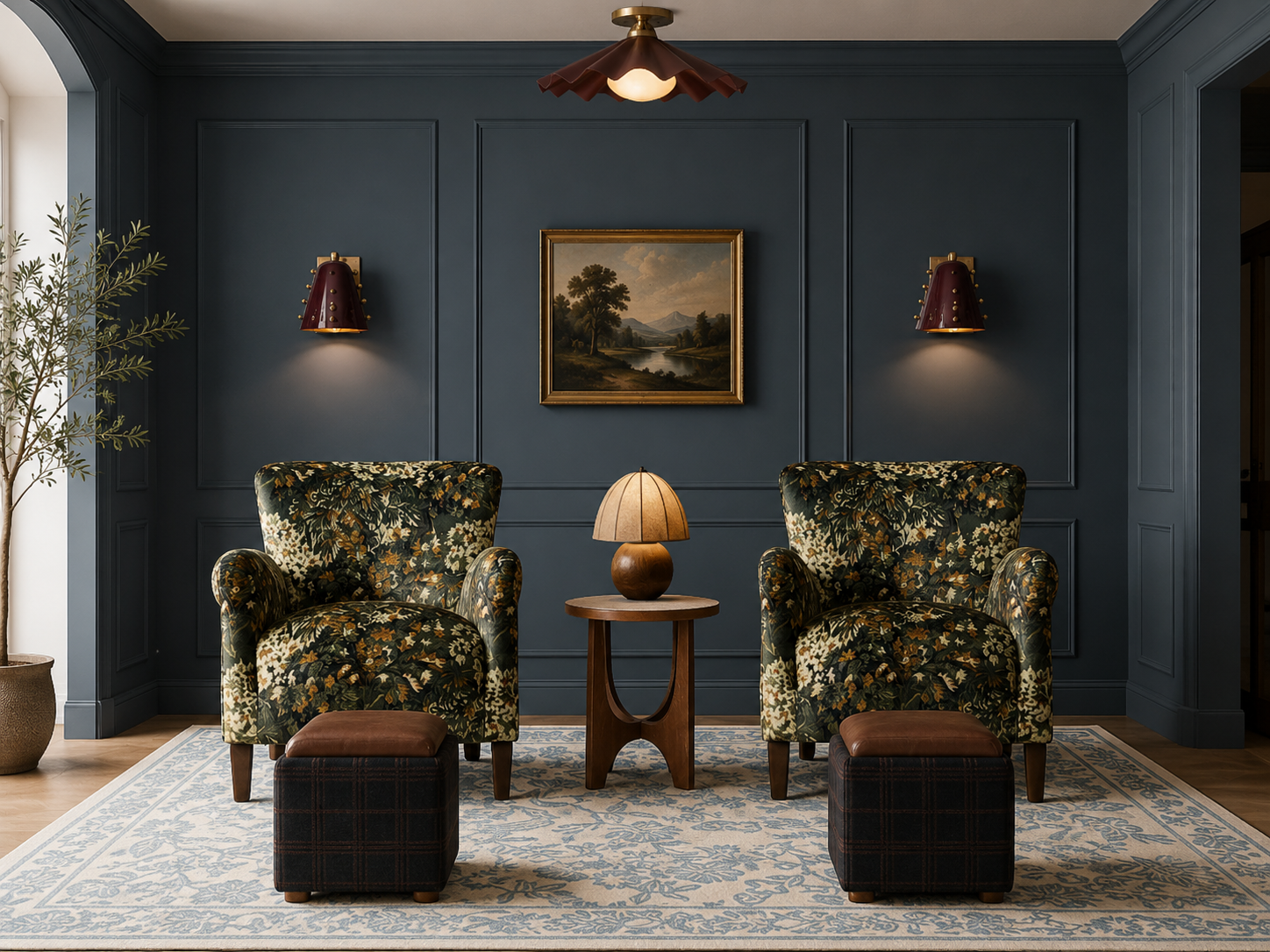
Molding:
Digital rendering depicting a moody reading room with floral upholstered armchairs, navy paneled walls, brass wall sconces, vintage artwork, and a warm wood side table.
7. A Mural or Large-Scale Wallpaper
Instead of placing something on the wall, make the wall itself the focal point.
Options include:
Scenic wallpaper.
Hand-painted murals.
Abstract murals.
Botanical designs.
Panoramic landscapes.
Wallpaper panels framed with molding.
Large-scale patterns often work particularly well on expansive walls because they have enough room to be fully appreciated. A tiny repeating pattern may make a large wall feel busy, while a mural can create one cohesive visual moment.
8. A Console Table With Art or a Mirror Above It
This is an important distinction: sometimes the wall doesn't need more wall décor—it needs furniture in front of it.
A long console can:
Anchor the lower portion of the wall.
Provide a surface for lamps.
Add storage.
Give artwork something to visually relate to.
Create an intentional focal point.
A large piece of artwork can feel lost when it's floating alone on an enormous wall. Place a substantial console beneath it, and suddenly the two pieces begin to read as one composition.
Then discuss layering:
Console.
Large art or mirror.
Lamps.
A few sculptural objects.
A bench or ottomans tucked underneath, where appropriate.
I love this combination from Anthropologie below. The pattern in the Hale table really adds something special to the design. I am a big fan of everything they have in this pattern.
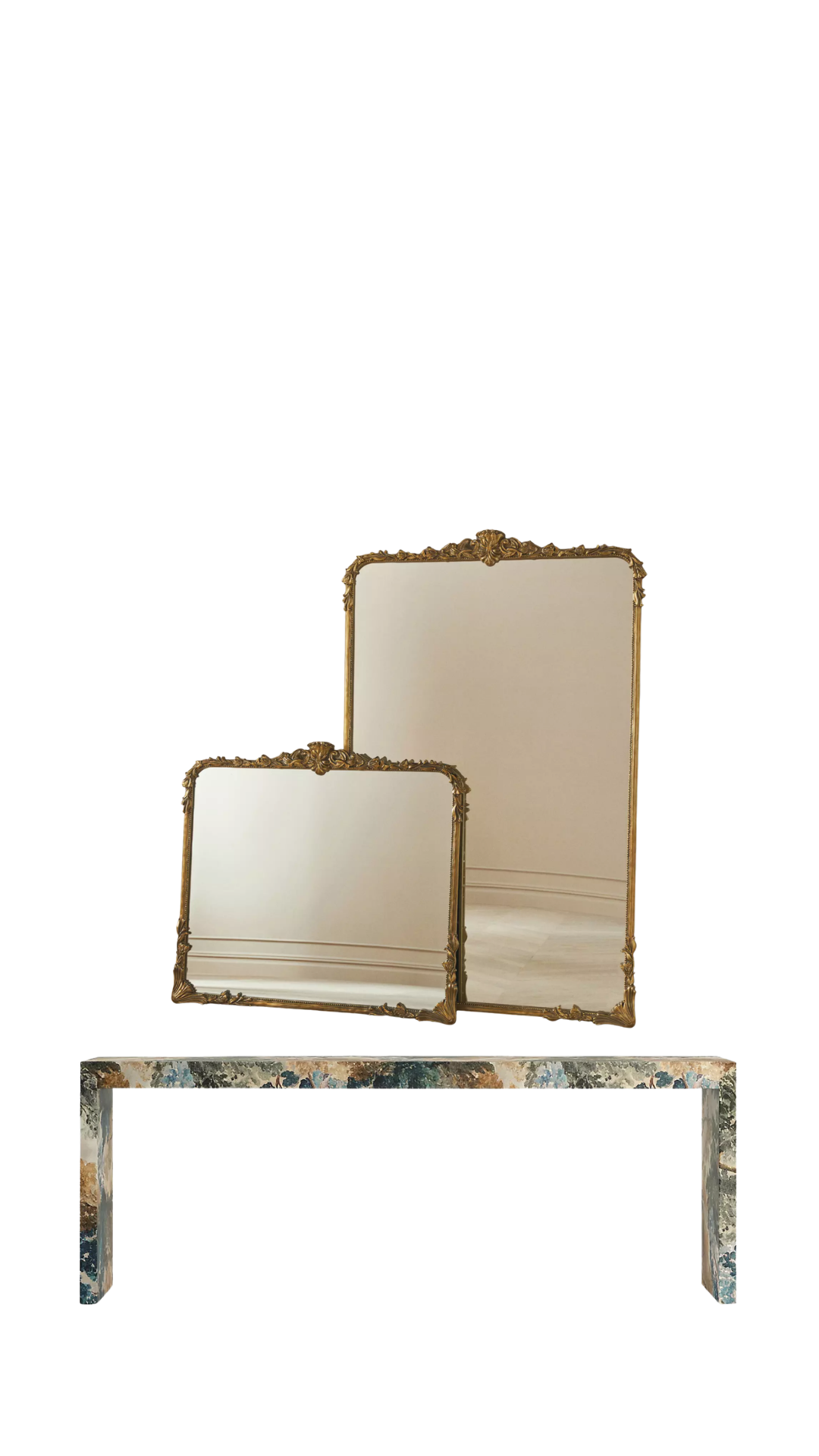
Console Table & Mirrors:
9. Built-In Bookcases or Cabinetry
For a more substantial investment, a large blank wall can become an opportunity to add architecture and function.
Ideas include:
Floor-to-ceiling bookcases.
Closed cabinetry with shelves above.
A library wall.
A built-in media unit.
Display cabinetry.
A bar.
A combination of open and closed storage.
“Designer perspective:
Built-ins are particularly effective when they’re designed in response to the architecture of the room rather than simply placed against an empty wall.”
Things to consider:
Ceiling height.
Baseboards and crown molding.
Existing door and window casing.
Electrical outlets.
Lighting.
The proportion of open versus closed storage.
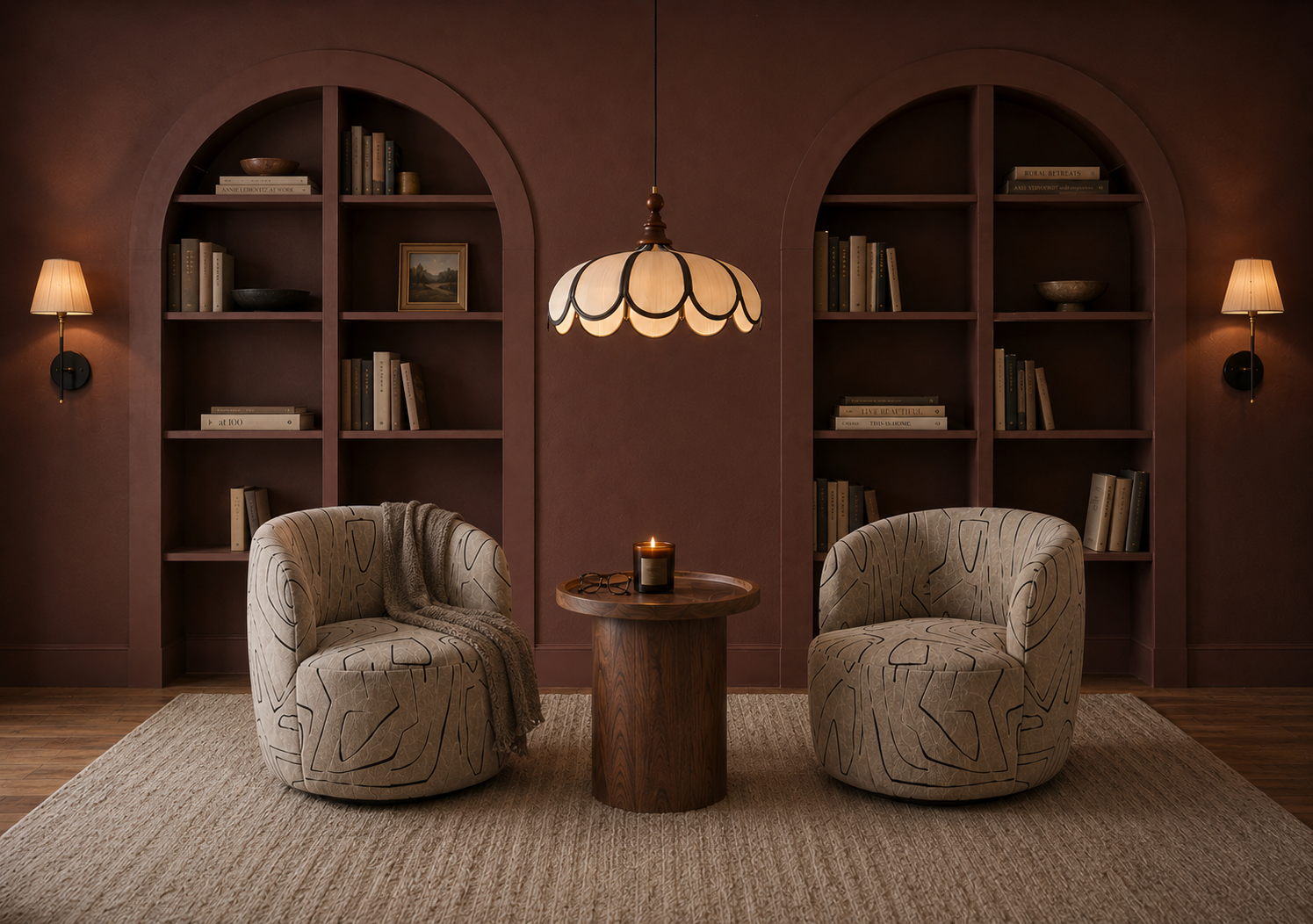
Built-In Bookcases
A digital rendering showing a reading room with arched built-in bookshelves, upholstered swivel chairs, layered lighting, and warm walnut millwork.
10. Freestanding Furniture That Has Enough Presence
Not everything has to be built in.
Consider:
An antique armoire.
A large bookcase.
A tall cabinet.
A secretary desk.
A substantial chest.
A sculptural shelving unit.
Sometimes a large wall doesn't need twenty small objects. It needs one piece of furniture with enough scale and presence to hold its own.
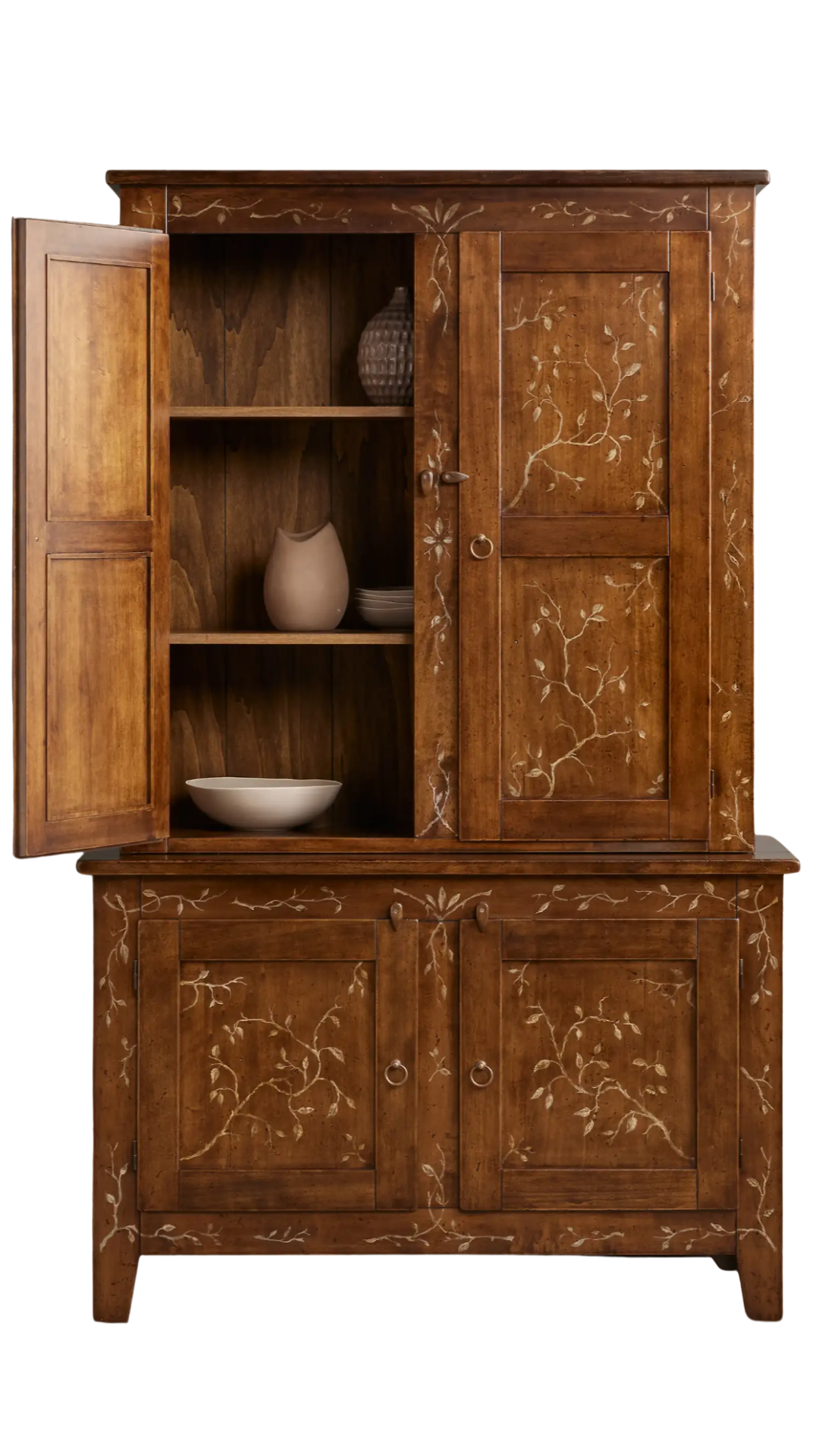
Large Freestanding Furniture:
11. Sculptural Wall Objects
This is a good alternative for people who don't want traditional framed art.
Ideas include:
Ceramic pieces.
Woven baskets.
Carved wood objects.
Metal sculptures.
Plaster reliefs.
Antique architectural fragments.
Decorative plates.
Three-dimensional fiber art.
The goal isn't to randomly scatter small decorative objects across a huge wall. Treat sculptural pieces as a composition, considering their total scale, spacing, and relationship to the furniture below.
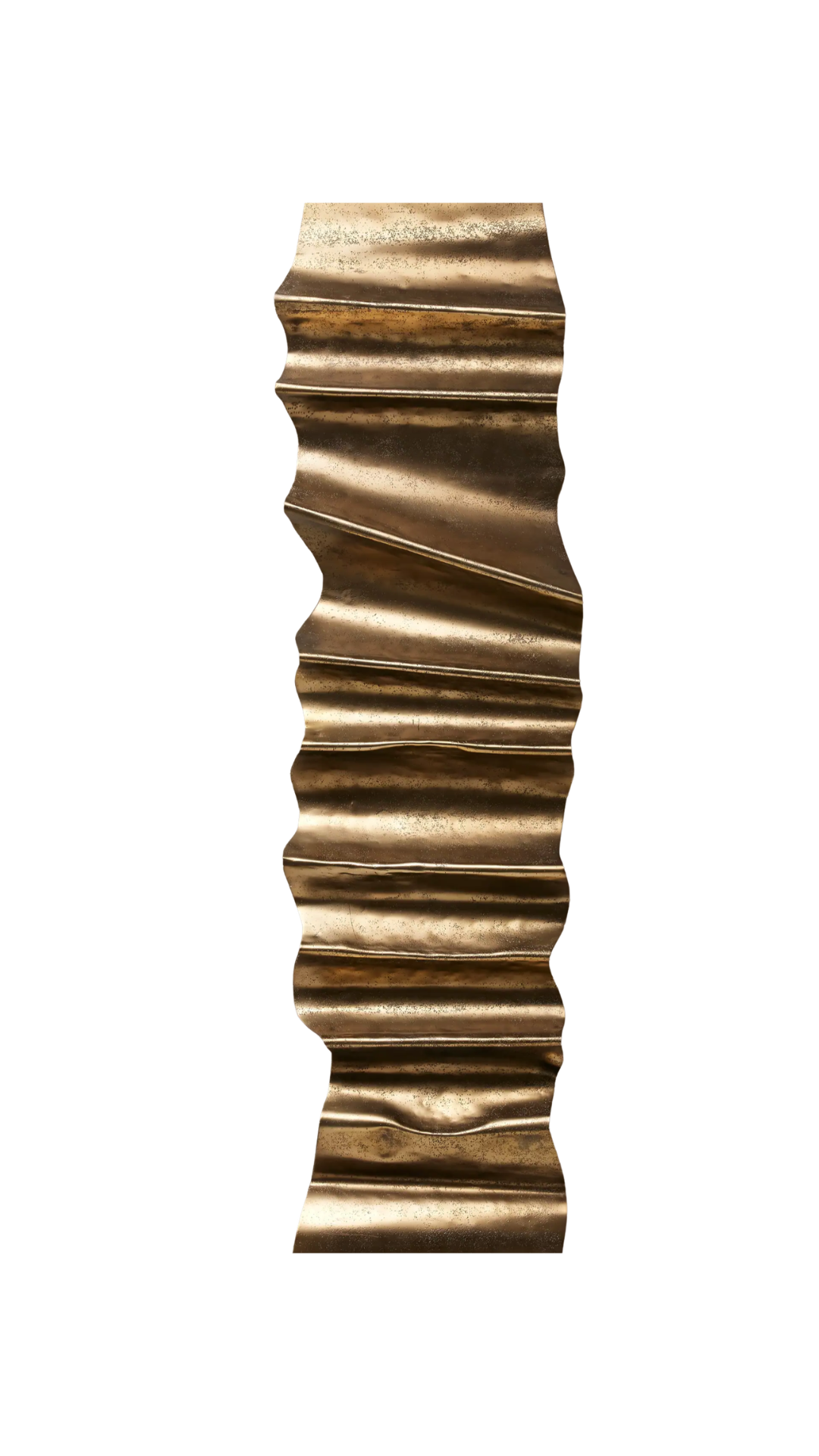
Sculptural Wall Element:
12. An Antique Architectural Element
Consider:
Antique doors.
Carved wood panels.
Old shutters.
Iron gates.
Architectural fragments.
Salvaged window frames.
Fireplace mantels.
Decorative screens.
Architectural salvage can give a new or builder-grade home a sense of history that is difficult to recreate with something mass-produced.
And because these items can be extremely heavy, note that appropriate professional installation may be necessary.
13. A Fireplace or Faux Fireplace Surround
This is obviously a larger undertaking, but if the wall needs a true focal point, it can completely transform the room.
Options include:
A functional fireplace.
Electric fireplace.
Decorative mantel.
Antique fireplace surround.
Plaster fireplace.
Stone or tile surround.
“The key designer point:
Even a non-functioning antique mantel can give a room a sense of architecture and provide a natural place for art, mirrors, or seasonal styling.”
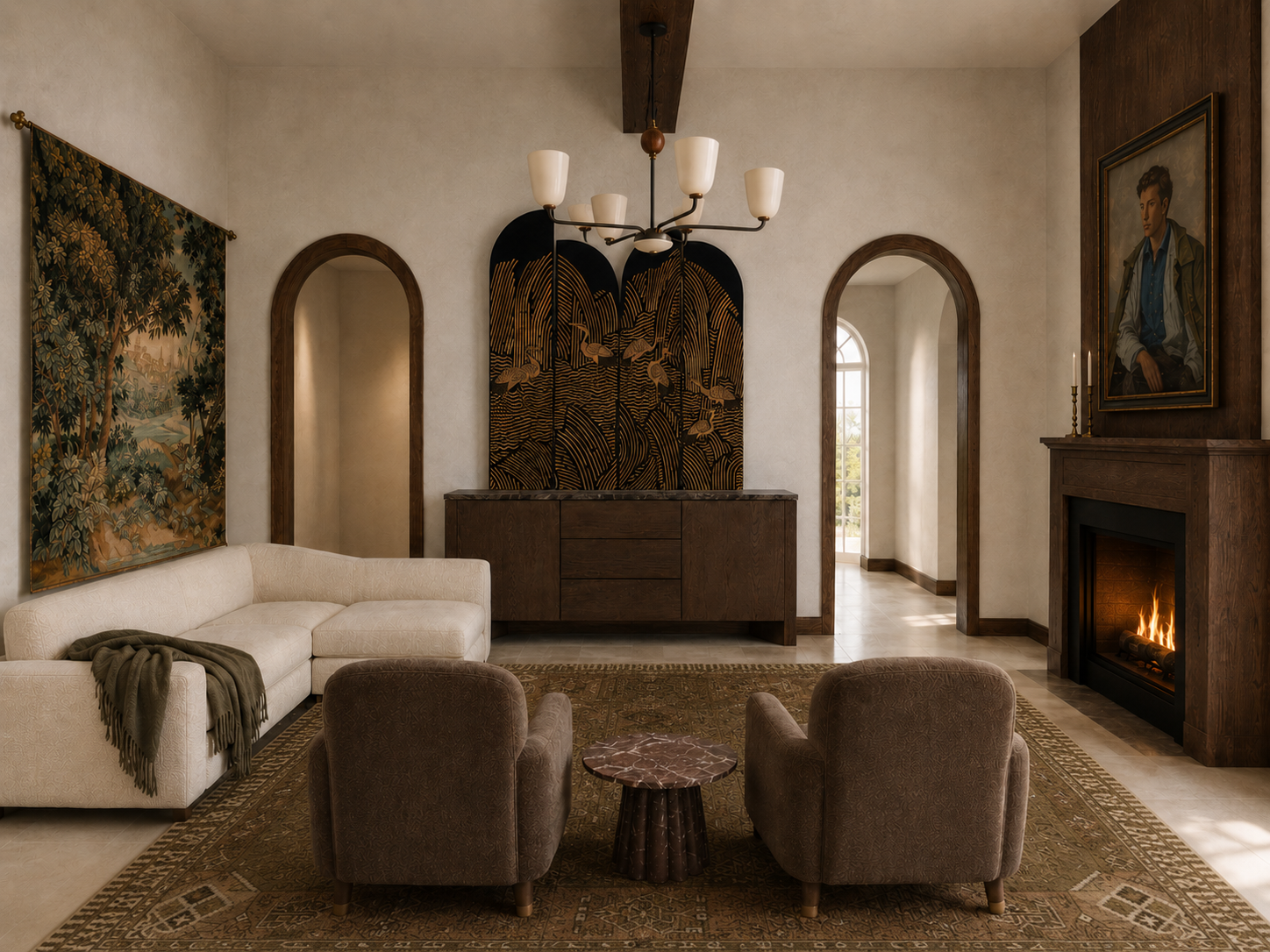
Fireplace:
A digital rendering showing a warm living room with a deep stained fireplace mantle.
How to Decide What Your Large Blank Wall Actually Needs
Does the room need a focal point? Consider oversized art, a mural, fireplace, or built-ins.
Does it need more architecture? Consider molding, cabinetry, or an architectural element.
Does it need function? Consider storage, a console, bookcases, or seating.
Does it feel visually cold? Consider textiles, wood, plants, or vintage pieces.
Does it need more light? Consider a mirror, picture lighting, or lamps.
Is the room already busy? Consider leaving the wall alone.
Before buying anything, identify why the wall feels unfinished. The best solution isn't necessarily the largest or most expensive one—it's the one that solves what's actually missing from the room.
Common Mistakes When Decorating a Large Blank Wall
Hanging art that's far too small for the wall or furniture beneath it.
Adding lots of tiny objects because one large piece feels intimidating.
Filling the wall without considering the rest of the room.
Ignoring the lower half of the wall when furniture could provide the missing visual weight.
Choosing something simply because it's large enough rather than because you actually love it.
Making every wall in the room compete for attention.
Forgetting that negative space is part of good design.
Conclusion: Don't Fill a Wall Just Because It's Empty
A large blank wall can feel intimidating, but the solution isn't necessarily to cover as much of it as possible. Sometimes it needs one oversized piece of art. Sometimes it needs furniture, architecture, texture, or storage. And sometimes it doesn't need anything at all.
Instead of asking, "What can I put on this wall?" ask what the room as a whole is missing. The best solution should feel connected to the furniture, architecture, scale, and personality of the space—not simply like something added to fill an empty spot.
