
How to Add Architectural Character to a Room
Introduction: Why Some Rooms Feel Special Before You Add Any Furniture
Some rooms feel interesting before a single piece of furniture is added. They have beautiful trim, interesting ceilings, substantial doors, built-ins, or other details that give the space a sense of history and personality. Other rooms are essentially a blank box—and no matter how beautiful the furniture is, something can still feel like it's missing.
Architectural character doesn’t require a historic home or an expensive renovation. You may be surprised to find you can add character fairly simply.
When a room feels flat or generic, the solution isn't always more furniture or décor. Sometimes what's missing is dimension in the architecture itself. The right architectural details can give a plain room depth, personality, and a sense of permanence—but the key is choosing additions that actually make sense for the home.
AFFILIATE DISCLOSURE: This post contains affiliate links. If you purchase through these links, I may earn a small commission at no additional cost to you. I only recommend products I genuinely love or would use in my own designs. This post is not sponsored, and all opinions are my own.
RENDERING DISCLAIMER: The images in this post are digital renderings created to illustrate my original design concepts. They are intended for inspiration and visualization and may not represent exact dimensions, materials, or construction details. See my full Disclosure & Disclaimer Policy for more information.
1. Doors & Trim:
Upgrade the Door and Window Trim
Trim can be one of the most overlooked architectural elements of a room, but your eyes will notice when it is forgotten. Even thin, relatively inexpensive trim can make a big difference. That being said, more substantial wood pieces make your home feel more custom.
Options include:
Wider door casing
More substantial window trim
Craftsman-style trim
Traditional profiles
Picture-frame casing
Decorative headers
Deep window stools and aprons
“Designer perspective:
One of the most effective ways to add architectural character is to pay attention to the things that are already there. Rather than adding an entirely new feature, sometimes simply giving existing doors and windows more substantial trim can completely change how finished the room feels.
Bigger isn’t automatically better. The scale and style of the trim should relate to the ceiling height, proportions, and overall architecture of the home.”
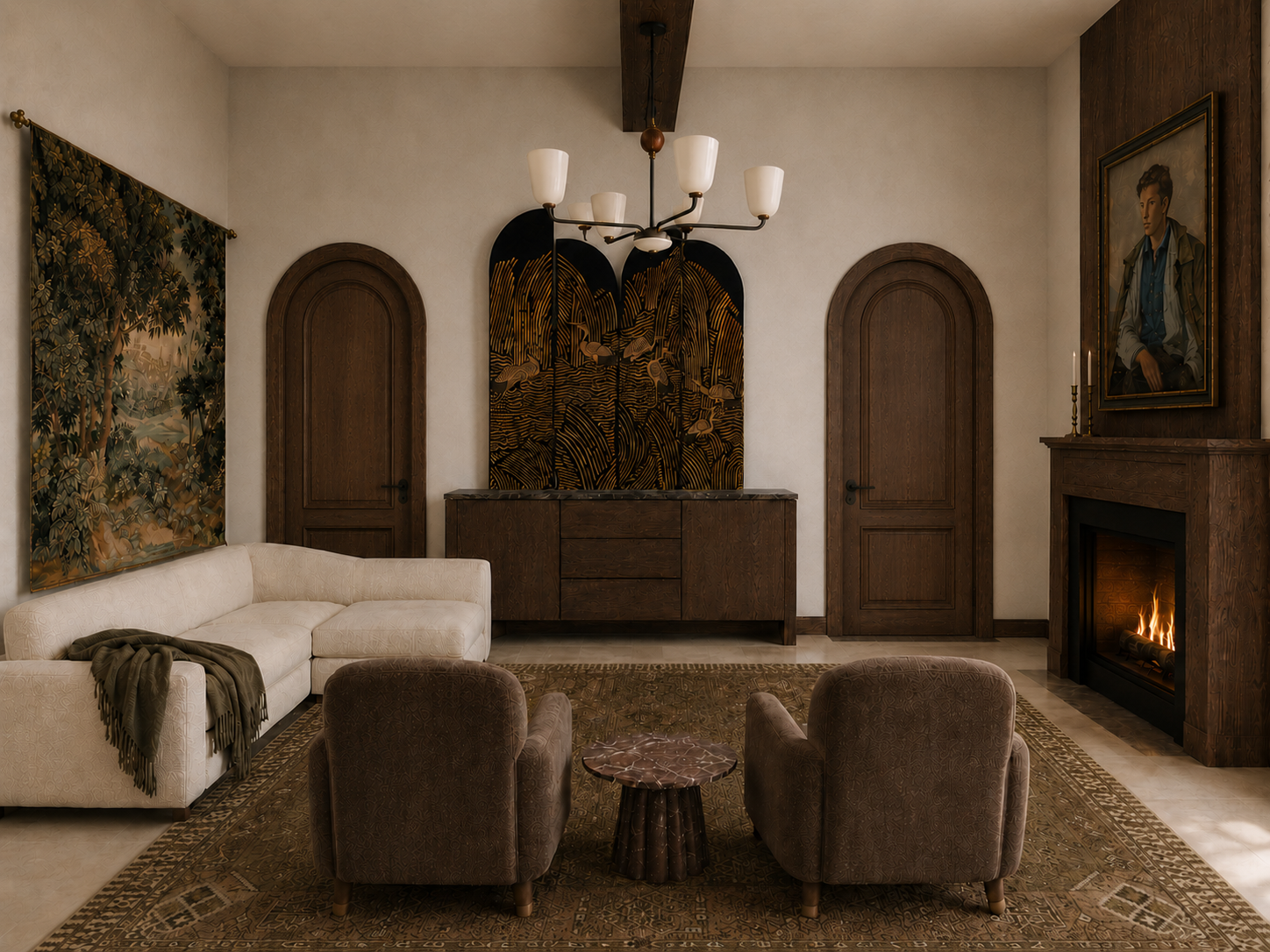
Custom Doors:
A digital rendering showcasing a warm design with custom arched walnut stained doors.
Transform a Basic Doorway or Opening
Taking out a door and making it a cased opening in areas that allow for it can open up the space and add interest in several ways. If you need to retain the doors themselves for privacy, consider some of these options to help customize the look of your doors.
Creating an arched doorway
Widening an opening
Raising the height of an opening
Adding substantial casing
Installing double doors
Adding a transom
Using glass doors
Adding pocket doors
Doorways are often treated purely as passages from one room to another, but their size, shape, and detailing have an enormous impact on how the architecture of a home feels.
An arched opening, for example, can add softness and character—but I'd caution against adding arches randomly:
Architectural details are most successful when they're repeated or supported elsewhere in the home. One isolated arch in an otherwise very angular house can sometimes feel more like an addition than an original feature.
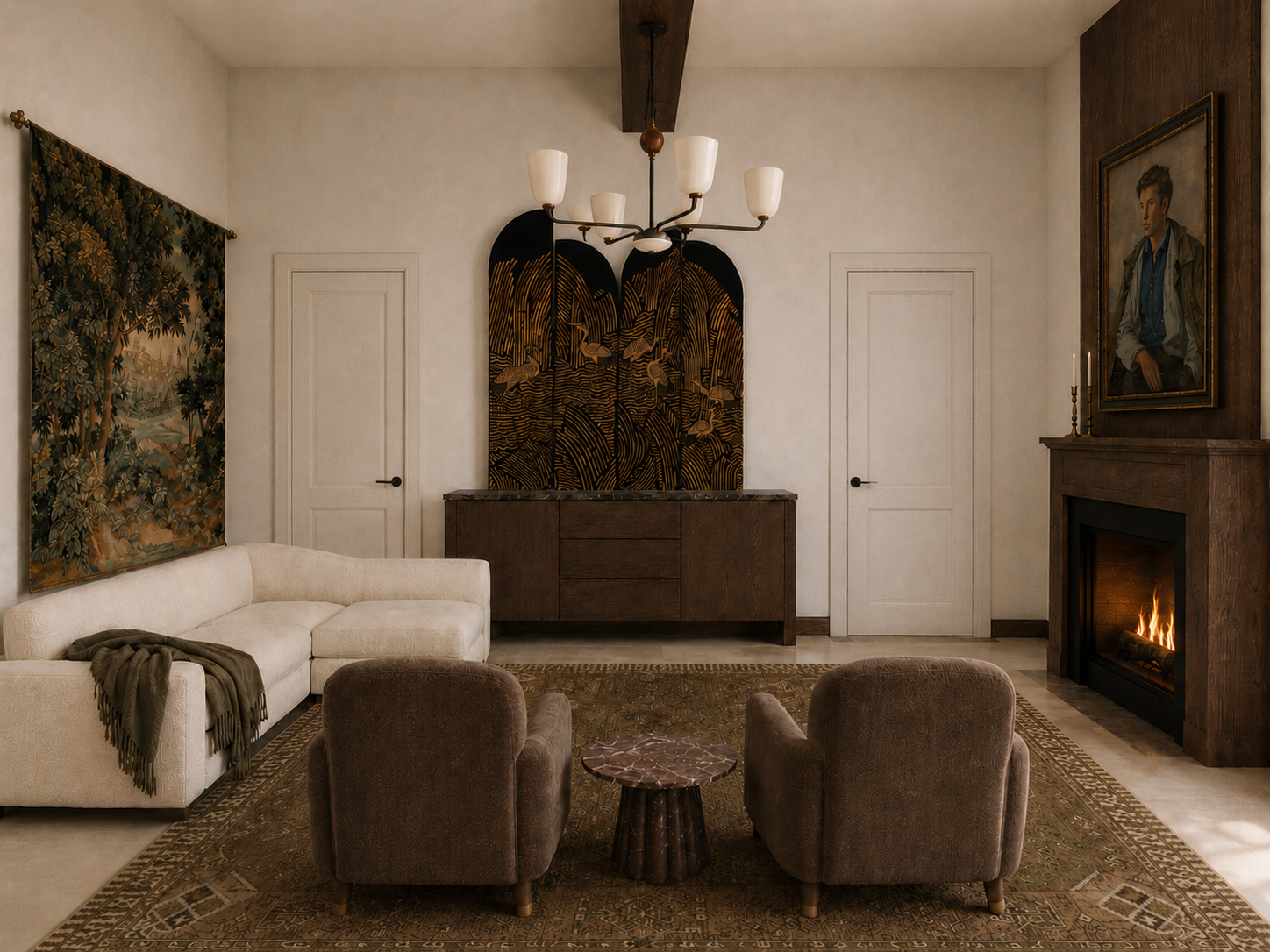
Standard Doors:
This is a digital rendering of the same living room to show the contrast of custom vs standard door design in this particular living room design .
Upgrade the Interior Doors
Doors take up a surprising amount of visual space, yet they're often overlooked.
Consider:
Solid wood doors
Paneled doors
Reeded-glass doors
French doors
Dutch doors
Pocket doors
Antique or salvaged doors
Adding molding to flat slab doors
Painting doors a contrasting color
And don't forget the hardware:
Knobs
Levers
Backplates
Hinges
A beautiful door is something you interact with every day. Upgrading a basic door—or even just its hardware—can add a layer of character that feels much more permanent than decorative accessories.
Add Transoms Above Doors- combine with door section
Transoms can be:
Clear glass
Frosted glass
Reeded glass
Stained or leaded glass
Operable or fixed
They can help:
Add architectural character
Make ceilings feel taller
Bring borrowed light into darker spaces
Give doorways more presence
This is especially good for older-home-inspired designs.
2. Add Picture-Frame Molding or Wall Paneling
This is probably one of the most popular ways to add architectural character right now. Some options for how to do this include:
Picture-frame molding
Applied box molding
Board and batten
Beadboard
Tongue and groove
Shiplap
Full-height paneling
Raised panels
Fluted wood
Not every type of wall paneling belongs in every house. Shiplap may feel natural in one home and completely out of place in another. The goal isn't simply to add texture—it's to choose a treatment that feels connected to the architecture and design direction of the space.
I have been loving using slatted or fluted wood panels recently to add depth with the stained wood but also texture.
Before installing wall molding, consider the location of windows, doors, outlets, switches, and furniture. Thoughtfully proportioned panels feel architectural; awkwardly divided boxes can make a wall feel busier rather than more refined.
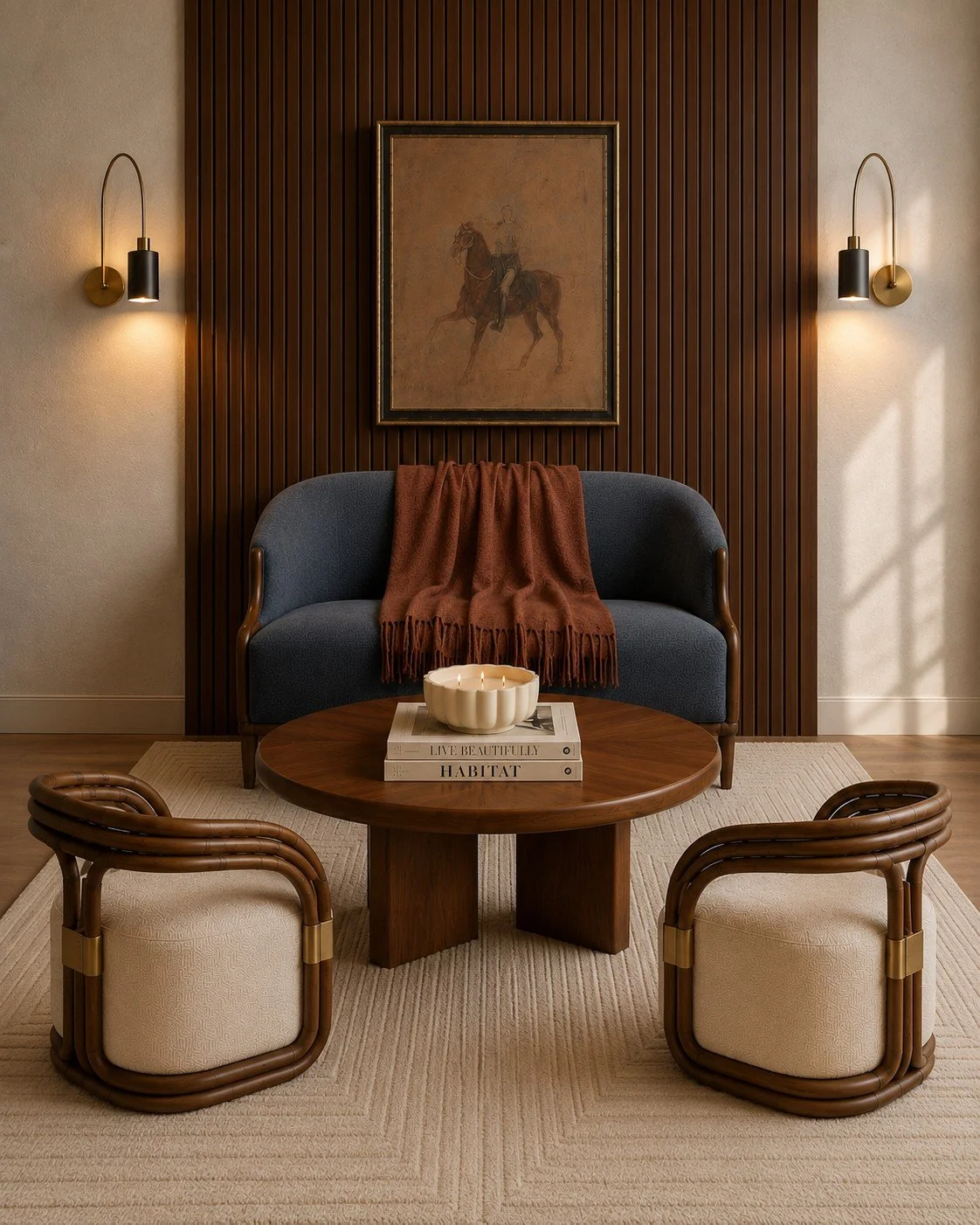
Wood Paneling:
A digital rendering showing a cozy living area with an accent fluted wood wall.
Base & Crown Molding
All of your molding should work together. For instance, your base shouldn’t be modern and sleek if you have a 12’’ crown with an ornate profile. Consider the following when considering new molding profiles:
Consider:
Baseboard height
Door casing width
Crown molding scale
Ceiling height
Existing architectural style
Trim shouldn't be selected one piece at a time. Baseboards, door casings, window trim, and crown molding should feel like parts of the same architectural language.
3. Look Up: Give the Ceiling Some Attention
A plain ceiling is a huge surface that's often completely ignored.
Ideas include:
Wood beams
Coffered ceilings
Tongue-and-groove paneling
Beadboard
Applied molding
Wallpaper
Limewash or plaster
A contrasting paint color
Ceiling medallions
Tray ceiling enhancements
We tend to think about the four walls of a room while forgetting the fifth wall entirely. In the right space, adding detail to the ceiling can completely change the architecture of the room.
A ceiling treatment should respond to the size, height, and style of the room. Heavy beams that look beautiful in a vaulted living room may overwhelm a smaller space with eight-foot ceilings.
I also talked about ceiling design in my Unexpected Ways to Make Your Home Feel More Custom post.
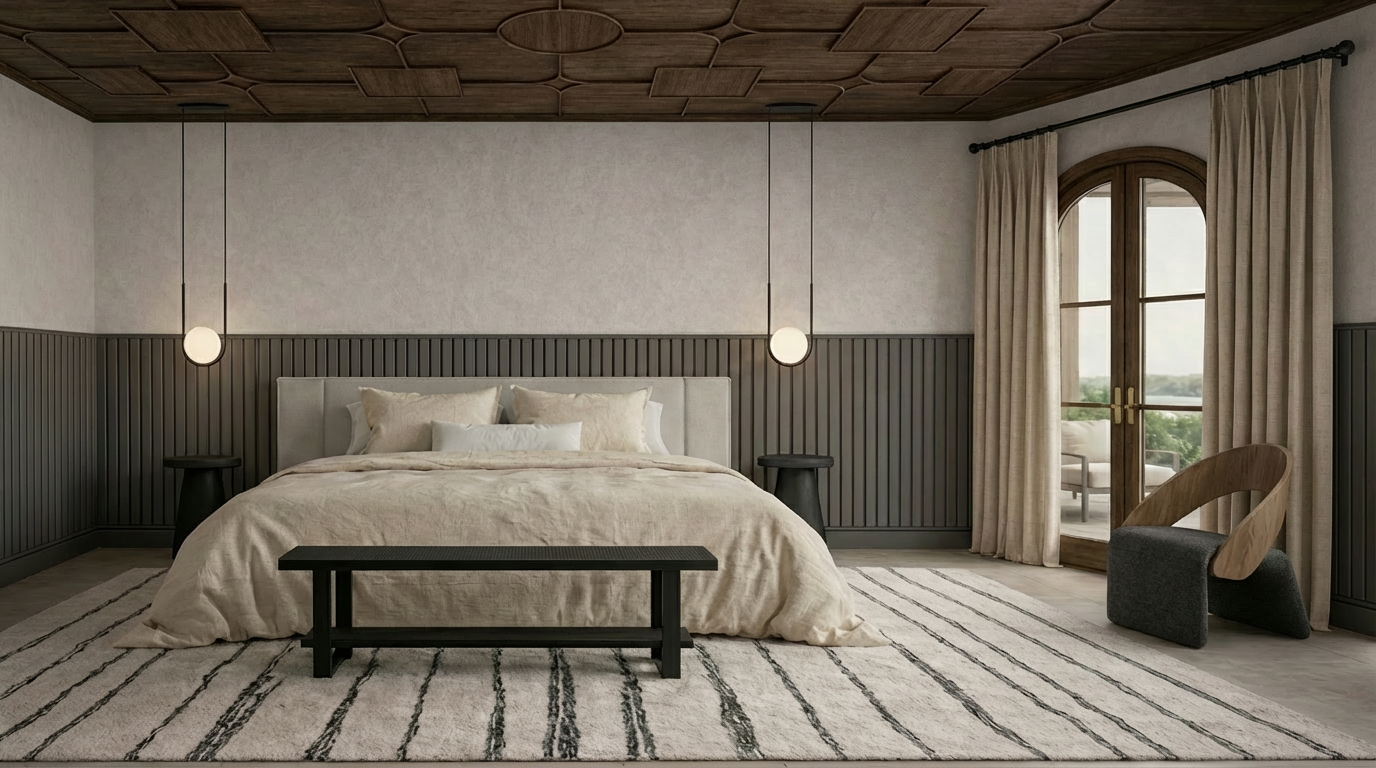
Ceiling Design:
A digital rendering showing a large bedroom with a custom stained and paneled ceiling.
Add a Ceiling Medallion- combine with ceiling section
A ceiling medallion can:
Give a chandelier more presence
Add historic character
Make a simple ceiling feel more intentional
Work in both traditional and eclectic spaces
A ceiling medallion is one of those small details that can make a light fixture feel as though it truly belongs to the architecture rather than simply being attached to the ceiling.
And importantly, medallions don't have to be extremely ornate. There are simple profiles that work in more contemporary interiors.
4. Built-Ins
Add Built-In Cabinetry or Bookshelves
Well designed built-ins can transform your room in the best way possible. They add an element of custom design and can transform the functionality of the space to meet your personal needs.
Ideas include:
Floor-to-ceiling bookcases
Cabinets surrounding a fireplace
Window seats with storage
Dining room cabinetry
Built-in desks
Library walls
Media cabinetry
Display niches
When designing built-ins, there are some details that take appearance to the next level. I have listed a few of those opportunities below:
Continuing baseboards across the cabinetry where appropriate
Relating crown molding to the rest of the room
Taking cabinetry to the ceiling
Considering the proportions of open shelves versus closed storage
Integrating lighting
Matching or thoughtfully coordinating door styles and hardware
“Designer Tip:
The most convincing built-ins don’t look like furniture that was pushed against a wall. They look as though the room was designed around them.”
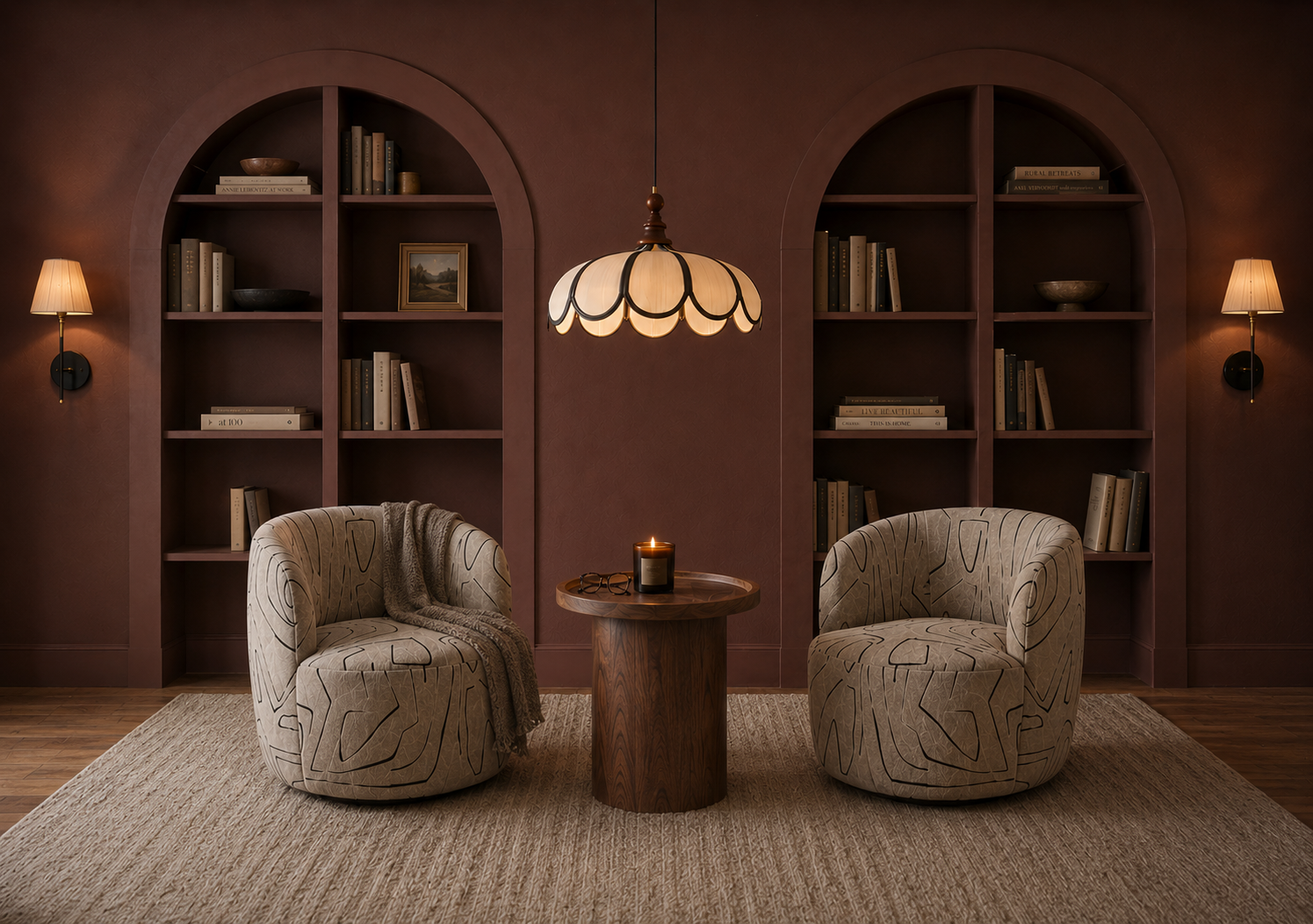
Built-Ins
A digital rendering showing a cozy reading room with built-in arched bookshelves.
Add a Window Seat or Built-In Bench
This is both architectural and functional.
It can work:
Beneath a large window
In a bay window
At the end of a hallway
In a breakfast nook
On a stair landing
Between two built-ins
A built-in bench can make an awkward or overlooked area feel purposeful. When it's thoughtfully integrated with the surrounding trim, cabinetry, or windows, it can look like an original part of the house. Benches can also add an element of softness with the help of upholstery.
Another added bonus to using a built-in bench is the option to include storage under/ inside the bench itself.
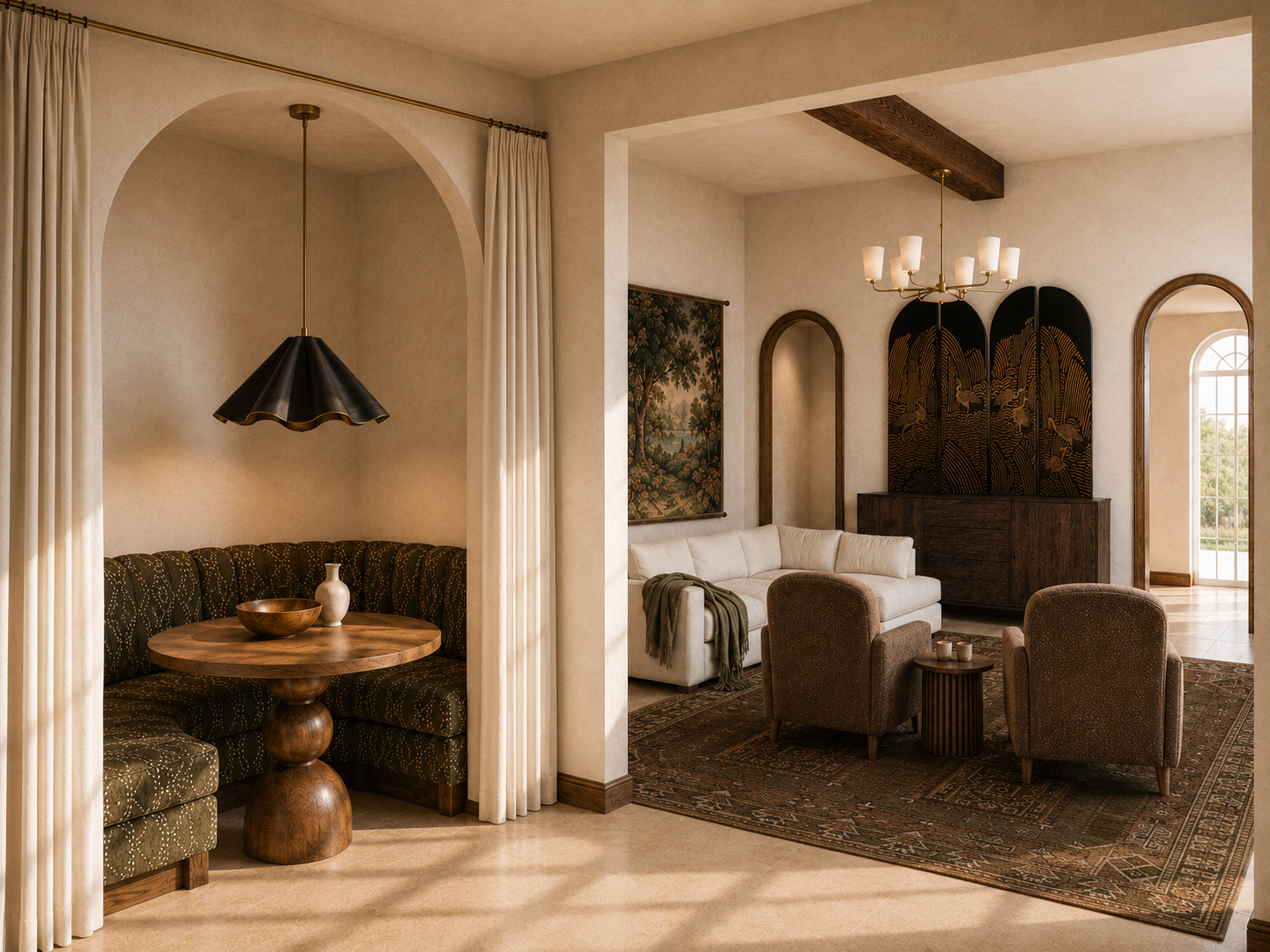
Built-In Bench
A digital rendering showing a built-in dining bench nook.
Create a Niche or Recessed Display Area
Wall niches can add depth without taking up floor space.
Options include:
Arched niches
Recessed shelving
Shower niches beyond purely functional applications
Art niches
Small display alcoves
Recessed bars
A niche becomes particularly effective when it's treated as a deliberate design moment—with a contrasting material, special finish, integrated lighting, or a carefully chosen piece of art.
For more tips on lighting, See my post on 7 Places to Add Lighting to Your Home here
5. Make the Fireplace Feel Like Part of the Architecture
If the room already has a fireplace, it may simply need more presence.
Options include:
Extending stone or tile to the ceiling
Adding a substantial mantel
Using plaster
Creating a full fireplace wall
Adding cabinetry or shelves around it
Installing an antique mantel
Adding wall molding above it
Or, in the right space, a decorative non-functioning mantel can add character even without an actual fireplace.
A fireplace is often the natural focal point of a room, but a small, builder-grade surround can feel disconnected from the scale of the wall around it. Giving the fireplace greater architectural presence can help anchor the entire room.
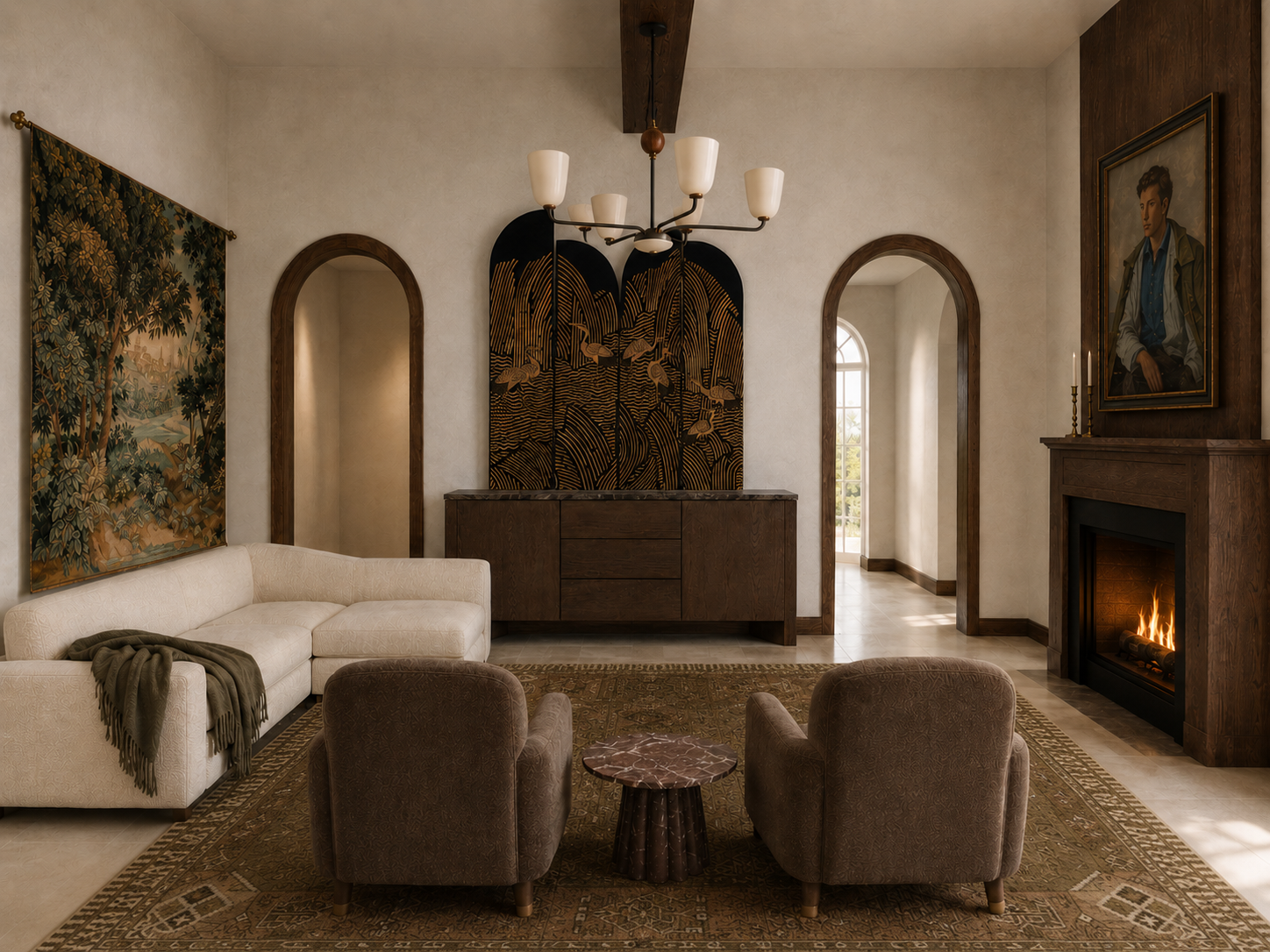
Fireplace Design:
A digital rendering showcasing a beautiful fireplace with mantle and chimney that extend a rich wood panel up to the ceiling.
6. Use Plaster, Limewash, or Another Dimensional Wall Finish
Architectural character doesn't always have to come from added trim.
Options include:
Venetian plaster
Limewash
Roman clay
Textured plaster
A dimensional wall finish can add subtle movement and depth without introducing another pattern or decorative object. This can be particularly effective in rooms where you want character without a lot of visual clutter.
Application method matters and that some finishes are best professionally installed. I recommend looking for someone certified in the craft.
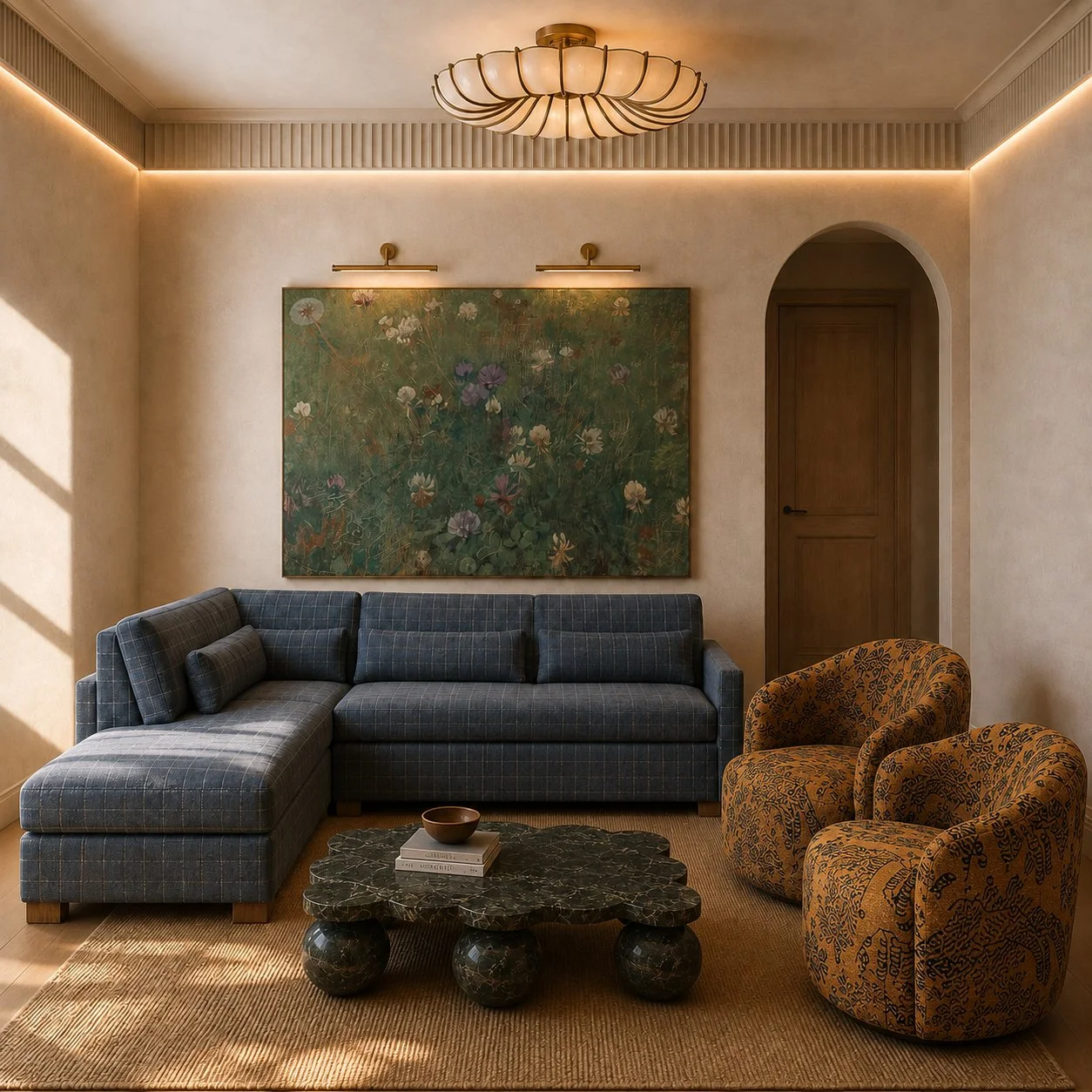
Limewash Plaster:
A digital rendering showing the texture of a limewash plaster wall throughout a small family room.
How to Choose the Right Architectural Details for Your Home
There was a lot of information in this post, and it can be difficult to decide what elements you should take to your design project. Consider the following when thinking about architectural details:
Ask:
What architectural style is the home?
When was it built?
What details already exist?
What's the ceiling height?
How large is the room?
Are there details that could be repeated elsewhere?
Does the addition feel permanent and intentional—or trendy and applied?
Then Think:
The goal isn't to add as many architectural details as possible. It's to identify what's missing and add the few details that make the room feel more complete.
If your home has no strong architectural style, you have more flexibility—but consistency becomes even more important. Choose a design language and repeat it thoughtfully throughout the home.
Common Mistakes When Adding Architectural Character
Adding too many different architectural styles. A farmhouse shiplap wall, ornate Victorian molding, and ultra-modern slatted partition may all be beautiful individually but not necessarily together.
Ignoring proportion. Oversized molding can overwhelm a small room, while tiny trim may disappear in a large one.
Adding details without a reason. Architectural elements are most convincing when they seem to serve a purpose.
Following trends without considering the home. Just because a treatment is popular doesn't mean it belongs in every house.
Forgetting transitions between rooms. A dramatically detailed room can feel disconnected if nothing relates it to the adjacent spaces.
Trying to make every surface special. Architectural character needs quiet areas to be appreciated.
Treating the architecture and furniture as separate decisions. The best rooms consider both together.
Conclusion: Character Should Feel Like It Belongs
Adding architectural character isn't about covering every wall with molding or adding decorative details everywhere you can. The most successful spaces are often the ones where a few thoughtful architectural elements make the entire room feel more complete.
Start by looking at what's already there. Could the windows use more substantial trim? Does a large blank wall need built-ins rather than more artwork? Would changing a basic doorway transform the way two rooms relate to one another?
The goal is to add details that feel connected to the home—as though they could have always been there.
Have a room that feels flat or unfinished, but you're not sure what it's missing? I offer professional interior design services to help create thoughtful spaces with character, function, and details that feel right for the home.
