
Crown Molding: Is It Worth It?
Introduction
AFFILIATE DISCLOSURE: This post contains affiliate links. If you purchase through these links, I may earn a small commission at no additional cost to you. I only recommend products I genuinely love or would use in my own designs. This post is not sponsored, and all opinions are my own.
RENDERING DISCLAIMER: The images in this post are digital renderings created to illustrate my original design concepts. They are intended for inspiration and visualization and may not represent exact dimensions, materials, or construction details. See my full Disclosure & Disclaimer Policy for more information.
What Is Crown Molding?
Crown molding is an architectural trim installed where the walls meet the ceiling. Rather than allowing the two surfaces to end at a simple 90-degree corner, crown molding creates a finished transition that adds depth, dimension, and architectural character to a room.
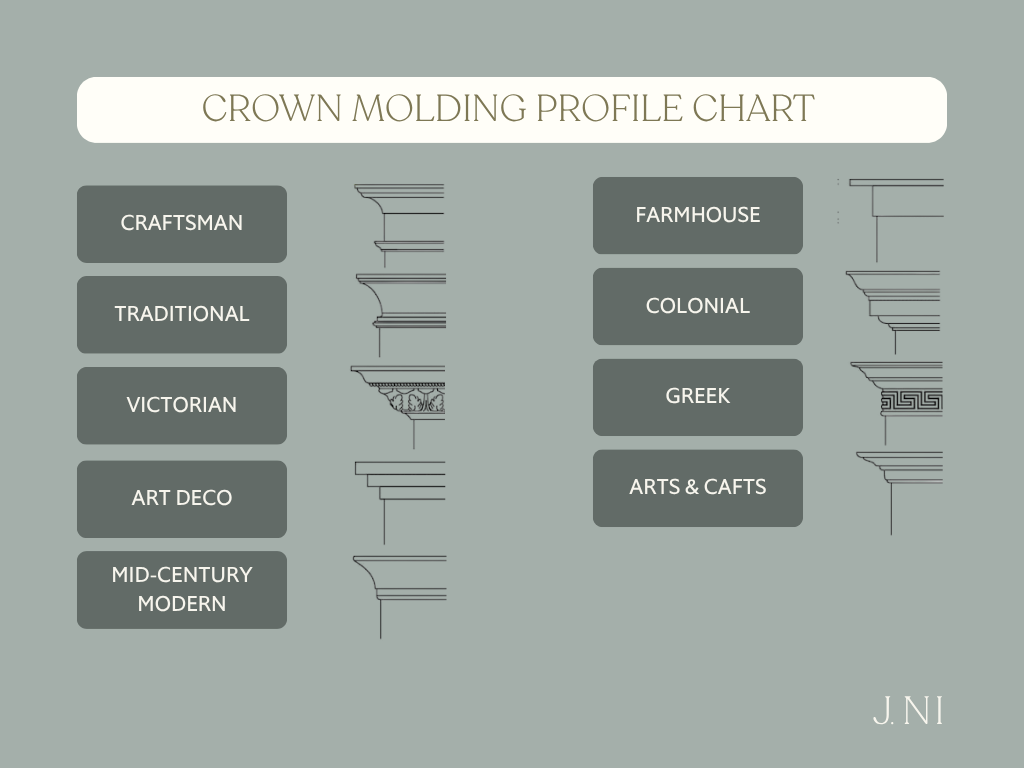
Crown molding comes in many different profiles, from simple, narrow designs with clean lines to large, highly detailed moldings made up of several layers. The appropriate style and scale usually depend on the room’s ceiling height, architecture, and overall design style.
Where Is Crown Molding Installed?
Crown molding is most commonly installed around the perimeter of a room at the ceiling line, but the concept isn’t limited to walls and ceilings. Crown-style molding can also be used at the tops of cabinetry, built-ins, bookcases, fireplace surrounds, and other architectural elements.
In some homes, what appears to be one substantial piece of crown molding is actually a combination of several different trim profiles layered together to create a larger, more elaborate architectural detail.
Crown Molding Has a Purpose Beyond Decoration
Today, crown molding is often added because it makes a room feel more finished, but historically architectural moldings also served practical purposes.
The transition between a wall and ceiling isn’t always perfectly straight or seamless. Crown molding can conceal small irregularities, gaps, and imperfections where the two surfaces meet while creating a cleaner visual transition.
It can also change the way we perceive the proportions of a room. Crown molding draws attention to the ceiling line and creates a clear architectural boundary between the walls and ceiling. When appropriately scaled, it can make an otherwise plain room feel more substantial and intentionally designed.
Why Crown Molding Became a Classic Architectural Detail
Decorative moldings have roots in classical Greek and Roman architecture, where carefully proportioned cornices and other architectural details were used to create hierarchy, shadow, and visual transitions between different parts of a building.
These classical ideas influenced European architecture for centuries and eventually became prominent in American architectural styles as well. During periods such as the Georgian, Federal, Greek Revival, and Victorian eras, interior moldings were frequently used to give rooms greater architectural definition and formality.
As building methods changed, crown molding became available in an increasingly wide variety of materials and styles, allowing the detail to appear in everything from elaborate historic homes to relatively modest houses.
That’s part of the reason crown molding has remained so enduring. It isn’t simply a decorative trend—it’s a modern interpretation of an architectural detail that has been used for centuries to create proportion, transition, and visual hierarchy.
And while crown molding can make a room feel more finished, that doesn’t mean every room needs it. The key is choosing molding that makes sense for the architecture, ceiling height, scale, and style of the home rather than adding it simply because a room feels unfinished.
When Crown Molding Is Worth the Investment
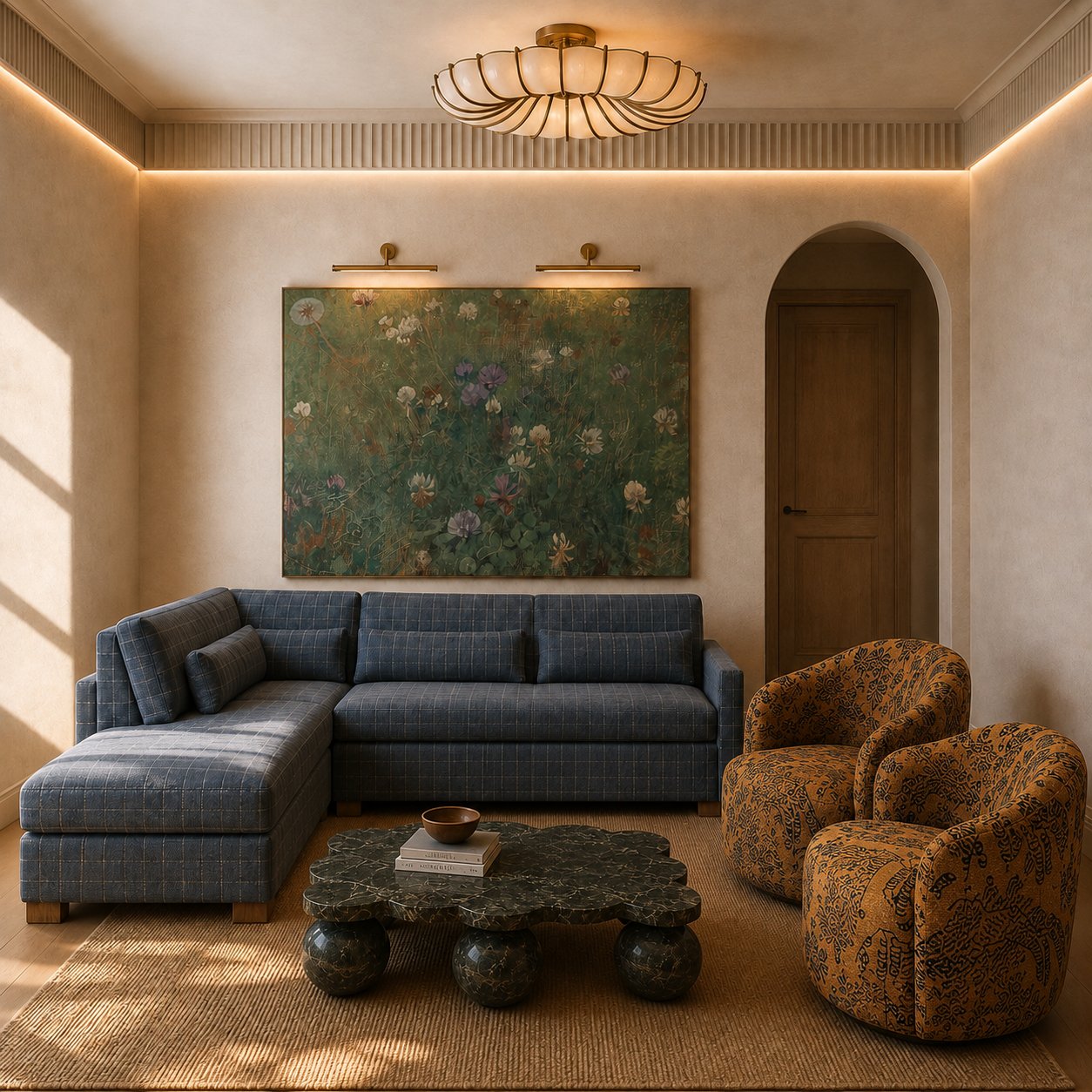
Crown molding isn’t necessary in every home, but there are certain situations where the investment can have a particularly noticeable impact. Because it adds architectural detail rather than simply another layer of decoration, crown molding can make a relatively simple room feel more finished, intentional, and established.
You’re Building or Remodeling
If you’re already building or renovating, this is one of the best times to consider crown molding. The room is already under construction, contractors and finish carpenters may already be working on-site, and the molding can be incorporated into the overall design rather than added as an afterthought.
Planning it early also gives you the opportunity to coordinate the crown with baseboards, window and door casings, cabinetry, ceiling details, and other millwork so the trim package feels cohesive throughout the home.
You Have Standard Builder-Grade Finishes
Crown molding can have an especially noticeable impact in rooms that otherwise have very little architectural detail.
A basic room with drywall, simple baseboards, and standard doors may feel somewhat flat even after it’s beautifully furnished. Adding appropriately scaled crown molding introduces another architectural layer and can make the room feel more custom without requiring major structural changes.
This is where crown molding can provide a lot of visual impact for the amount of construction involved.
Your Ceilings Are 9 Feet or Taller
Higher ceilings provide more visual space for substantial molding.
With 9-foot, 10-foot, or taller ceilings, a properly scaled crown profile can help connect the walls and ceiling while giving the upper portion of the room more architectural presence. Taller ceilings can also accommodate larger or layered molding profiles that might overwhelm a smaller room.
That doesn’t mean crown molding can’t work with an 8-foot ceiling—it absolutely can. It simply means scale becomes especially important. A molding that looks elegant in a room with 10-foot ceilings may feel disproportionately large when installed in a room with much lower ceilings.
You Want a More Timeless Look
Crown molding has been used in architecture for centuries, which gives it a sense of permanence that many decorative trends don’t have.
If you’re trying to create a home that feels classic, traditional, transitional, or architecturally established, crown molding can reinforce that direction. Even relatively simple profiles can add character without making a room feel overly ornate.
The key is choosing a profile that relates to the architecture of the home. Crown molding itself is timeless; the wrong style or proportion can still feel out of place.
You’re Improving Resale Appeal
Crown molding can also be worthwhile when you’re making thoughtful improvements with resale in mind. Buyers may not walk into a room specifically looking for crown molding, but architectural details can contribute to the overall impression that a home feels finished, upgraded, and well considered.
It’s unlikely that crown molding alone will dramatically increase a home’s value, so it shouldn’t be treated as a guaranteed dollar-for-dollar return on investment. Its value is more often part of the home’s overall presentation.
This is particularly effective when the molding complements other improvements rather than standing alone. Updated trim, cohesive paint, quality lighting, well-designed cabinetry, and crown molding can collectively make a builder-grade interior feel considerably more elevated.
Ultimately, crown molding is most worth the investment when it supports the architecture that’s already there—or helps create architectural character where very little exists. The goal isn’t simply to add more trim. It’s to make the room feel as though the detail belongs there.
When You Might Skip Crown Molding
Crown molding can add beautiful architectural character, but leaving it out isn’t necessarily a missed opportunity. In some rooms, a simple transition between the walls and ceiling is actually the more appropriate design choice.
The decision should ultimately come down to the home’s architecture, proportions, design style, and budget—not the idea that every finished room needs crown molding.
You Have Very Low Ceilings
Crown molding takes up visual space at the top of the wall, so proportion becomes particularly important in rooms with low ceilings.
A large or elaborate crown profile can make a low ceiling feel more noticeable rather than improving the room. While a small, simple molding can still work with an 8-foot ceiling, there are situations where leaving the ceiling line clean creates a lighter, less crowded appearance.
If you do want crown molding with lower ceilings, choosing the correct scale is often more important than the molding itself.
Your Interior Is Extremely Modern or Minimalist
Crown molding isn’t automatically appropriate simply because it adds architectural detail.
Many modern and minimalist interiors intentionally emphasize clean planes, simple transitions, and minimal ornamentation. In these spaces, a traditional crown profile can interrupt the simplicity that makes the architecture successful.
Some contemporary homes use very simple trim profiles, shadow reveals, or other subtle ceiling transitions instead. Others intentionally allow the drywall to meet the ceiling without additional trim.
In those cases, the absence of crown molding is part of the design.
You’re Working With a Tight Renovation Budget
If your renovation budget is limited, crown molding may not be where your money makes the biggest difference.
Before investing in decorative millwork, consider whether the room needs improvements to its lighting, flooring, cabinetry, paint, window treatments, or other more prominent elements. Those changes may have a much greater effect on how the room looks and functions.
Crown molding can always be added later, making it an easier item to postpone when more important improvements need to take priority.
The Molding Would Have Little Visual Impact
Not every room provides a great opportunity for crown molding.
A small secondary space, a room with complicated ceiling conditions, or an area where the ceiling line is largely interrupted by cabinetry or other architectural elements may not benefit enough to justify the additional expense.
When deciding where to invest, consider how visible the molding will actually be and how much it contributes to the overall composition of the room.
Your Home Has Intentionally Simple Architecture
One of the biggest mistakes with architectural details is assuming that adding more of them automatically makes a home look more expensive.
It doesn’t.
If your home’s architecture was intentionally designed to be simple, adding elaborate crown molding can sometimes feel disconnected from everything around it. Crown molding should relate to the home’s baseboards, casings, doors, ceiling heights, cabinetry, and overall architectural language.
A simple home can be beautifully designed precisely because of its restraint.
Ultimately, crown molding is an option, not a requirement for a finished-looking room. In the right setting, it can add depth, character, and a sense of permanence. In another, a clean wall-to-ceiling transition may be the stronger design decision.
The goal isn’t to add crown molding wherever possible. It’s to determine whether it makes the architecture better.
Choosing the Right Crown Molding Style
Choosing crown molding isn’t just about finding a profile you like. The molding should feel connected to the architecture of the home, the other trim details, and the overall design style of the room.
A highly ornate crown can feel out of place in a simple contemporary home, while an extremely minimal profile may not have enough presence in a traditional room filled with substantial millwork. The goal is to choose a crown that looks like it could have been part of the home’s original architectural plan.
Traditional Cr own Molding Profiles
Traditional crown molding typically incorporates curves, steps, decorative edges, and more detailed profiles. Some installations combine multiple pieces of trim to create a larger, more substantial cornice.
These profiles work particularly well with architectural styles such as:
Colonial
Georgian
Federal
Greek Revival
Victorian
Traditional
French-inspired interiors
Traditional crown molding can also complement rooms with paneled walls, decorative fireplace surrounds, substantial window and door casings, ceiling medallions, or other classical details.
The more elaborate the architecture, the more detailed the crown can generally become without feeling excessive.
Transitional Crown Molding Profiles
Transitional crown molding falls somewhere between ornate traditional profiles and extremely simple modern ones.
You’ll still see some curvature and dimension, but the profile is typically cleaner and less decorative. This makes transitional crown one of the most versatile options, particularly in homes that combine traditional architecture with more contemporary furnishings.
It works especially well with:
Transitional interiors
Updated traditional homes
New construction
Modern farmhouse
Some coastal interiors
Homes with simple but substantial millwork
If you want crown molding to add architectural character without becoming a major decorative feature, a transitional profile is often a good place to start.
Modern Square Profiles
Modern interiors generally call for much simpler architectural details.
Instead of a deeply curved traditional crown, a modern room might use flat stock, stepped square profiles, or very simple geometric molding to create definition at the ceiling line.
These profiles complement:
Contemporary architecture
Modern interiors
Midcentury-inspired spaces
Minimalist homes
Some Scandinavian-inspired interiors
In a modern room, the goal is usually to create a crisp architectural transition rather than decorative ornamentation.
And in very minimalist architecture, you may decide to eliminate crown molding altogether.
Craftsman Crown Molding
Craftsman-style molding is generally characterized by straight lines, substantial proportions, and simple construction rather than ornate curves and decorative carving.
Instead of relying on one elaborate molding profile, Craftsman trim can be created by layering relatively simple pieces of flat or geometric trim.
It works particularly well in:
Craftsman homes
Bungalows
Arts and Crafts architecture
Some farmhouse interiors
Because Craftsman architecture places so much emphasis on craftsmanship and visible construction, the molding should feel substantial but straightforward.
Pair it with similarly simple door casings, window trim, baseboards, and built-ins so the entire trim package speaks the same architectural language.
Cove Molding
Cove molding has a concave curved profile that creates a softer transition between the wall and ceiling.
Unlike traditional crown molding, which often projects outward and incorporates several curves or decorative details, cove molding can be relatively understated.
Depending on its scale and detailing, it can complement:
Traditional interiors
Transitional interiors
Art Deco-inspired spaces
Midcentury interiors
Contemporary rooms
Rooms with curved architectural elements
A simple cove can be particularly useful when you want to soften the wall-to-ceiling transition without introducing a highly decorative crown profile.
Match the Crown to the Architecture
Rather than choosing crown molding in isolation, look at the other architectural details already present in the room.
Consider the baseboards, window and door casings, cabinetry, interior doors, fireplace, ceiling height, and any existing wall paneling or millwork. These elements should feel related even if they aren’t identical.
For example, delicate crown molding paired with extremely substantial baseboards may feel visually unbalanced. Likewise, an elaborate classical crown can look strange above very simple contemporary doors and trim.
You also don’t need to choose the most decorative profile available to make a room feel expensive. In many homes, a simple, appropriately scaled crown molding looks more sophisticated than an elaborate profile that doesn’t relate to the architecture.
The best crown molding is often the one you notice as part of the room rather than as a separate decorative feature.
Choosing the Right Size
Choosing the right crown molding isn’t only about finding a style that complements your home. Scale is just as important as the profile itself.
Crown molding that’s too small can disappear in a large room, while molding that’s too substantial can overwhelm lower ceilings or simpler architecture. Ceiling height is a useful starting point, but room size, existing trim, window and door heights, and the overall level of architectural detail should also influence your decision.
Crown Molding for 8-Foot Ceilings
With 8-foot ceilings, crown molding generally looks best when it stays relatively restrained.
A crown around 2½ to 4 inches is often a good starting range. This provides enough definition to finish the ceiling line without taking up too much of the wall visually.
You can occasionally go larger, particularly in a traditional home where substantial millwork is already part of the architecture, but be careful with oversized or heavily layered profiles. Too much molding can make an 8-foot ceiling feel crowded.
If your goal is simply to give a builder-grade room more architectural character, a simple 3- to 4-inch crown can make a surprisingly noticeable difference.
Crown Molding for 9-Foot Ceilings
Nine-foot ceilings provide more flexibility and can usually support a more substantial profile.
A crown around 4 to 6 inches is a useful starting point for many rooms with 9-foot ceilings. You have enough height to introduce more depth and detail without the molding dominating the room.
This is also where layered crown treatments can begin to work particularly well. Combining crown with another small molding or piece of flat stock can create the appearance of a larger architectural cornice.
Crown Molding for 10-Foot Ceilings
With 10-foot ceilings, undersized molding can become just as problematic as oversized molding.
A tiny crown at the top of a tall wall may look insignificant and out of proportion to the room. Profiles around 5 to 8 inches or more can often work well, depending on the architecture and size of the space.
Large rooms with 10-foot or taller ceilings can also support built-up crown molding, where multiple pieces of trim are layered together to create a deeper and more substantial treatment.
This doesn’t mean every 10-foot ceiling needs enormous molding. A contemporary or transitional home may still call for a relatively simple profile—the difference is that the profile can be simple in style while still substantial in scale.
Crown Molding With Vaulted Ceilings
Vaulted ceilings require a little more consideration because there isn’t always a straightforward horizontal wall-to-ceiling transition.
Crown molding can sometimes be installed successfully along vaulted or sloped ceilings, but the changing angles make installation more complicated. Depending on the architecture, crown may also emphasize awkward transitions rather than improving them.
Before adding crown to a vaulted room, look at the ceiling as an architectural feature in its own right. In some spaces, molding can beautifully define the shape of the ceiling. In others, leaving the ceiling line clean allows the height and geometry of the room to become the focal point.
You might also use crown molding selectively—for example, around the horizontal portions of the room or on surrounding walls—rather than forcing it along every slope.
Why Scale Matters as Much as Style
You can choose the perfect crown molding style for your home and still end up with a result that feels wrong if the proportions aren’t right.
Think about crown molding as part of the room’s overall trim hierarchy. The crown, baseboards, door casings, window casings, cabinetry, and ceiling height should visually relate to one another.
A room with tall ceilings, large windows, substantial doors, and wide baseboards can usually support a larger crown. A smaller room with low ceilings and delicate trim often needs something much more restrained.
And remember that the measurements above are starting points rather than strict rules. Two rooms with the same ceiling height can need completely different crown molding depending on their proportions and architecture.
Before committing, consider purchasing a sample or cutting a short piece of the molding and holding it against the ceiling. Seeing the profile at its actual scale in the room is much more useful than judging it from a small sample or product photo.
Ultimately, the goal is for the crown molding to feel proportional enough that it looks like part of the architecture—not something that was simply added around the ceiling afterward.
Where Crown Molding Makes the Biggest Difference
You don’t necessarily need crown molding in every room for it to make an impact. If you’re working with a limited budget, it often makes more sense to prioritize the most visible and architecturally important spaces in the home.
The rooms where you spend the most time—or the ones guests see first—are generally where crown molding provides the greatest visual return.
Living Rooms
Living rooms are one of the best places to invest in crown molding because they’re typically large, highly visible, and centrally located within the home.
Crown molding can help frame the room, emphasize the ceiling height, and create a finished transition between the walls and ceiling. It can be particularly effective when paired with other architectural elements such as a fireplace, built-ins, wall paneling, or substantial window and door casings.
In an otherwise simple living room, crown molding can provide just enough architectural detail to make the space feel more established.
Dining Rooms
Dining rooms naturally lend themselves to architectural detailing.
Because these spaces are often slightly more formal, crown molding can complement features such as wainscoting, picture-frame molding, chair rails, wallpaper, decorative lighting, or ceiling medallions.
If you’re creating a more traditional or transitional dining room, crown molding can also help visually connect wall treatments to the ceiling and make the entire room feel more intentional.
Primary Bedrooms
A primary bedroom is another space where crown molding can make a noticeable difference, particularly if you’re trying to create a room that feels finished, calm, and elevated.
You don’t necessarily need an elaborate profile. A relatively simple crown can define the perimeter of the room and add subtle architectural character without competing with the furnishings.
In bedrooms with taller ceilings, crown molding can also help bring the scale of the room down slightly and create a stronger sense of enclosure.
Home Offices
Home offices are sometimes overlooked when it comes to architectural details, but crown molding can be especially effective if the room includes built-in cabinetry, bookshelves, paneled walls, or a substantial desk arrangement.
The molding can help visually connect those elements and make the office feel more like a deliberately designed room rather than a spare bedroom that happens to contain a desk.
If your office is visible from the main living areas of the home, maintaining the same trim language can also create better continuity between spaces.
Kitchens
Crown molding can have a significant impact in kitchens, particularly when it relates to the cabinetry.
Cabinets that extend to or near the ceiling can often be finished with crown molding to create a more built-in appearance. In other kitchens, crown molding may continue around the perimeter of the room, helping visually connect the cabinetry to the surrounding architecture.
The important thing is to coordinate the cabinet crown and architectural crown rather than selecting them independently. Their proportions and profiles don’t necessarily have to match, but they should look intentional together.
Entryways
The entryway establishes the architectural language for the rest of the home, which makes it another strong place to consider crown molding.
Even a relatively small foyer can benefit from a well-scaled crown, particularly when it’s combined with wall paneling, substantial door casings, an interesting light fixture, or other millwork.
Because this is one of the first spaces you and your guests experience, a relatively small architectural improvement can influence the impression of the home as a whole.
Where Crown Molding May Be Unnecessary
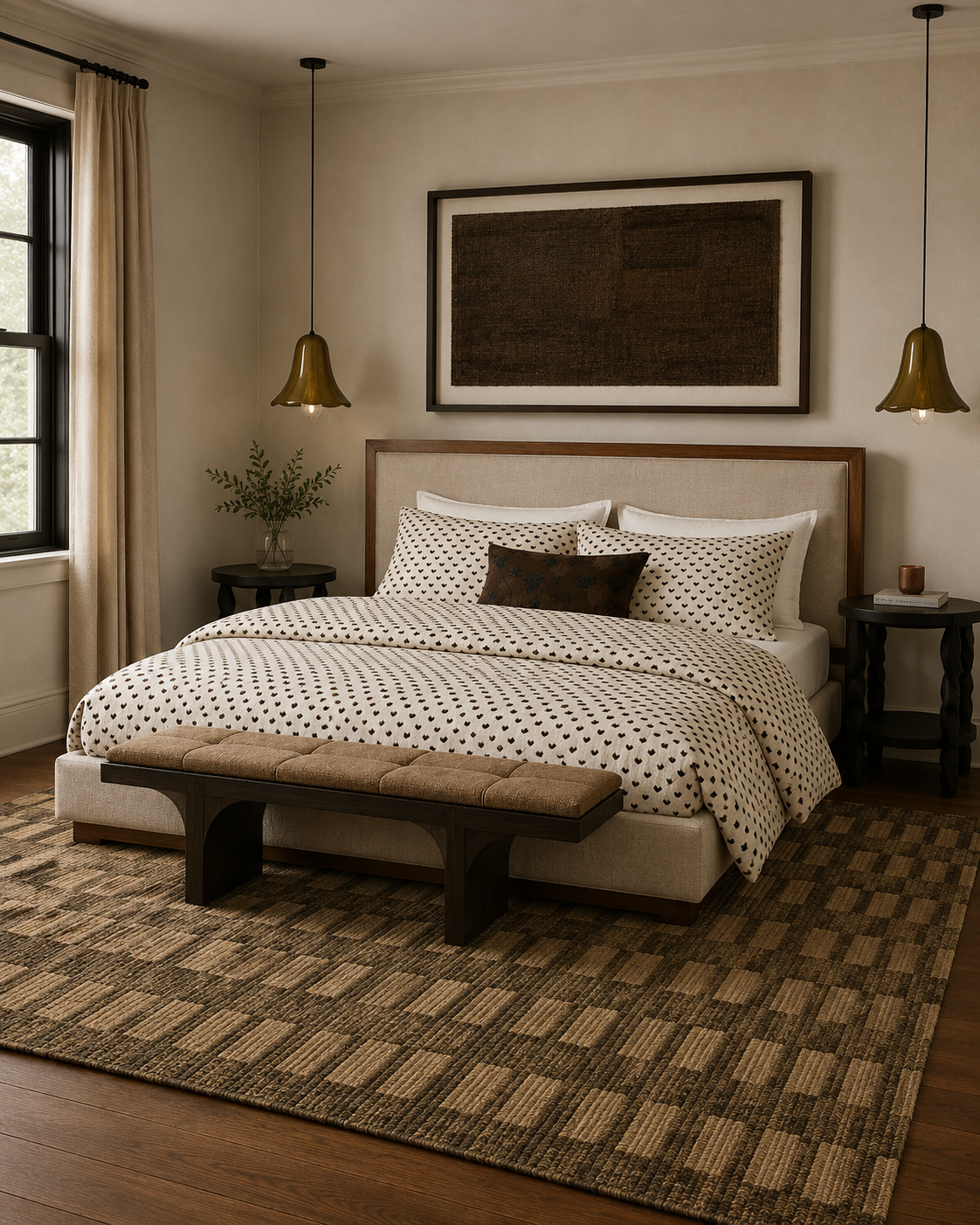
Not every room needs the same level of architectural detailing.
Spaces such as closets, pantries, laundry rooms, mechanical rooms, storage areas, and other utility spaces may not provide enough visual impact to justify the additional material and installation cost—particularly when you’re working within a renovation budget.
There are exceptions, of course. A beautifully designed walk-in closet, butler’s pantry, or laundry room may absolutely warrant crown molding if it’s being treated with the same level of detail as the rest of the home.
The better question isn’t “Does every room need crown molding?” but “Will crown molding meaningfully improve this particular space?”
If the answer is no, there’s nothing wrong with leaving it out.
When you’re deciding where to spend your budget, prioritize the rooms that are most visible, most frequently used, and most important to the home’s overall architectural character. Crown molding tends to have the greatest impact when it’s part of a thoughtful hierarchy of details rather than something added automatically to every room.
Crown Molding vs. Other Trim Upgrades
If you’re trying to add architectural character to your home, crown molding is only one option. Baseboards, window and door casings, picture frame molding, and wall paneling can sometimes make an equal—or even greater—difference.
If your budget doesn’t allow you to upgrade everything at once, think about which architectural details are currently missing or undersized and which changes will be most visible throughout the home.
Crown Molding
Visual impact: Moderate to high
Crown molding adds definition to the ceiling line and can make a room feel more finished and architecturally established. Its impact tends to be greatest in living rooms, dining rooms, entryways, kitchens, and rooms with taller ceilings.
However, crown molding usually isn’t the first trim upgrade I would prioritize if the rest of the room still has extremely basic millwork.
If you have tiny baseboards, minimal door casings, and completely untrimmed windows, addressing those elements first may create a more substantial transformation.
Baseboards
Visual impact: High throughout the home
Baseboards are easy to overlook because we’re accustomed to seeing them, but they run along almost every wall in the house.
Replacing very small builder-grade baseboards with a taller, appropriately scaled profile can immediately make the architecture feel more substantial.
Baseboards also create the visual foundation for the rest of your trim package. If you’re gradually upgrading your millwork, they’re often one of the smartest places to start because the improvement carries through so many rooms.
Window Casing
Visual impact: High, especially on prominent windows
Window casing can dramatically change the appearance of a room because windows are already natural focal points.
If your windows currently have little or no decorative trim, adding casing can make them feel larger, more substantial, and more integrated into the architecture.
This can be particularly impactful in living rooms, dining rooms, bedrooms, and other spaces with large or highly visible windows.
If you have beautiful windows but they currently look unfinished, I may prioritize window casing before crown molding.
Door Casing
Visual impact: Moderate to high
Door casing frames every doorway and helps establish the architectural language of the home.
Upgrading narrow builder-grade casing to something more substantial can make even inexpensive interior doors feel more intentional. Door casing becomes especially important in hallways and open floor plans where multiple doorways are visible at the same time.
It’s also important to consider door and window casings together. They don’t necessarily have to be identical, but they should feel like part of the same trim family.
Picture Frame Molding
Visual impact: High in selected rooms
Picture frame molding can create a dramatic transformation because it adds architecture to what would otherwise be a large, flat wall.
It’s particularly effective in dining rooms, entryways, living rooms, bedrooms, stairways, and hallways.
Unlike baseboards and casings, however, picture frame molding doesn’t necessarily need to continue throughout the entire house. You can use it strategically in one or two important rooms, which can make it an appealing upgrade when you want a lot of visual character without adding decorative millwork everywhere.
Wall Paneling
Visual impact: Very high
Wall paneling—including raised panels, flat-panel treatments, board-and-batten-inspired applications, and other substantial millwork—typically creates the strongest architectural statement on this list.
It can completely change the character of a room because you’re no longer simply trimming the edges of the architecture; you’re changing the walls themselves.
That impact generally comes with a higher material and labor cost, so wall paneling is often best reserved for focal spaces such as an entryway, dining room, study, staircase, or primary bedroom rather than automatically installing it throughout the house.
What Should You Upgrade First?
If you’re working with a limited budget, don’t assume crown molding should automatically be your first millwork upgrade.
I would generally prioritize fixing the weakest part of the existing trim package first.
If you have tiny builder-grade baseboards throughout the house, start there. If you have beautiful windows surrounded by unfinished drywall, window casing may make a bigger difference. If the basic trim is already substantial but the rooms still feel flat, crown molding or picture frame molding may be the next layer that gives the home more character.
A practical order for many builder-grade homes is:
Baseboards and door/window casings — establish a substantial, cohesive foundation.
Crown molding — define the ceiling line and add another architectural layer.
Picture frame molding or wall paneling — selectively add character to the rooms where you want the greatest impact.
You don’t necessarily have to follow that order. A dining room with good existing trim but completely blank walls, for example, might benefit far more from picture frame molding than new baseboards.
The bigger goal is architectural hierarchy. Your baseboards, casings, crown molding, and decorative wall treatments should feel like parts of one system rather than a collection of unrelated upgrades.
And if your budget only allows for one improvement, choose the detail that addresses what’s making the room feel unfinished now. One well-chosen, appropriately scaled millwork upgrade will usually look better than several inexpensive details added simply for the sake of having more trim.
Cost vs. Value
The cost of crown molding can vary considerably depending on the material, profile, size of the room, and complexity of the installation. Instead of focusing only on the price per linear foot, it’s more useful to think about what you’re getting for the investment and how much the molding will contribute to the finished space.
Crown Molding Material Options
The material you choose affects not only the initial cost but also the appearance, durability, installation, and long-term maintenance of the molding.
MDF is a common option for painted crown molding. It provides a smooth, consistent surface without the knots or grain variations found in natural wood. It’s often a practical choice when you want the look of substantial painted millwork without paying for a premium wood species. However, MDF doesn’t handle moisture as well as some alternatives, so the location matters.
Solid wood is a more traditional choice and is particularly valuable when the molding will be stained rather than painted. Wood provides authentic grain and can work beautifully in historic homes or interiors with other natural wood millwork. It can also be more expensive and may expand, contract, or develop small gaps as humidity changes.
Finger-jointed or paint-grade wood offers another option when you want real wood but intend to paint the finished molding. Because the joints will be concealed by paint, you’re not paying for the appearance of a clear, continuous piece of premium lumber.
Polyurethane and other synthetic moldings can reproduce surprisingly detailed profiles while remaining lightweight. They’re also resistant to many of the moisture-related problems associated with wood or MDF, which can make them useful in certain applications. The quality varies, though, so look closely at the finished appearance rather than choosing a synthetic product based on material alone.
There isn’t one material that’s automatically best. The right choice depends on where the molding is being installed, whether it will be painted or stained, the architectural style, and how much you’re comfortable investing.
Installation Complexity Matters
Crown molding is more complicated to install than it might appear.
Unlike a standard piece of flat trim, traditional crown molding sits at an angle between the wall and ceiling. Corners require accurate cuts, and walls and ceilings in real homes are rarely perfectly square.
Installation becomes even more complicated when you’re dealing with outside corners, vaulted ceilings, curved walls, uneven surfaces, complicated room layouts, or built-up molding made from several different trim profiles.
This is why two rooms with roughly the same perimeter can represent very different levels of work.
When evaluating the value of crown molding, consider the complexity of the room—not just the amount of material required.
DIY vs. Professional Installation
Crown molding can certainly be a DIY project, particularly if you’re comfortable with finish carpentry and already own the appropriate tools.
A relatively square room with a simple painted profile is much more approachable than a room filled with unusual angles or elaborate built-up crown.
The biggest consideration is the quality of the finished installation. Crown molding is positioned at a highly visible transition, and gaps, poorly fitted corners, inconsistent joints, and uneven caulk lines can undermine the architectural effect you were trying to create.
If you’re an experienced DIYer, doing the work yourself can make crown molding a much more accessible upgrade.
If you’re not comfortable with precise trim work—or you’ve chosen an expensive material or complicated profile—professional installation may provide better value because you’re protecting the investment you’ve already made in the molding itself.
Is Crown Molding a Good Value for Your Home?
The best way to evaluate crown molding isn’t simply to ask, “How much will this cost?”
Instead, consider:
How visible and important is this room?
Does the home currently lack architectural character?
Will the crown coordinate with the existing trim?
Is the profile appropriate for the ceiling height and architecture?
Will you be happy with the detail for many years?
Are there other improvements that would make a greater difference with the same renovation budget?
If crown molding addresses something that’s genuinely missing from the architecture, it can be a worthwhile investment. If you’re adding it simply because you believe every expensive-looking home is supposed to have crown molding, your money may have more impact elsewhere.
The value of crown molding comes from how successfully it improves the architecture—not simply from the fact that it’s there.
Common Crown Molding Mistakes
Include:
Choosing a profile that’s too ornate for the home
Installing molding that’s too small
Mixing conflicting trim styles
Ignoring ceiling height
Poor installation and visible seams
Forgetting to coordinate with existing trim
Designer Tips
Match the molding to your home’s architecture.
Keep trim profiles consistent throughout the home.
Use larger profiles in rooms with taller ceilings.
Don’t let crown molding compete with other architectural details.
If adding only one trim upgrade, prioritize the rooms where you’ll notice it most.
Conclusion
Crown molding isn’t a necessity—but when it’s thoughtfully selected and properly installed, it can dramatically elevate a home’s appearance. The key is choosing a profile and scale that complement your architecture, your ceiling height, and your overall design style.
