
How to Choose the Right Countertops
Introduction
Your countertop is not only a financial investment, but also one of the most important design decisions for your home. Let’s talk about how you can make sure you make the right decision.
AFFILIATE DISCLOSURE: This post contains affiliate links. If you purchase through these links, I may earn a small commission at no additional cost to you. I only recommend products I genuinely love or would use in my own designs. This post is not sponsored, and all opinions are my own.
RENDERING DISCLAIMER: The images in this post are digital renderings created to illustrate my original design concepts. They are intended for inspiration and visualization and may not represent exact dimensions, materials, or construction details. See my full Disclosure & Disclaimer Policy for more information.
Step 1: Understand the Most Popular Countertop Materials
Think about the current countertop you have and your living situation. Do you cook often? Do you entertain often? Do you have young children? Do you want a low maintenance stone? Are you ok with natural aging and patina? These are all questions we need to consider. Now let’s take a look at different types of stones and pros and cons of each to determine what fits best for your home.
Quartz
Pros:
Very durable- resistant to scratches, chips, and everyday wear (this doesn’t mean it is indestructible…just less fragile)
Nonporous- Does not absorb liquids easily, making it highly stain resistant.
Easy to clean
Can be cost effective depending on the selection.
Cons:
Not as heat resistant as natural stone -this is because it is made of resinous materials that break down with excessive heat.
Does not have the unique qualities that natural stone does. If you pair a synthetic and a natural stone together you will see that the engineered stone is beautiful, but there is something truly unique about natural stone that you won’t find with an engineered stone.
Limited outdoor use- UV exposure can cause discoloration in some instances.
Granite
Pros:
Extremely durable- granite is a hard natural stone that holds up very well.
Excellent heat resistance-much better than engineered quartz
Every slab is unique.
Highly scratch resistant.
Cons:
Usually needs to be sealed because it is porous.
Because of the above, granite can stain, especially in lighter varieties.
Pattern matching can be difficult (if you are doing a waterfall island etc, it may be difficult to create a seamless look.)
Marble
Pros:
Beautiful, unique, and timeless look that takes on a natural patina.
Heat resistant
Etches easily -can etch with acidic substances like lemon juice or vinegar.
Can stain and usually requires sealing to help reduce staining.
Softer than granite or quartz, so it scratches and chips easily.
Higher maintenance.
Expensive
Quartzite
Pros
Natural stone (unlike quartz), so it has unique qualities and a beautiful marble like appearance.
Very hard and durable- true quartzite is harder and more scratch resistant than marble
Good heat resistance, but trivets are still recommended.
Better resistance to etching than marble.
Cons:
Still needs to be sealed
Can still stain if it is a lighter stone.
Often very expensive and fabrication can be more expensive than other stones because of how hard it is to cut.
Soapstone
Pros
Beautiful natural stone qualities
Nonporous -unlike many other stones, soapstone does not need to be sealed.
Highly stain resistant
Heat resistant
Restaurant to acids
Develops a natural patina
Cons:
Soft compared to granite or quartzite- it can scratch, nick, or dent relatively easily.
Will show wear- it is important that you appreciate the patina of soapstone before committing because it will take on wear qualities over time.
Limited colors
Limited availability
Can be expensive
Butcher Block
Pros
Adds texture and natural warmth
Can be refinished
Can be more affordable than natural stone
Cons:
Sensitive to water
Requires regular maintenance
Can scratch and dent
Can stain
Heat can damage it.
Requires extra attention around sinks
Can harbor bacteria if not cleaned properly.
Solid Surface
Pros
Nonporous
No sealing
Nearly seamless appearance
Integrated sinks are possible
Repairable - scratches, small burns, and minor damage can often be buffed out.
Less expensive
Cons:
Can scratch easily
Lower heat resistance
Can look less luxurious than natural or engineered stone
Can show wear over time
Not ideal for cutting on
Some colors feel dated
May not have the same resale appeal.
Step 2: Consider Durability
When thinking of durability, consider the following:
Scratch resistance: Will knives, cookware, jewelry, or everyday objects easily leave marks?
Stain resistance: How easily can wine, coffee, oils, makeup, or other spills penetrate the material?
Etch resistance: Acidic substances can chemically dull certain natural stones—especially marble—even when they don't technically “stain” them.
Heat resistance: Can the surface tolerate hot cookware, or will you need to be diligent about trivets?
Chip and impact resistance: What happens if you drop a heavy pan or appliance on an edge?
Water resistance: Particularly important around sinks and in bathrooms.
Repairability: Damage doesn't necessarily make a material a poor choice. Wood and solid surface scratch relatively easily, for example, but they're also relatively repairable.
How it ages: Some materials are designed to stay relatively consistent, while others develop patina, scratches, etching, or color changes with use.
Step 3: Think About Maintenance
Questions to ask:
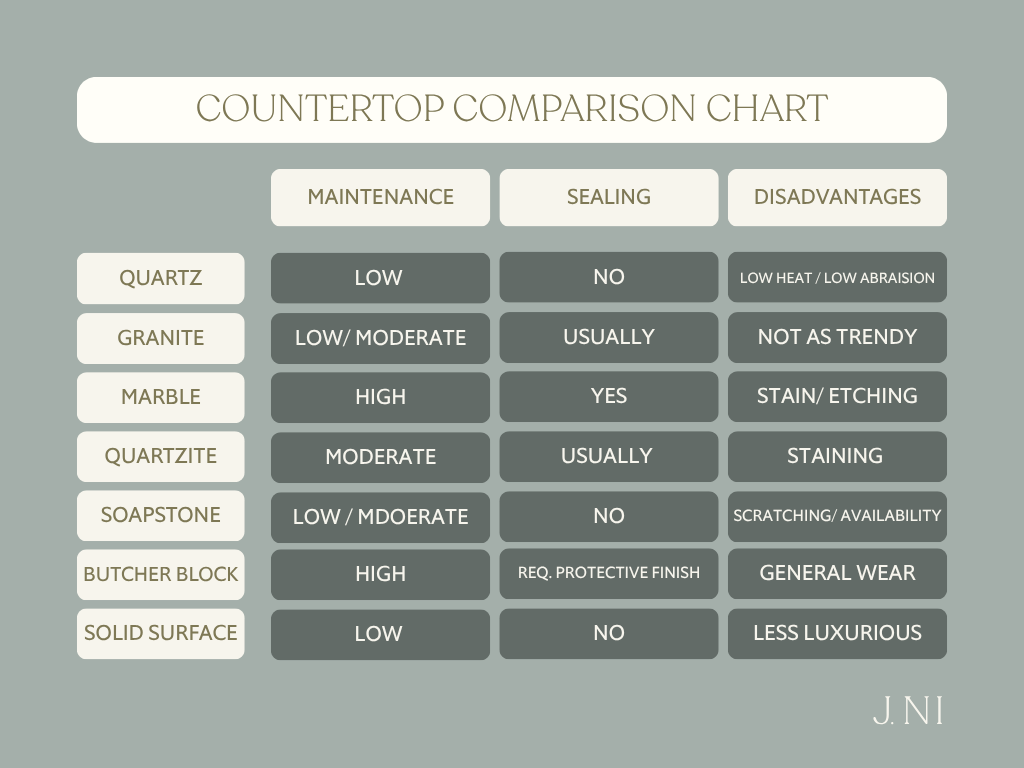
Sealing requirements: Some natural stones need periodic sealing to help prevent staining, while quartz, solid surface, and soapstone generally don't require sealing.
Daily cleaning: Find out whether the material can handle your normal cleaning products or requires a gentler, pH-neutral cleaner.
Spill sensitivity: Some surfaces allow you to wipe up a spill later; others are much less forgiving of wine, oil, coffee, lemon juice, makeup, or other products sitting on them.
Etching: Marble and other calcite-based stones can etch from acidic substances. Sealing helps with staining, but it doesn't prevent etching.
Oiling or waxing: Materials like soapstone and butcher block may be periodically oiled or treated depending on the finish and desired appearance.
Refinishing: Wood and solid surface can often be sanded or refinished when they become scratched or worn.
Special precautions: Some materials require trivets, cutting boards, specific cleaners, or extra care around water.
Long-term appearance: Consider whether you're comfortable with patina. Marble, soapstone, and butcher block tend to tell the story of how they've been used, while quartz is generally chosen by people who want a more consistent appearance.
How often does it need maintenance?
Step 4: Choose the Right Color
Think about the following when choosing color/ pattern:
Undertones: This is probably the biggest one. A white countertop might lean warm, cool, gray, cream, pink, or even green. Compare it directly with your cabinets, backsplash, flooring, and paint rather than looking at it by itself.
Cabinet color: Decide whether you want the countertop to contrast with the cabinetry or blend with it. Dark cabinets with light countertops create definition, while similar tones can create a softer, more seamless look.
Flooring: Floors and countertops don't necessarily need to match, but their undertones should work together. This becomes especially important with wood flooring and warm natural stone.
Movement vs. color: A countertop can technically be neutral while still feeling visually dominant because of dramatic veining or pattern. Consider both the base color and how much movement the material has.
Natural variation: With granite, marble, quartzite, soapstone, and wood, you're selecting a natural material. The exact colors can vary significantly within a slab and between slabs.
Lighting: Natural and artificial light can dramatically change how a countertop reads. Always look at samples in the actual room when possible.
Room size and brightness: Light countertops can help a space feel brighter and more open, while dark countertops can add depth, contrast, and drama.
Other permanent finishes: Pay particular attention to finishes that aren't going anywhere soon—cabinetry, flooring, tile, and plumbing fixtures—rather than trying to coordinate the countertop with easily changed accessories.
Longevity: If you're investing significantly in countertops, consider whether you'd still like the color and pattern if you changed the paint, hardware, or decor several years from now.
Typical colors:
White
Cream
Gray
Black
Warm tones
Bold veining
Solid patterns
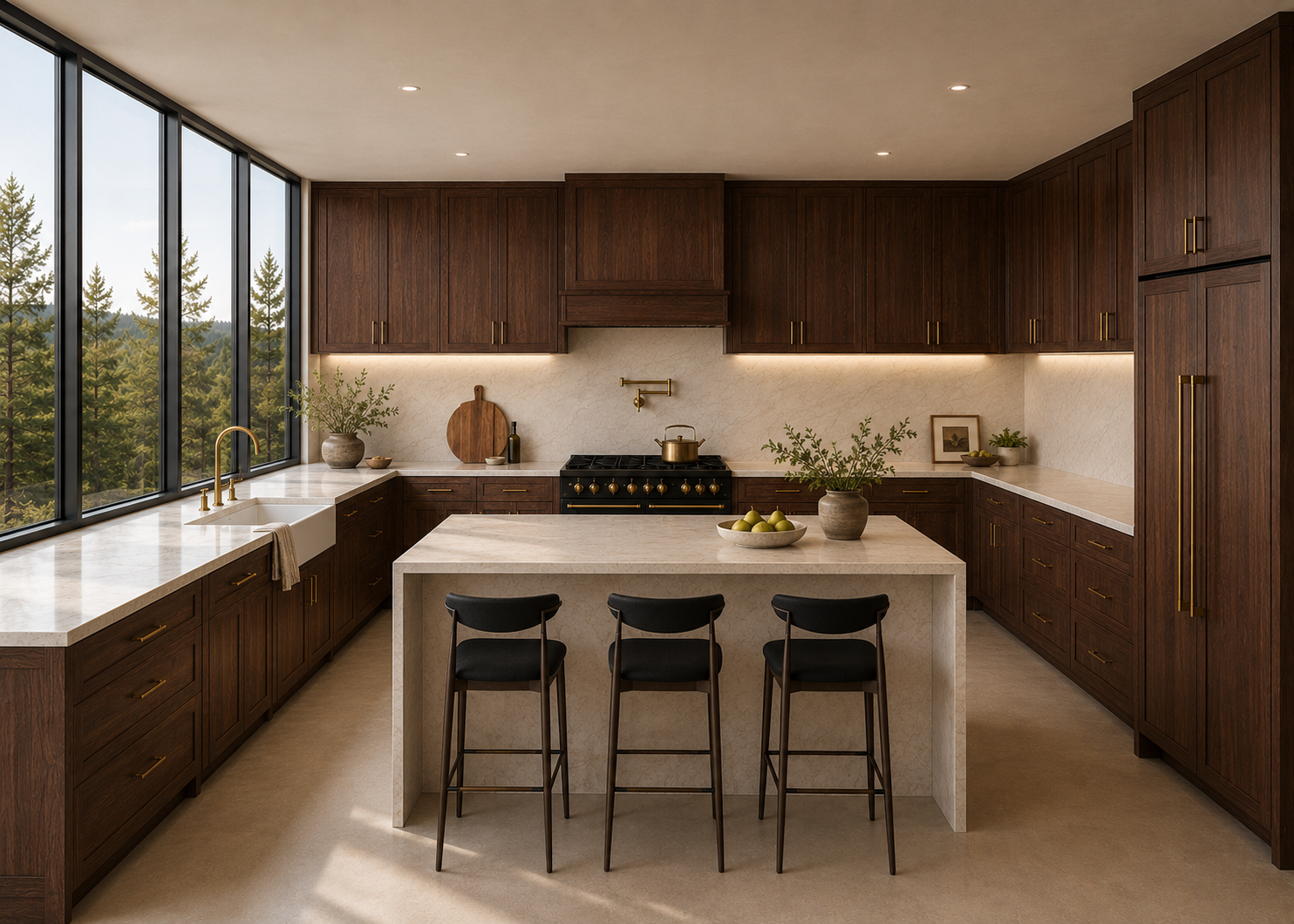
Notice the renderings below. The first shows an accent island with stone backsplash under the island and stone waterfall in a white stone. Because the stone will essentially be used as a kickplate due to location, we looked at quartz for this application.
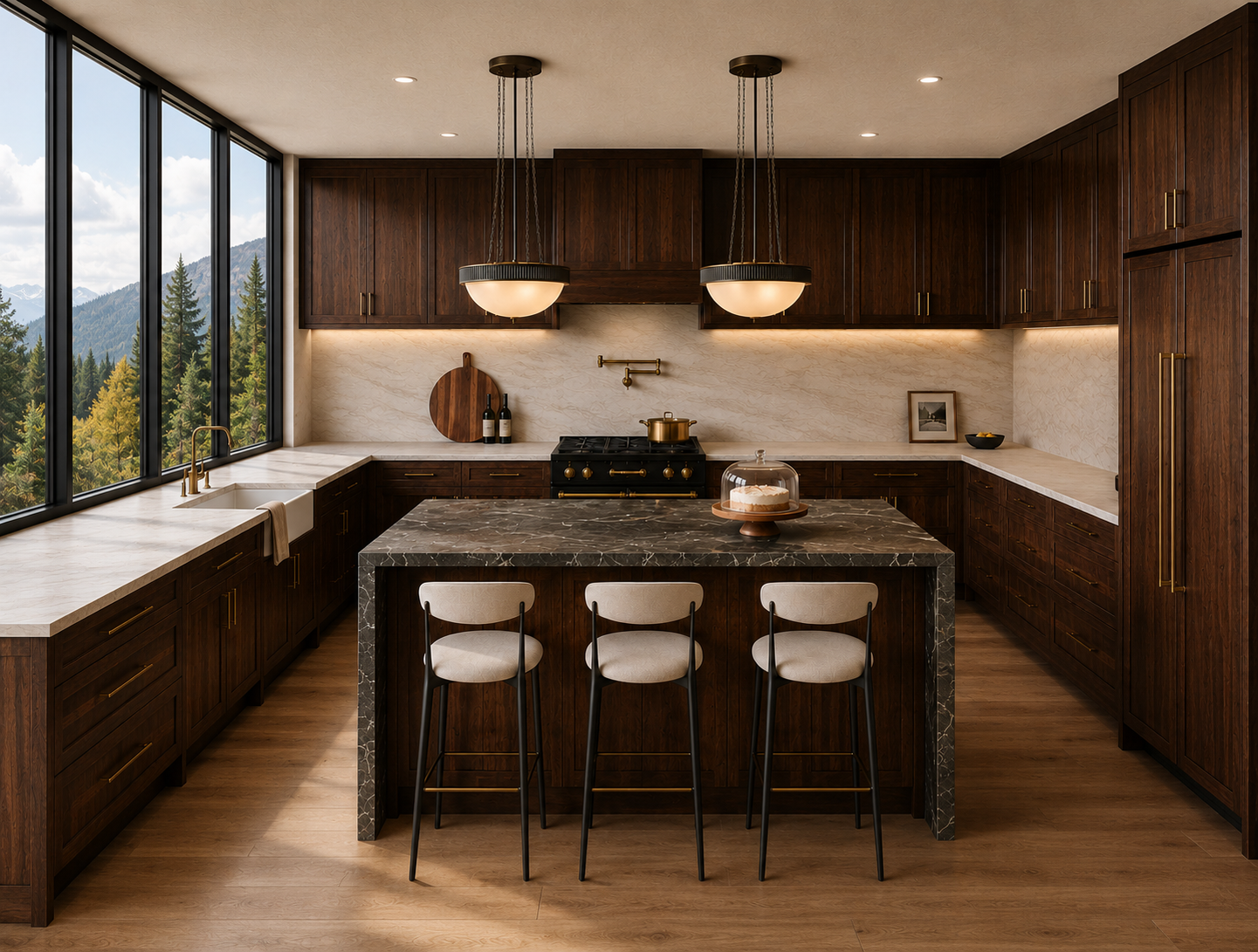
In the second image, you can see how big of a difference the accent color makes. It all depends on preference, but I really like how the deeper island ties into the range. We had also added lights and changed the scenery for the second image (if only it was that easy in real life), so that also helps tie everything together.
White island
A digital rendering showing a walnut kitchen with a white stone island.
Dark Island
A digital rendering showing a walnut kitchen with a dark accent island.
Step 5: Decide on the Pattern
Compare:
Amount of movement: Countertops can be nearly solid, subtly speckled, softly veined, or dramatically veined. More movement generally makes the countertop more of a focal point.
The other patterns in the room: If you have patterned tile, wood grain, detailed cabinetry, or a busy floor, a quieter (or less busy) countertop can give the eye somewhere to rest.
Vein scale: Fine, delicate veining feels very different from large sweeping veins. Consider the size of the room and countertop areas when choosing the scale.
Direction: Veining has a visual direction. On islands and long countertop runs, think about which way you want that movement to travel.
Slab-to-slab variation: Natural stone can change dramatically from one slab to another, so selecting the actual slabs is especially important with highly patterned materials.
Seams: Dramatic patterns can make seams much more noticeable if the veins don't align naturally.
Waterfall edges: If you're wrapping stone down the side of an island, discuss vein matching with the fabricator. A thoughtfully book-matched or vein-matched edge can look intentional rather than interrupted.
Backsplashes: If you're continuing the countertop material up the wall, the pattern becomes an even bigger part of the room. A dramatic slab backsplash may mean you want to simplify other finishes.
How forgiving it is: Pattern can disguise crumbs, fingerprints, small scratches, and everyday wear better than some completely solid surfaces.
Longevity: Very distinctive manufactured patterns can sometimes be easier to associate with a particular design trend. If longevity is important, consider whether you love the pattern itself rather than choosing it simply because it's popular right now.
Step 6: Select the Right Finish
There are 3 main types of countertop finishes:
Polished
Honed
Leathered (where applicable)
Before deciding on a countertop finish you need to first consider:
Overall look: Polished finishes tend to feel brighter and more refined, while honed or matte finishes create a softer, more understated appearance.
Color intensity: Polishing typically makes colors appear deeper and more saturated. Honing can make the same stone appear lighter, softer, or slightly muted.
Veining and movement: A polished surface can emphasize contrast and veining, while a matte finish can soften dramatic movement.
Light reflection: Polished countertops bounce more light around a room. Honed and matte finishes absorb more light and create less glare.
Fingerprints and smudges: Dark polished surfaces can make fingerprints, water spots, and smudges particularly noticeable.
Texture: Leathered and textured finishes introduce a tactile quality that can add depth to otherwise simple materials.
Staining: With some natural stones, honing or texturing can leave the surface more susceptible to staining than a highly polished finish, making proper sealing especially important.
Etching: On marble, a honed finish doesn't prevent etching, but etches may be less visually obvious because the surrounding surface isn't highly reflective.
Cleaning: Deeply textured finishes can require a little more attention because crumbs, dust, or residue can collect in the texture.
Style of the room: Polished finishes can feel more formal or glamorous, while honed, matte, and leathered surfaces often work beautifully in relaxed, organic, traditional, or contemporary spaces.
Step 7: Don’t Forget the Edge Profile
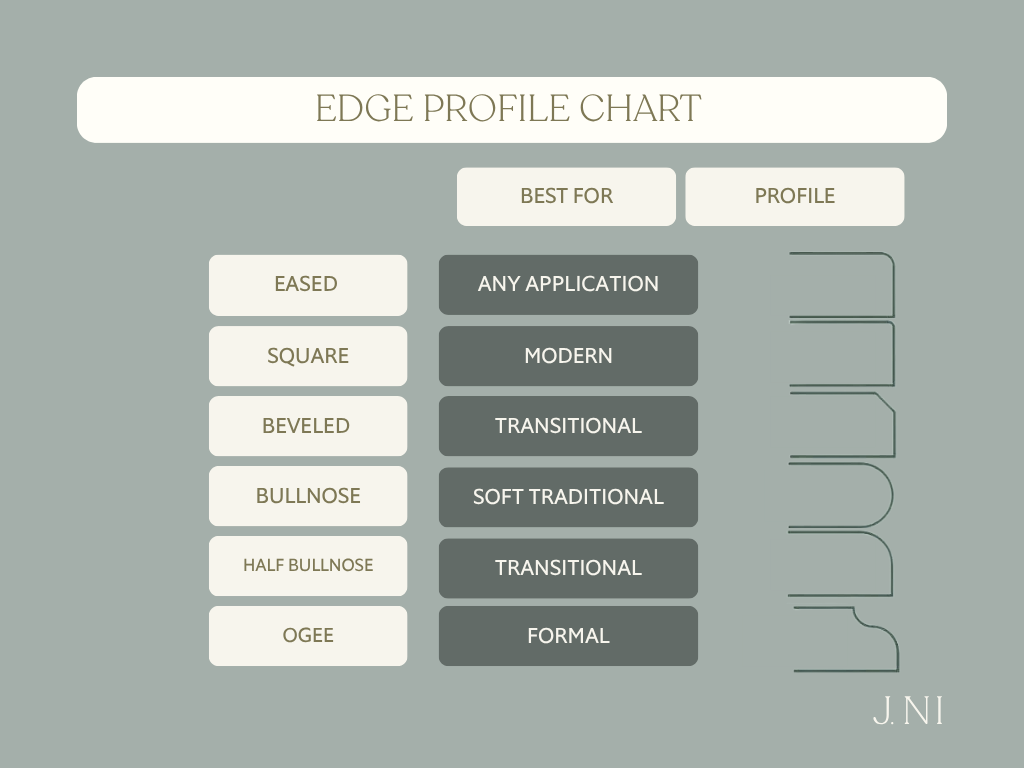
Some things to consider before deciding on an edge profile:
Overall design style: Simple edges tend to feel cleaner and more contemporary, while decorative profiles can complement traditional or formal cabinetry.
Countertop thickness: The edge affects how thick the countertop appears. A mitered edge can create the look of a much thicker slab without using solid stone at that full thickness.
Cabinet style: Detailed inset or traditional cabinetry can support a more decorative edge, while slab-front or minimalist cabinetry often looks best with a simpler profile.
Comfort: Highly squared edges can feel sharper when you lean against them. Slightly eased or rounded edges are generally more comfortable.
Chipping: Sharp corners and intricate profiles can be more vulnerable to chipping depending on the countertop material.
Cleaning: Elaborate profiles create more grooves and ledges where dust and crumbs can collect. Simple profiles are typically easier to wipe clean.
Pattern and veining: If you've selected a dramatic stone, a simple edge often allows the material itself to remain the focal point.
Cost: Standard edges may be included in fabrication, while intricate profiles, mitered edges, and specialty details generally increase fabrication costs.
Overhangs: The profile can affect how substantial an island or seating overhang appears.
Consistency: Consider using the same edge throughout the room or intentionally changing it—for example, giving an island a more substantial edge while keeping perimeter counters simple.
Step 9: Think About Thickness
Edge profile and countertop thickness should really be considered together.
A standard eased edge on a thinner slab creates a relatively understated look. A thick mitered edge can make the exact same countertop feel architectural and substantial. Decorative built-up edges can make traditional countertops feel more furniture-like.
Overall design style: Thinner countertops tend to feel sleek and contemporary, while thicker countertops create a more substantial, luxurious appearance.
Visual weight: The thicker the countertop appears, the more it anchors the room. This is especially noticeable on large islands.
Material choice: Some materials are more commonly available in certain thicknesses. For example, quartz is often available in multiple thicknesses, while natural stone thickness options may vary by supplier.
Countertop spans: Very large overhangs or unsupported areas may require additional structural support regardless of thickness.
Cabinet style: Slim countertops pair well with modern slab-front cabinetry, while thicker tops often complement traditional, transitional, and luxury kitchens.
Edge profile: Thickness and edge profile work together. A simple eased edge on a thick countertop feels very different than the same edge on a thinner slab.
Waterfall edges: Thicker countertops create a more dramatic waterfall effect, while thinner slabs create a lighter, more minimalist look.
Backsplashes: If you're extending the countertop material up the wall, think about whether you want the countertop and backsplash to feel bold or understated.
Budget: Thicker slabs—or built-up/mitered edges that create the appearance of extra thickness—typically increase material, fabrication, and installation costs.
Current trends vs. timelessness: Thickness preferences have changed over time. Rather than chasing trends, choose a thickness that fits the overall architecture of your home.
“¾’’ (2cm)- sleek, light and contemporary
1-¼’’ (3cm) - balanced and substantial
2-3cm (mitered)- bold and statement ”
Common Countertop Mistakes
Choosing based only on appearance
Ignoring maintenance requirements
Picking trendy patterns that date quickly
Forgetting to view full slabs instead of small samples
Choosing countertops before selecting cabinets
Ignoring undertones
Prioritizing price over long-term value
Designer Tips for Choosing Countertops
Suggestions:
Always view the full slab if possible.
Bring cabinet, flooring, and backsplash samples when shopping.
Think about how the countertop will look in natural and artificial light.
Let one element be the star—avoid competing focal points.
Consider resale, but choose something you’ll enjoy every day.
Remember that seams, edge profiles, and installation quality matter just as much as the material.
Conclusion
Choosing countertops is about balancing beauty, durability, maintenance, and budget. By starting with your lifestyle and then narrowing your options based on material, color, finish, and design, you’ll end up with countertops that look great and perform well for years.
