
How to Choose Hardware for Cabinets and Furniture
Introduction
Finding the right hardware for your design is like finding the right piece of jewelry for your look. It can really push the overall look to higher levels without trying too hard.
AFFILIATE DISCLOSURE: This post contains affiliate links. If you purchase through these links, I may earn a small commission at no additional cost to you. I only recommend products I genuinely love or would use in my own designs. This post is not sponsored, and all opinions are my own.
RENDERING DISCLAIMER: The images in this post are digital renderings created to illustrate my original design concepts. They are intended for inspiration and visualization and may not represent exact dimensions, materials, or construction details. See my full Disclosure & Disclaimer Policy for more information.
Step 1: Start With Your Home’s Style
Before you start searching for finishes, sizes, or shapes, ask yourself what style your home is and how you want it to look.
Modern homes often feature simple, clean-lined bar pulls or minimalist knobs with little ornamentation.
Contemporary homes tend to use streamlined hardware but may incorporate softer shapes or mixed materials.
Transitional homes have the most flexibility, often blending classic forms with clean, updated finishes.
Traditional homes typically suit more detailed hardware with curves, decorative backplates, or classic silhouettes.
Farmhouse homes often incorporate cup pulls, simple knobs, or hardware with a handcrafted feel.
Industrial homes pair well with bold, utilitarian hardware in darker finishes.
Organic or Scandinavian-inspired homes often feature understated hardware with soft lines and natural finishes.
Then Consider the Cabinet Style
The cabinet doors themselves provide clues.
Shaker cabinets work with almost every hardware style, making them one of the most versatile door styles.
Slab-front cabinets usually look best with simple, contemporary hardware.
Raised-panel cabinets often pair beautifully with more traditional or transitional designs.
Inset cabinetry can support both traditional and modern hardware depending on the overall home.
Step 2: Decide Between Knobs and Pulls
Consider How You'll Use the Space
Think about how you interact with your cabinetry every day.
Pulls provide more surface area to grip, making them especially comfortable on large drawers, pantry doors, and frequently used cabinets.
Knobs require a pinching motion and are generally best suited for smaller cabinet doors.
If accessibility or ease of use is a priority, pulls are often the more ergonomic choice.
Think About the Style You Want
The choice between knobs and pulls can subtly influence the overall feel of the room.
Knobs often create a more classic, traditional, or understated appearance.
Pulls tend to feel cleaner, more contemporary, and slightly more architectural.
Both can work beautifully in transitional spaces depending on their design.
Consider the Scale of Your Cabinetry
Larger cabinetry generally benefits from larger hardware.
Wide drawers are usually easier to open with pulls.
Small upper cabinets often look balanced with knobs.
Tall pantry doors frequently benefit from longer pulls that feel proportional to the cabinet height.
Mixing Knobs and Pulls
Many professionally designed kitchens use both.
A common approach is:
Knobs on cabinet doors
Pulls on drawers
This combination provides both visual variety and practical function. However, using all pulls or all knobs can also create a beautiful, cohesive design.
Keep It Consistent
If you mix hardware, maintain consistency in the finish, style, and proportions so the room feels intentional rather than random.
For example:
Use the same finish throughout.
Choose knobs and pulls from the same collection whenever possible.
Keep the design language consistent (modern with modern, traditional with traditional).
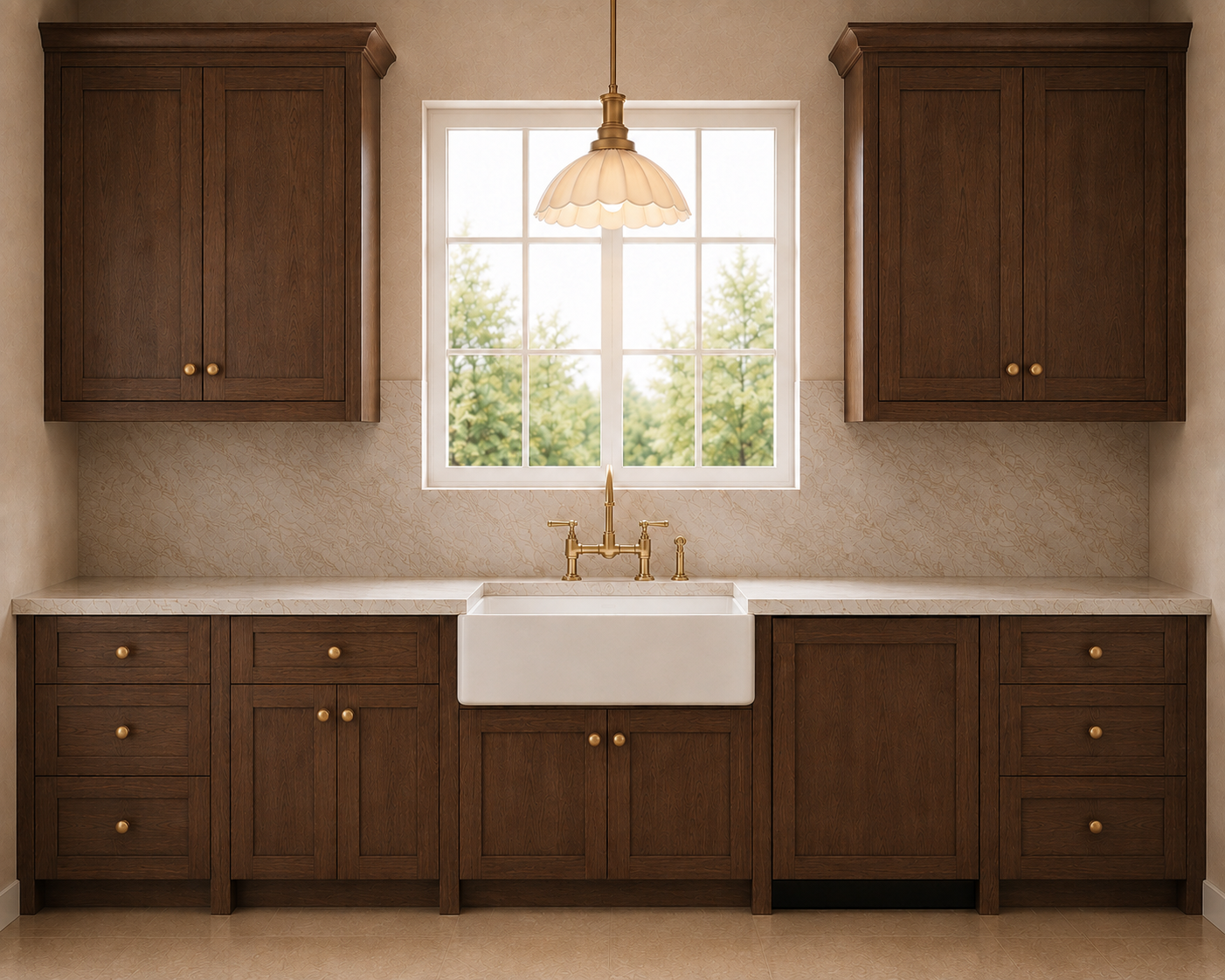
Kitchen knobs
A digital rendering showing a kitchen cabinet layout with mostly knobs. The trash drawer pull has been left off, but you can see where it would be located. The knobs here along with the inset cabinets make for a semi-cottage aesthetic. The knobs keep things a little more traditional and soft.
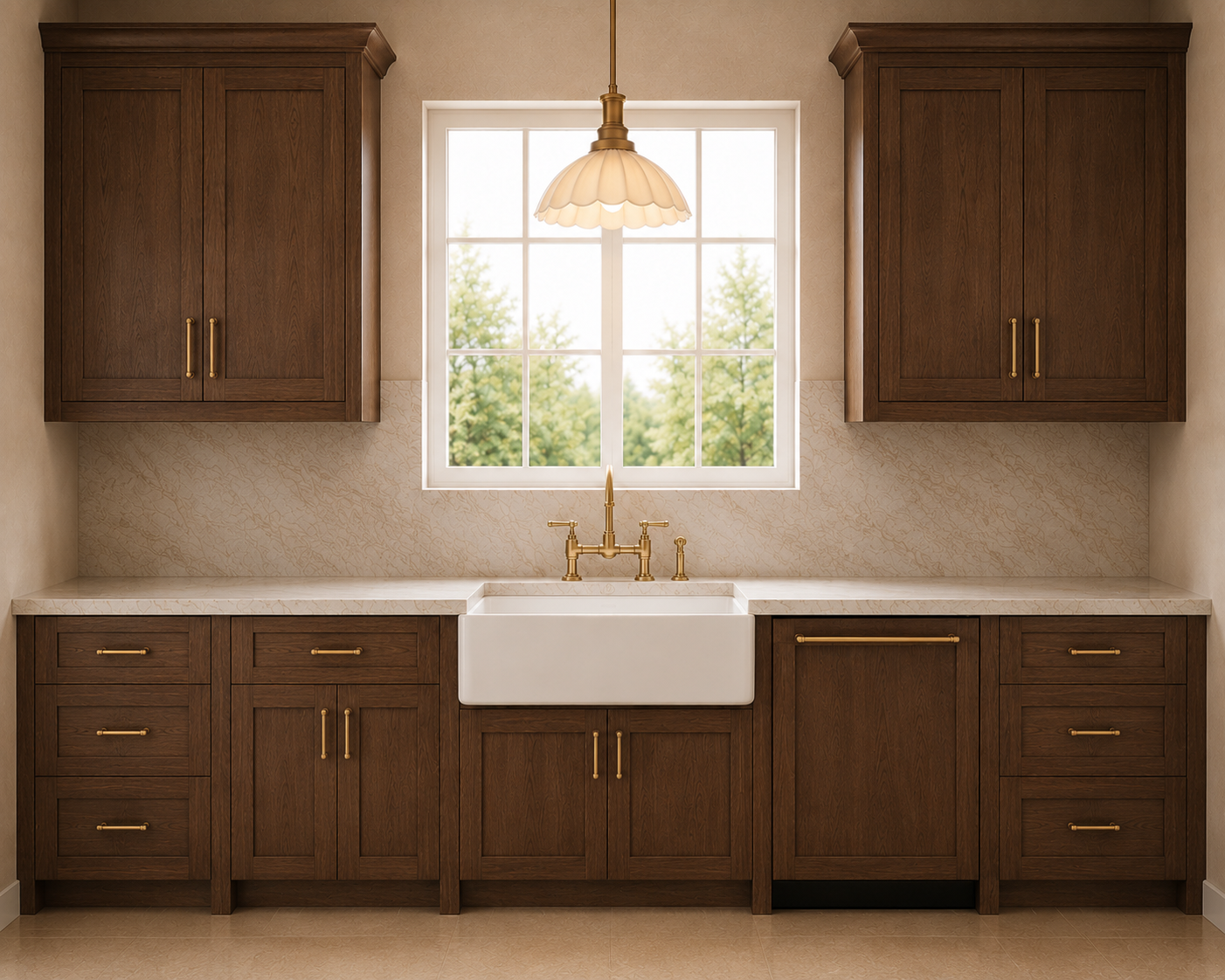
Kitchen Pulls
A digital rendering showing a kitchen cabinet layout with cabinet pulls. This layout contrasts the knob layout quite a bit. You can see how the straight lines throughout immediately modernized the look.
Step 3: Choose the Right Size
Consider the Size of Your Cabinetry
Larger cabinets generally need larger hardware.
Wide drawers typically benefit from longer pulls.
Small cabinet doors often look balanced with smaller pulls or knobs.
Tall pantry doors usually need longer pulls that feel proportional to their height.
As cabinetry gets larger, your hardware should generally scale with it.
Think About the Style
Hardware size also affects the overall feel of the room.
Longer pulls often feel more contemporary and architectural.
Smaller hardware tends to create a more traditional or understated appearance.
The exact same cabinet can look dramatically different simply by changing the hardware size.
Prioritize Comfort
Cabinet hardware isn't just decorative—it's something you'll use every day.
Choose hardware that's comfortable to grip and easy to use, especially on frequently accessed drawers, pantry doors, and pull-out storage.
Keep the Scale Consistent
If you're using multiple hardware sizes, they should feel like they belong together.
For example:
Small drawers may receive shorter pulls.
Medium drawers may use a mid-sized pull.
Wide drawers often benefit from longer pulls.
Using the same style and finish while adjusting the length helps create a custom, intentional look.
Don't Be Afraid of Larger Hardware
One of the biggest mistakes homeowners make is choosing pulls that are too small.
Slightly oversized hardware often makes cabinetry feel more custom and high-end, especially in kitchens with large islands or tall cabinetry.
When Using Knobs
Knobs don't vary in size as dramatically as pulls, but proportion still matters.
Small, delicate knobs complement petite cabinets.
Slightly larger knobs can better balance larger doors or heavier cabinetry.
Make sure the knob is comfortable to grasp and doesn't feel undersized against the cabinet.
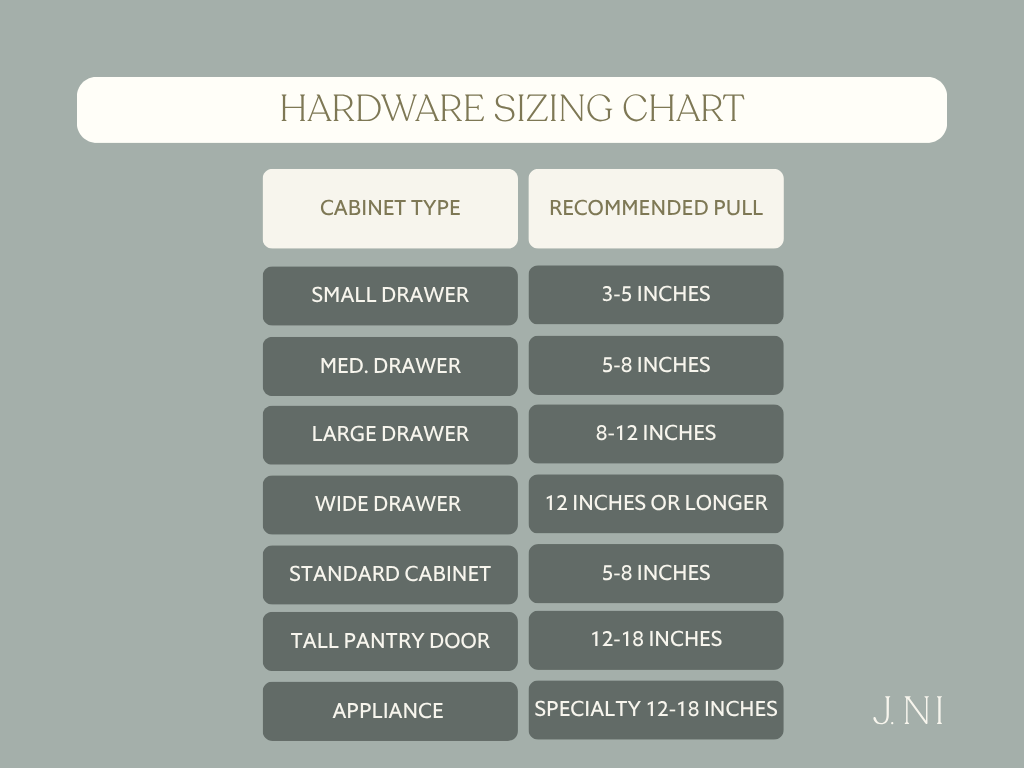
Common Pull Length Guidelines
These aren't strict rules, but they're good starting points:
Step 5: Choose the Right Finish
Decide How Much Contrast You Want
Hardware can either blend into the cabinetry or become a design feature.
High contrast (like brass on dark walnut or black on white cabinets) creates a bold, eye-catching look.
Low contrast (like black on dark cabinets or brushed nickel on light oak) creates a softer, more subtle appearance.
Neither is better—it's simply a matter of where you want the eye to go.
Consider the Room's Style
Certain finishes naturally complement different design styles.
Unlacquered brass: Traditional, European, English, and organic homes
Brushed brass or satin brass: Transitional, modern, and contemporary interiors
Polished nickel: Classic, elegant, and timeless
Brushed nickel: Versatile, understated, and transitional
Matte black: Modern, farmhouse, and industrial styles
Oil-rubbed bronze: Rustic, traditional, and Mediterranean-inspired homes
Chrome: Modern, minimalist, and contemporary spaces
Remember that these are guidelines—not strict rules.
Think About Maintenance
Some finishes show fingerprints, water spots, and wear more readily than others.
For example:
Polished finishes generally show fingerprints and smudges more easily.
Brushed or satin finishes tend to hide everyday wear better.
Living finishes like unlacquered brass intentionally develop a natural patina over time.
If you want your hardware to look the same for years, choose a finish designed to stay consistent. If you appreciate materials that age gracefully, a living finish may be a great choice.
Common Cabinet Hardware Finishes
Brushed Brass / Satin Brass
Transitional, modern, traditional
Hides fingerprints well
Unlacquered Brass
Traditional, European, organic
Develops a natural patina over time
Polished Nickel
Classic, elegant interiors
Shows fingerprints more easily
Brushed Nickel
Transitional, versatile spaces
Easy to maintain
Matte Black
Modern, farmhouse, industrial
Can show dust on dark surfaces
Oil-Rubbed Bronze
Traditional, rustic homes
Generally low maintenance
Chrome
Contemporary, minimalist spaces
Can show water spots and fingerprints
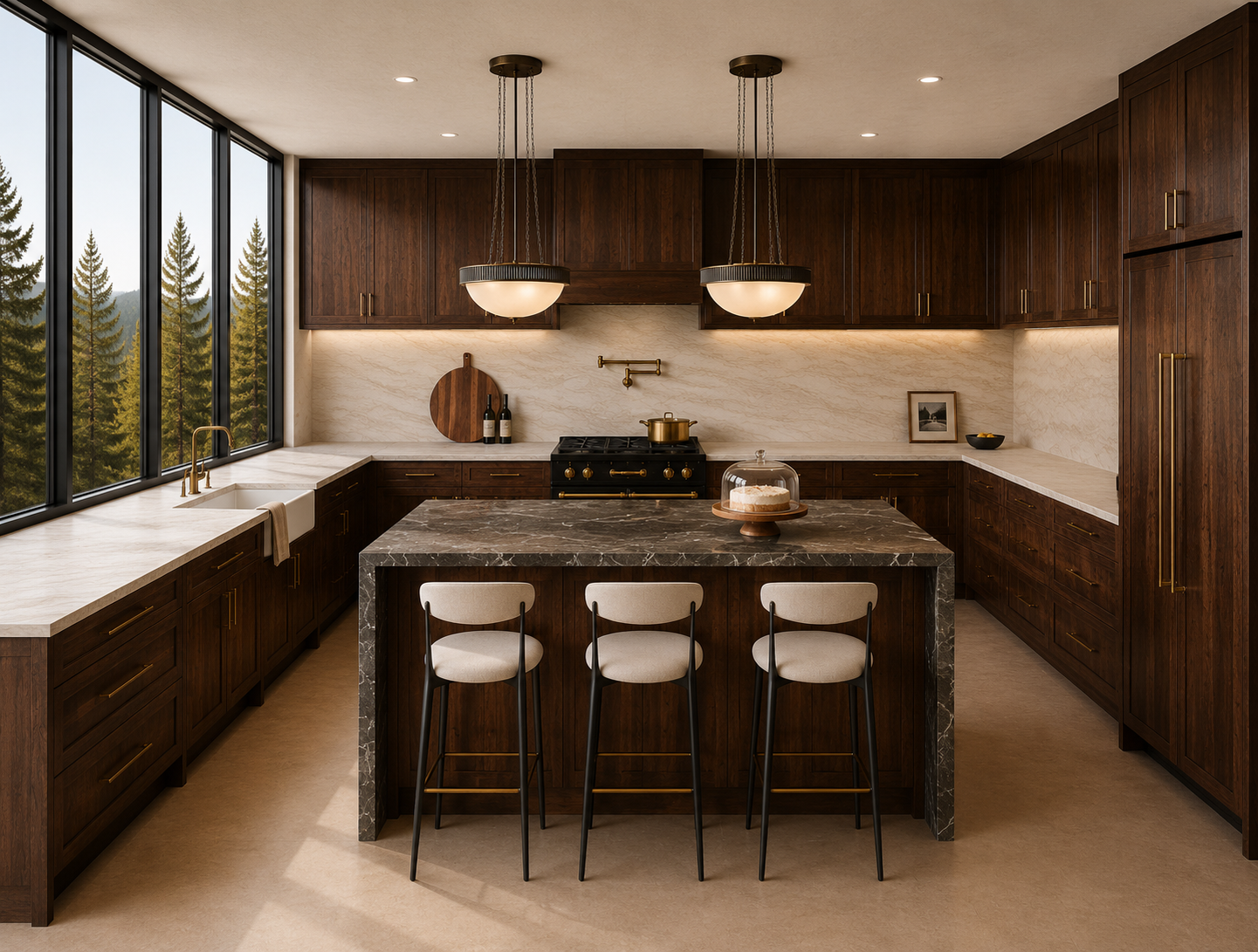
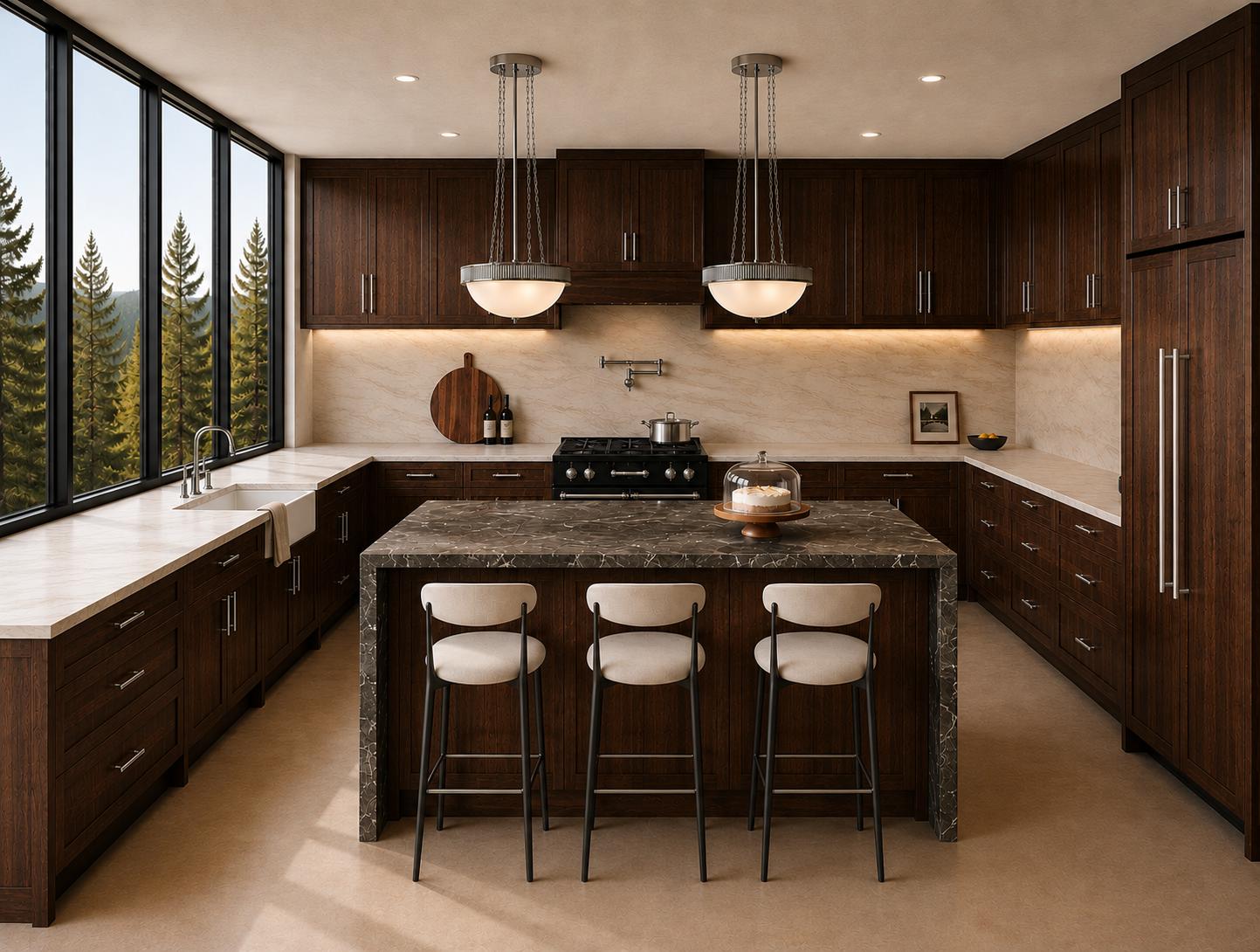
Notice the renderings below and compare how the different hardware finishes change the look of the kitchen.
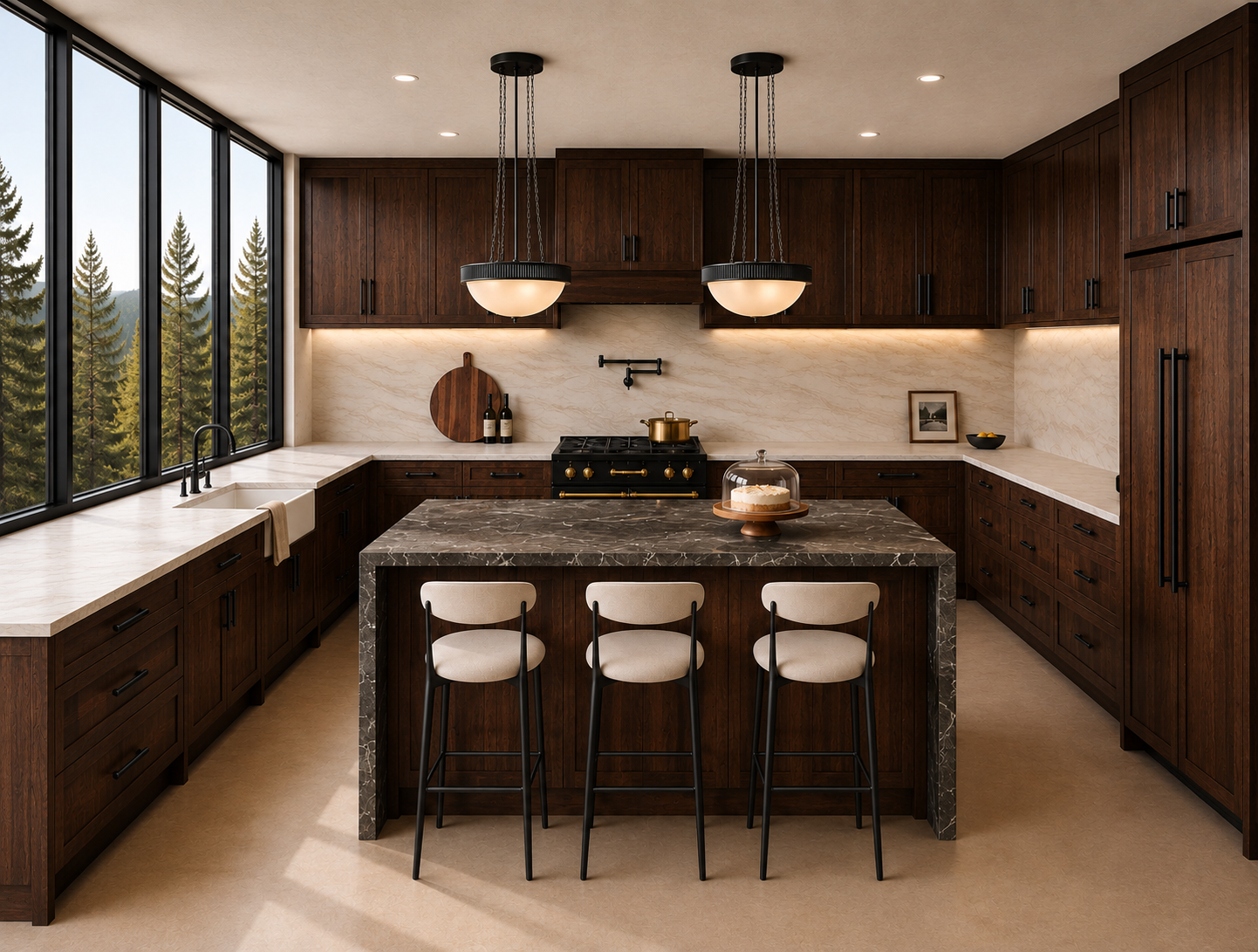
Black Hardware
A digital rendering of a dark kitchen showing black hardware. This results in a low contrast, more transitional looking kitchen because the black adds a sleek modern look while blending in with the dark wood more.
Brass Hardware
A digital rendering showing a dark walnut kitchen with brass hardware. The brass hardware adds slight contrast and warmth to the design. I personally like how the brass brings the design down a little and softens the overall look.
Brushed Chrome Hardware
In my opinion, the brushed chrome feels a little more out of place than the other examples. You can see we went so far as to change the pot on the stove as well. The reason this finish doesn’t blend as naturally with the design is because the chrome is a very cool finish and the design is overall very warm. The sandy stain on the concrete, the taj mahal quartzite, and the walnut are all very warm leaning finishes, and warmer accents will complement that.
Order Samples Before Buying Everything
Something I encourage everyone to do is order a single piece of hardware prior to ordering the lot. This will allow you to touch and see and even install the piece to use before you commit to an entire kitchen’s worth.
By doing this you can avoid mistakes like hardware that doesn’t coordinate with other finishes in that room, hardware that is unusually uncomfortable to the touch, or hardware that protrudes and becomes a knee-knocker.
Common Hardware Mistakes
Include:
Choosing hardware that’s too small
Matching every metal perfectly
Ignoring comfort
Using one hardware size everywhere
Forgetting proportions
Mixing too many finishes
Choosing trendy shapes over timeless ones
Buying before cabinets are finalized
Designer Tips for Choosing Hardware
Suggestions:
Prioritize proportion over trends.
Use pulls on heavy drawers whenever possible.
Mix knobs and pulls intentionally.
Repeat metal finishes throughout the room for cohesion.
Let hardware complement—not overpower—the cabinetry.
Invest in quality hardware you’ll touch every day.
Conclusion
The best cabinet and furniture hardware balances style, scale, finish, and function. By considering your home’s design style, choosing the right size, coordinating finishes thoughtfully, and testing samples before committing, you can create a polished, cohesive look that feels intentional and timeless.
