
How to Create a Functional Entryway
Introduction:
Your entryway is more than just a place to walk through—it's your home's first impression. Within just a few seconds of stepping inside, guests begin forming expectations about the style, personality, and atmosphere they'll experience throughout the rest of the house.
AFFILIATE DISCLOSURE: This post contains affiliate links. If you purchase through these links, I may earn a small commission at no additional cost to you. I only recommend products I genuinely love or would use in my own designs. This post is not sponsored, and all opinions are my own.
RENDERING DISCLAIMER: The images in this post are digital renderings created to illustrate my original design concepts. They are intended for inspiration and visualization and may not represent exact dimensions, materials, or construction details. See my full Disclosure & Disclaimer Policy for more information.
Why Every Home Needs a Functional Entryway
Your entryway is the first impression someone has on your home and the transition between outdoors to indoors and the rest of your home.
It Softens the Transition
When someone walks through your front door, they should gradually move from the exterior of your home into its interior.
The entryway helps make that transition feel intentional by introducing the colors, materials, and design elements that continue throughout the house.
It Previews What's Inside
Think of the entryway as a preview rather than the entire show.
If your home features warm wood tones, natural stone, black accents, or brass finishes, introducing those elements in the entryway creates a natural progression into the rest of the home.
Guests should immediately feel like they're entering this home—not an entirely different space.
It Provides a Functional Landing Space
Beyond aesthetics, the entryway also supports the transition in practical ways.
It's where people naturally:
Set down keys or bags
Remove shoes or outerwear
Pause before entering the rest of the home
Gather belongings before leaving
A well-designed entryway makes these everyday routines feel organized rather than chaotic. Take a look at the three images below. The first shows the baseline entryway or a simple entryway when it has just been cleaned. The second image shows what this entryway is likely to invite (chaos), and the final image shows a solution for the clutter.
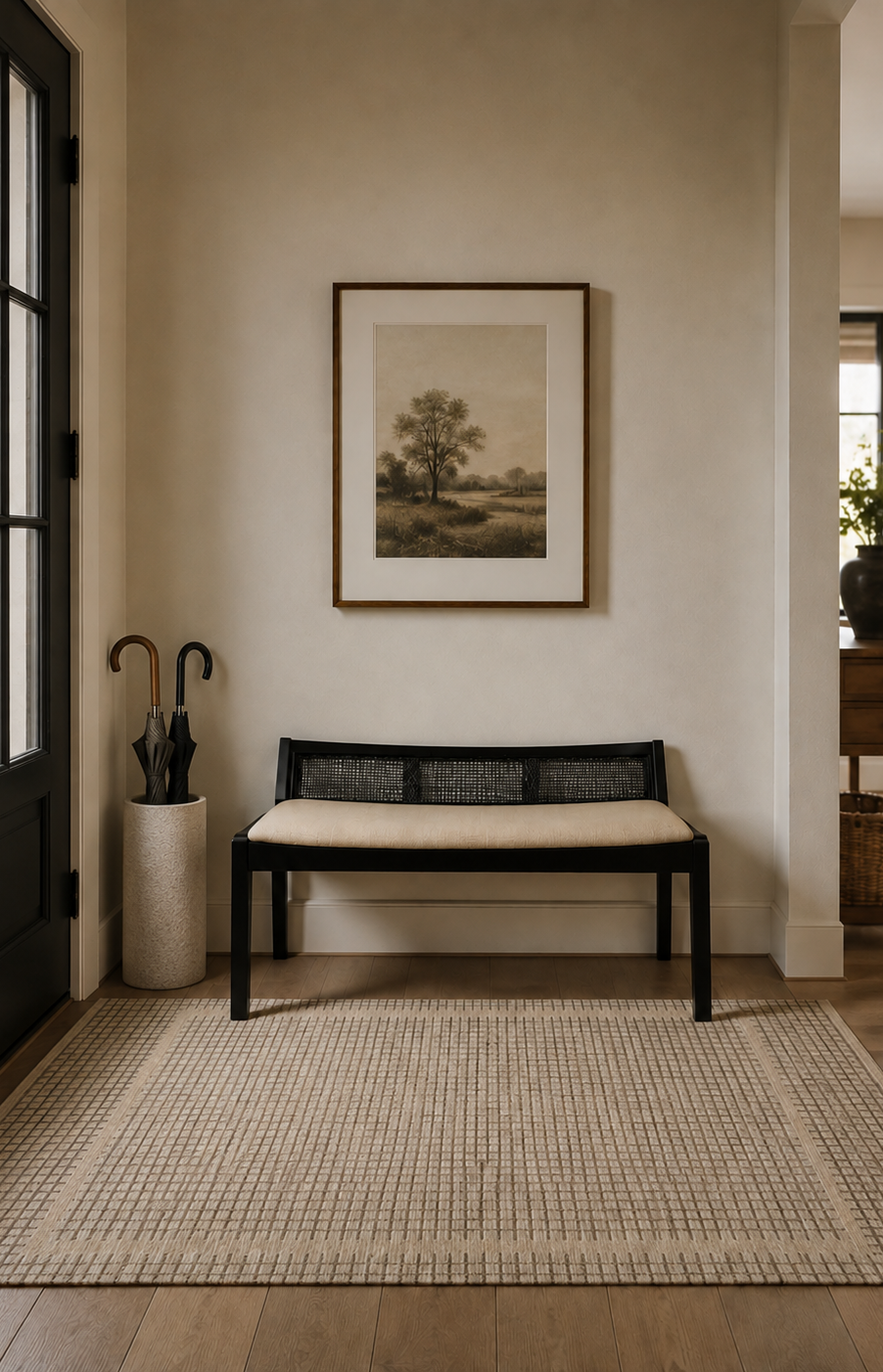
Original
A digital rendering showing a simple entryway. This is the baseline image and we will build from here.
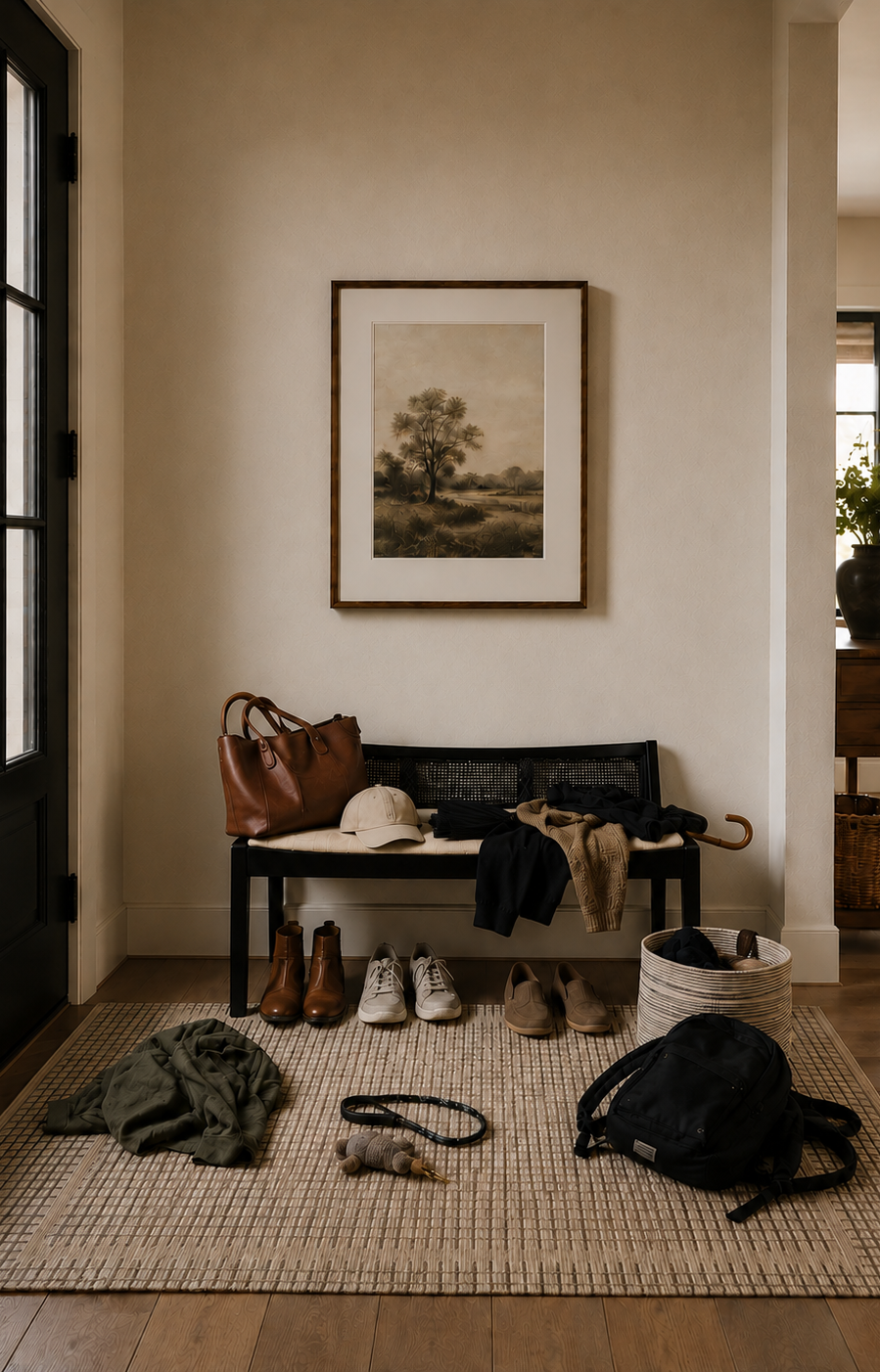
Cluttered entryway
The entryway in the first image looks nice, but due to the lack of functional design, it will more than likely end up looking like this pretty often.
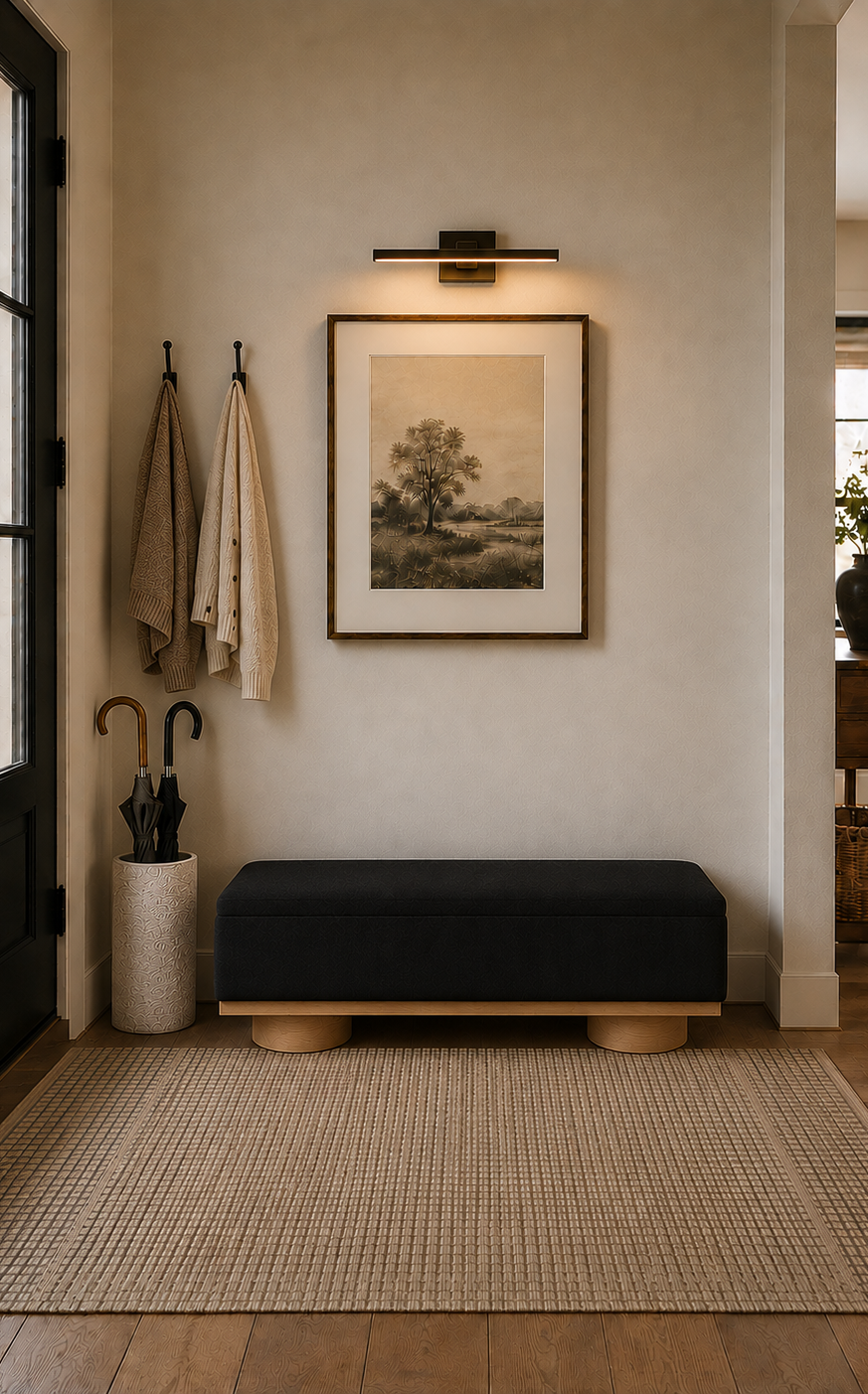
Functional Entryway
A digital rendering showing a functional entryway. This image shows a few swaps that can be made to make the entryway more sustainable long term.
In the last image you will notice I changed out the bench. This is a functional choice rather than an aesthetic one. The bench in the first design was beautiful but lacked storage. This bench has lift-up storage built in and allows miscellaneous items and shoes to be stored out of sight. I have also included an umbrella holder and a couple of minimal coat hooks.
Step 1: Think About How You Use the Space
Think About Your Daily Routine
Start by asking yourself:
What do I reach for every time I leave?
What do I naturally drop when I come home?
What tends to create clutter in this space?
Plan for What Comes In and Goes Out
Your entryway should provide a designated place for the items you use every day, such as:
Keys
Wallet
Purse or backpack
Mail
Sunglasses
Shoes
Dog leash
Umbrella
Coats or jackets
Make Coming Home Feel Easy
Think about what happens the moment you walk through the door.
Can you comfortably:
Set your bags down?
Take off your shoes?
Hang your coat?
Drop your keys?
Sort your mail?
Some more questions to consider:
Do you come in through the front door or garage?
Do you have children?
Do you have pets?
Do guests use this entrance?
What items naturally collect here?
Step 2: Define the Must-Have Functions
Common needs:
Place to drop keys
Mail storage
Shoe storage
Coat storage
Bag storage
Umbrella storage
Seating
Mirror
Lighting
Not every entryway needs every feature. In our example entryway, we stuck with a few and left the rest that didn’t suit the space or the client’s needs.
Step 3: Choose the Right Furniture
Furniture layout is especially important in an entryway because an entryway is both a circulation space and a functional room. Unlike a living room, people need to move through it easily while also using it to enter, exit, set things down, put on shoes, greet guests, and access nearby rooms.
Some pieces to consider:
Console table
Entry cabinet
Bench
Hall tree
Floating shelf
Narrow dresser
Built-in storage
Hooks
Umbrella storage
Middle table (usually round for circulation)
Add a Mirror
In some cases, adding a mirror can be beneficial. This is not true for all spaces, as you may have to sacrifice other elements to make the mirror work, but it can be a great addition if it works for your needs.
It Makes the Space Feel Larger
Mirrors reflect the room around them, creating the illusion of additional depth. This is especially helpful in small or narrow entryways, where they can make the space feel more open and spacious.
It Provides a Last-Minute Check Before You Leave
One of the biggest practical benefits is convenience.
A mirror allows you to quickly check your appearance before leaving the house.
Below I am showing some examples of how a well-designed entryway can be furnished. The first image shows a console table with a mirror above. This works great if you don’t need space for shoes or putting on shoes but you still like to have a catch-all spot and a place to check your outfit before you head out the door.
The second image shows a more mudroom style entryway that is typical in homes where children are coming in from school and need a place to house their school bags and sports equipment.
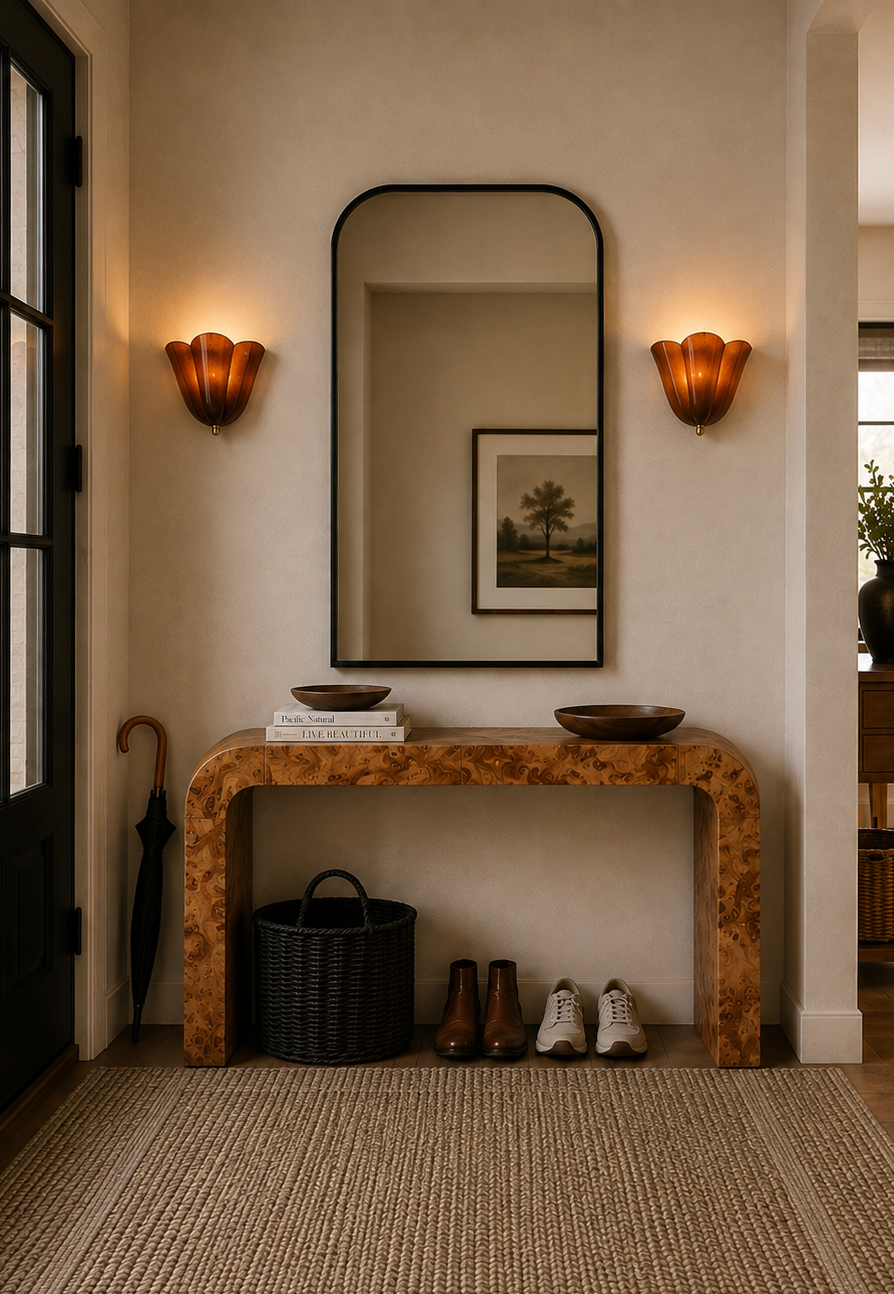
Differing Furniture Layout: Console Table & Mirror
A digital rendering showing an alternate furniture layout for the entryway.
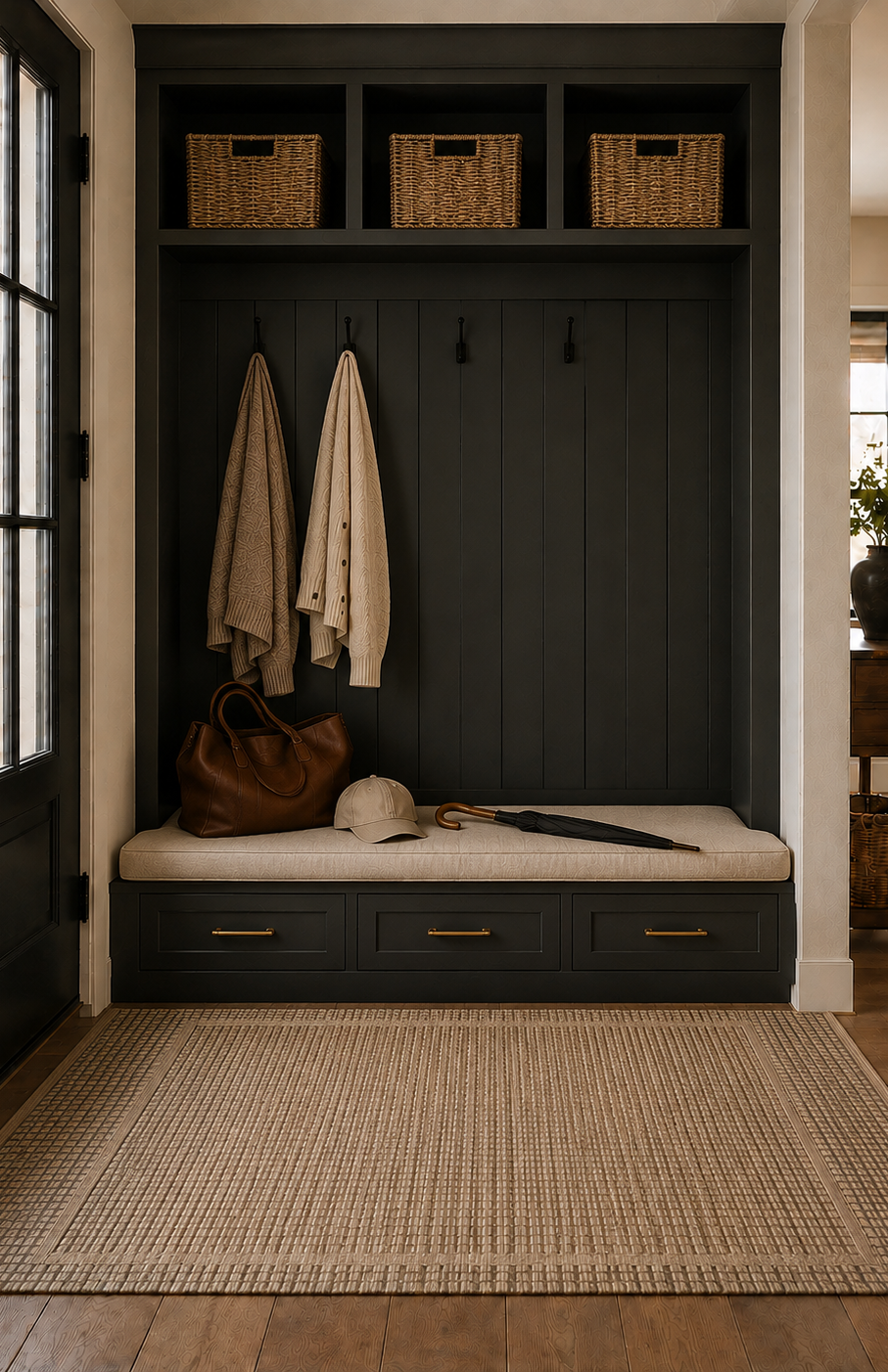
Mudroom Style Entry
A digital rendering showing a mudroom style entryway with built in bench seating, hooks and storage.
Step 6: Layer Lighting
I have talked a lot about the importance of layered lighting, and I even have a whole post dedicated to just that. Layered lighting is important in an entryway because the space has to do several different jobs, and one light source rarely does all of them well. An entry needs to be bright enough for practical tasks while also creating a warm, welcoming first impression.
A few layers serve different purposes:
Ambient lighting provides overall illumination—typically a chandelier, pendant, flush mount, or recessed lighting.
Task lighting helps with practical moments like finding keys, checking yourself in the mirror, putting on shoes, or sorting mail.
Accent lighting adds depth and highlights artwork, architectural details, a console vignette, or other focal points.
Decorative lighting contributes to the design itself. A beautiful pendant or pair of sconces can help establish the style of the home immediately.
The layering also prevents an entryway from feeling flat or overly harsh. If the only light is a bright overhead fixture, everything receives roughly the same visual emphasis. Adding a table lamp, picture light, sconces, or other secondary source creates highlights and shadows, making the space feel warmer and more dimensional.
Chandeliers
Flush mounts
Pendants
Wall sconces
Table lamps
For more information on layered lighting, check out my lighting post here: 7 places most people forget to add lighting
Step 7: Choose a Durable Rug
Your entryway rug should work as hard as it looks good. Since it's exposed to more wear than almost any other rug in your home, prioritize durability, cleanability, and performance alongside style. A well-chosen rug not only protects your floors but also helps your entryway stay cleaner, safer, and more welcoming for years to come.
Indoor-outdoor rugs
Washable rugs
Runners
Doormats
Layering rugs
For more information on rugs, I have an entire post dedicated to choosing the right rug. How to choose the right rug for your home
Common Entryway Mistakes
Include:
No place to sit
Too much open storage
No drop zone
Using furniture that’s too large
Ignoring lighting
No mirror (if necessary for your lifestyle)
Choosing delicate rugs
Letting mail pile up
Overdecorating small spaces
Designer Tips for a Functional Entryway
Suggestions:
Design for your daily routine, not just guests.
Hide clutter whenever possible.
Include at least one closed storage piece.
Add one statement item for personality.
Keep walkways clear.
Choose durable, easy-to-clean materials.
Reevaluate the space as your family’s needs change.
Conclusion
A functional entryway doesn’t have to be large or expensive—it simply needs to support your daily routine. By combining smart storage, durable materials, thoughtful lighting, and a few well-chosen decorative touches, you can create a welcoming space that’s both practical and beautiful.
