
What Paint Finish Should You Use Where?
What Is a Paint Finish?
A paint finish, also called a paint sheen, describes how much light a painted surface reflects once the paint has dried. It determines whether the surface looks flat and matte or smooth and glossy.
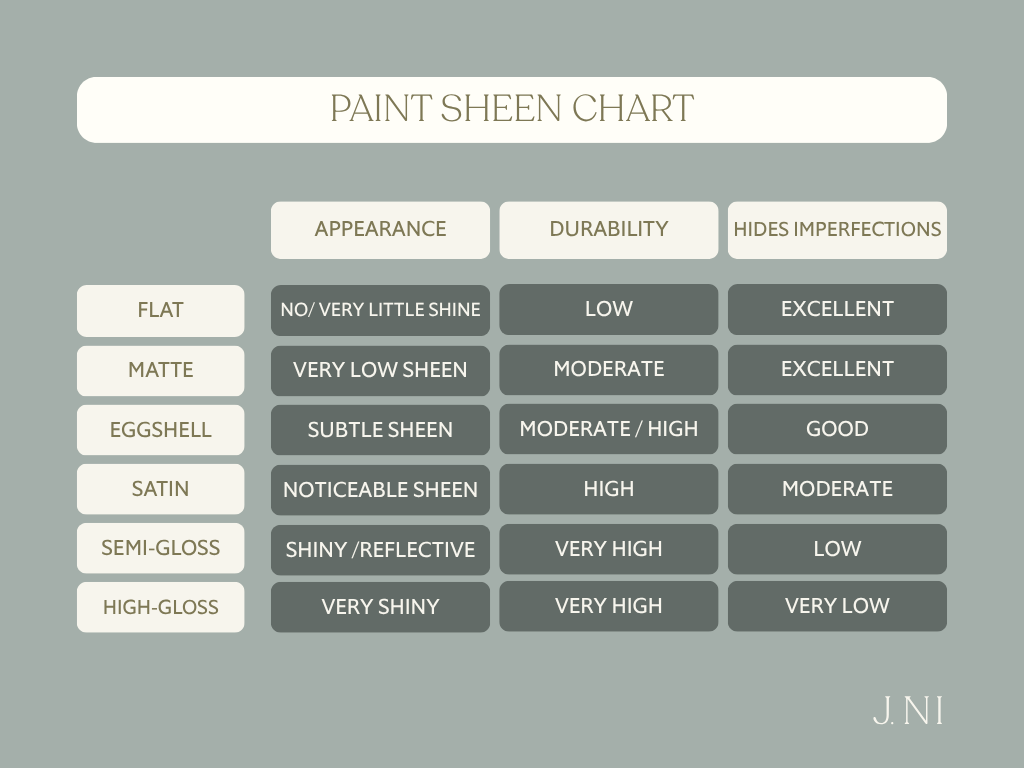
Paint finishes generally range from flat/matte → eggshell → satin → semi-gloss → high-gloss. As the sheen increases, the paint reflects more light and typically becomes more durable and easier to clean—but it can also make imperfections in the surface more noticeable.
Appearance
Sheen determines how much light reflects off a painted surface. Lower-sheen finishes absorb and diffuse more light, creating a softer, flatter appearance. Higher-sheen finishes reflect more light, giving surfaces more dimension and sometimes making colors appear richer or more saturated.
Sheen can also affect how a color appears throughout the day. Because glossy surfaces reflect their surroundings and the changing light more readily, the same paint color can look different depending on the finish.
Durability
Traditionally, higher-sheen paints are more durable because they form a harder, less porous surface that better withstands touching, rubbing, moisture, and everyday wear. Higher sheen paints are typically easier to wipe down as well. This is why you usually see semi-gloss or gloss sheens on trim, doors, and cabinetry.
Modern paint formulations have blurred this rule somewhat—many premium matte and eggshell paints are now engineered to be highly durable—but sheen is still an important consideration.
Washability
Generally, washability increases with sheen. Smoother, less porous finishes allow dirt, fingerprints, splashes, and other marks to be wiped away more easily.
Flat and matte finishes have historically been more difficult to scrub without leaving burnished or shiny areas. Eggshell and satin offer greater cleanability, while semi-gloss and gloss finishes are typically among the easiest to wipe clean.
Maintenance
Sheen creates a bit of a trade-off when it comes to maintenance.
Higher sheens are easier to clean, so they often perform better in spaces exposed to fingerprints, splashes, moisture, or frequent contact.
However, lower sheens are often easier to touch up. Because they reflect less light, a small repaired or repainted area is less likely to stand out. Touch-ups on satin, semi-gloss, and gloss surfaces can sometimes remain visible because even slight differences in application can change how the surface reflects light.
Visibility of Wall Imperfections
This is one of the biggest aesthetic differences between sheens.
The higher the sheen, the more noticeable surface imperfections tend to become. Reflected light highlights changes in the surface, making dents, drywall seams, patches, texture inconsistencies, and other flaws easier to see.
Flat and matte finishes diffuse light instead, which helps disguise imperfections. That's one reason they're particularly useful on ceilings, older walls, textured surfaces, or walls with less-than-perfect drywall work.
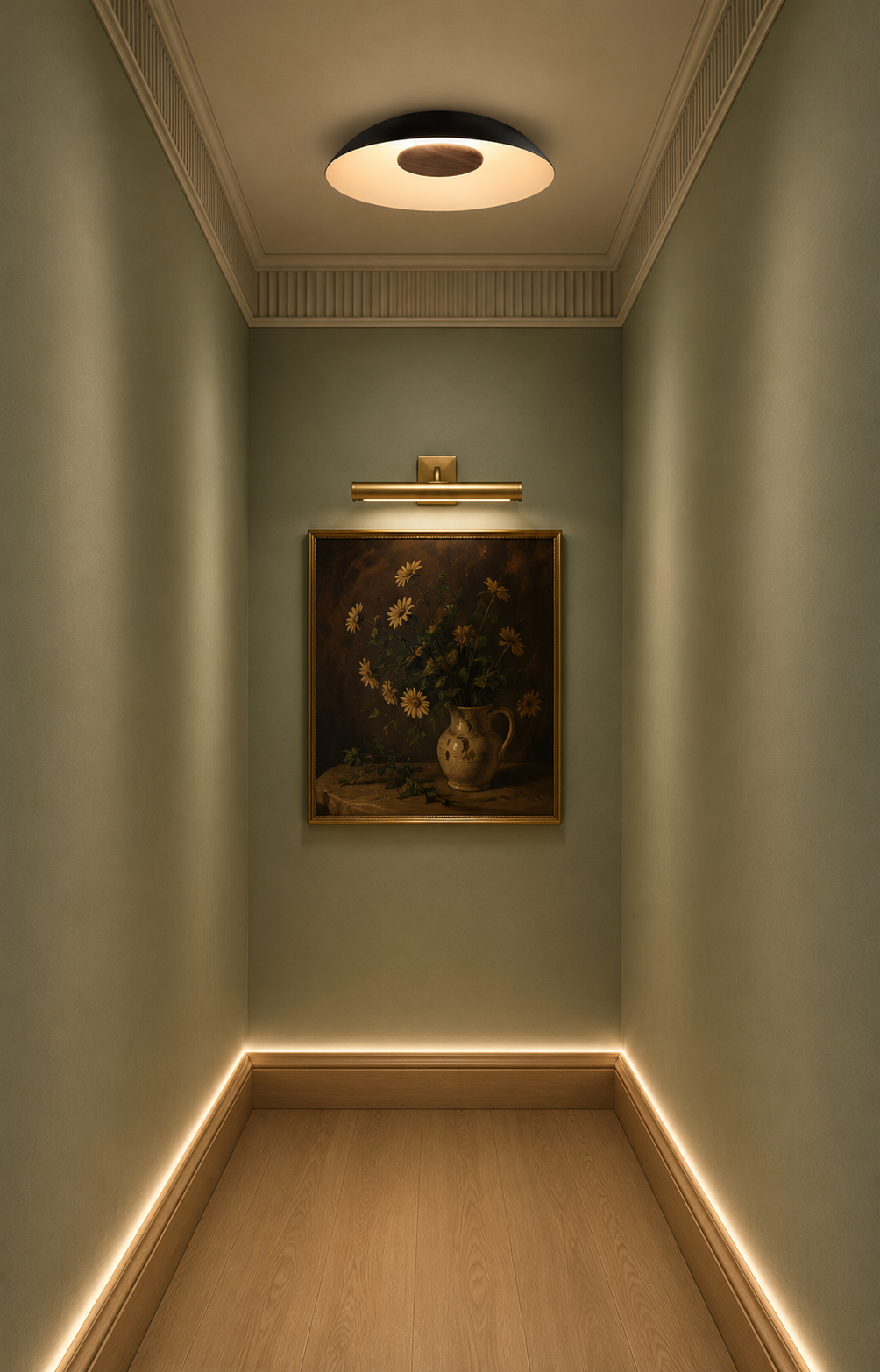
Eggshell Walls
A digital rendering showing an accent at the end of a hallway with eggshell sheen walls.
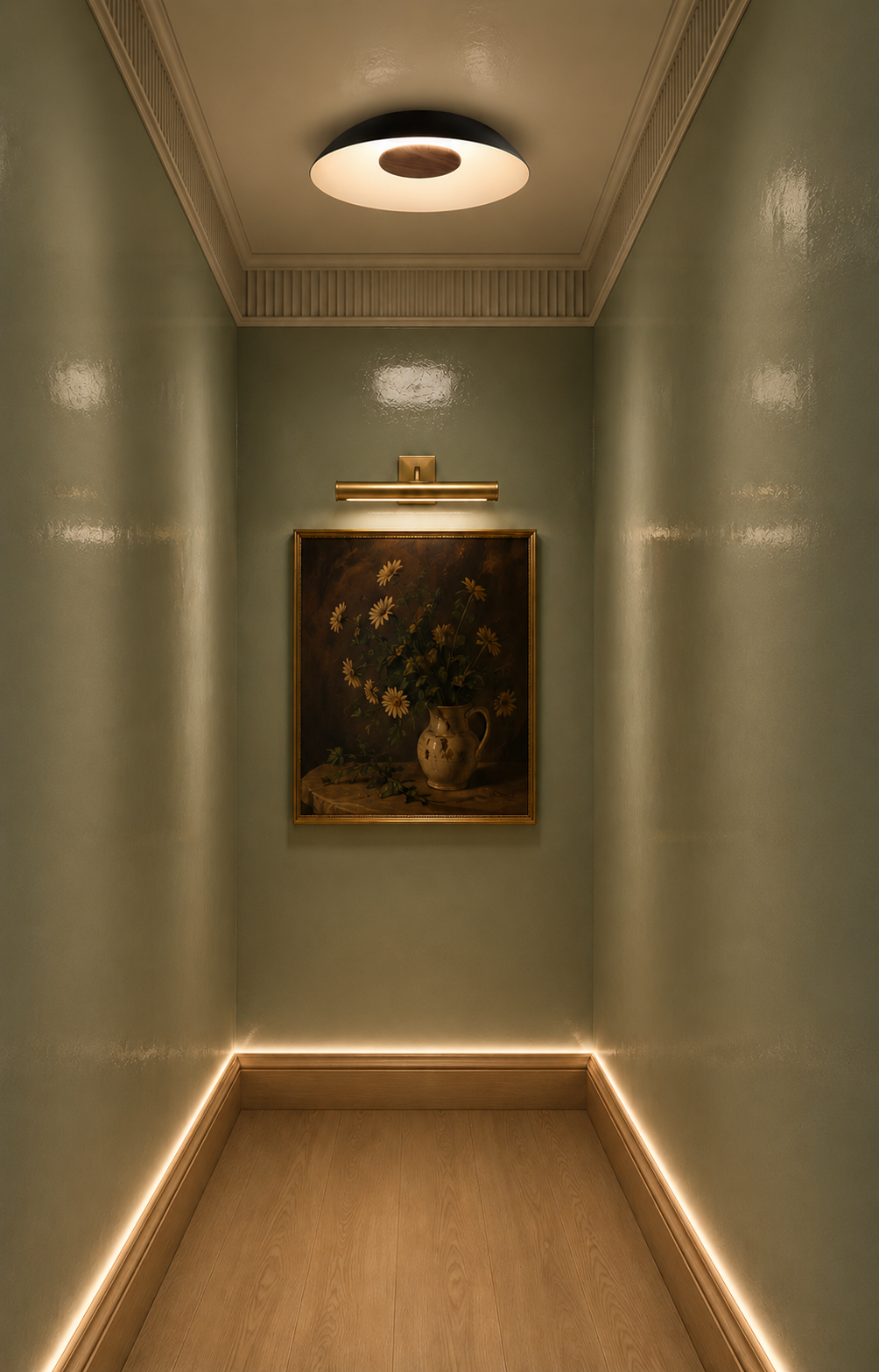
High-Gloss Walls
A digital rendering showing high-gloss paint throughout the hallway. You can see as compared to the eggshell how this feels more harsh and almost unnatural for the design. The glossy paint reflects the light and it becomes distracting because of the layered lighting we have in the space. The softer eggshell finish suits this design more.
Understanding the Different Paint Finishes
Brief overview of each finish:
Flat (Matte)
Lowest sheen
Best at hiding imperfections
Soft, velvety appearance
Eggshell
Slight sheen
Most common wall finish
Easy to maintain
Satin
Noticeable sheen
More durable
Great for higher-traffic areas
Semi-Gloss
Reflective
Moisture-resistant
Easy to wipe clean
High-Gloss
Very shiny
Highly durable
Best used intentionally
Step 1: Think About How the Room Is Used
1. How much traffic does the room get?
Think about how often people touch, bump, brush against, or mark the walls.
A formal dining room or adult bedroom may not need much durability, so a lower sheen can work beautifully. Hallways, mudrooms, kids’ rooms, and entryways usually experience considerably more wear and may benefit from a more durable finish.
More traffic → generally consider more durability/washability.
2. How likely are the walls to get dirty?
Traffic and mess aren't necessarily the same thing. Think specifically about what might end up on the walls.
Cooking splatter, fingerprints, muddy hands, makeup, water droplets, crayons, pet messes, etc. make washability more important.
For example, a kitchen wall generally needs to tolerate cleaning much better than a bedroom wall.
3. Is moisture present?
Bathrooms, laundry rooms, kitchens, and other humid or splash-prone areas require more consideration than dry rooms.
Historically, this pushed people toward higher sheens. Modern paints have changed this somewhat, because some lower-sheen products are specifically formulated for moisture-prone spaces. So readers should check the manufacturer's recommended applications rather than automatically assuming every bathroom has to be satin or semi-gloss. If you are doing a renovation that includes adding walls, definitely check the type of drywall you choose for the space as well. In moist areas be sure to choose a moisture resistant drywall.
4. What condition are the walls in?
If the walls have patches, dents, uneven drywall, texture inconsistencies, old plaster, or other imperfections, increasing the sheen can make those flaws much easier to see because reflected light emphasizes changes in the surface.
Imperfect walls → lower sheen is generally more forgiving.
Conversely, beautifully prepared, smooth walls can handle higher sheens much more successfully.
If you are adding walls in your renovation, you are going to want to prep your walls to handle the type of sheen you put on it. Higher sheen paints need higher level finishes for drywall.
5. What do you want the room to look like?
Once the practical requirements are satisfied, sheen becomes a design decision.
A matte wall creates a soft, quiet appearance. A subtle eggshell or satin introduces more light reflection and movement. High-gloss can become an intentional design feature, particularly when used on architectural elements or in a dramatic room.
So someone might intentionally choose a glossy wall despite it showing more imperfections because that's the aesthetic they're trying to create.
Step 2: Choose the Right Finish for Each Room
Living Room
Recommended finish:
Eggshell or matte
Semi-gloss (trim)
This works because it provides a soft appearance with enough durability for everyday use.
Dining Room
Recommended finish:
Eggshell or Matte
Semi-gloss (trim)
This is typically a lower traffic area which allows you to prioritize appearance. That being said, consider how close your dining table is to the walls and consider the guests that will be at your table. If you host a lot of children, maybe consider a more durable sheen.
Bedroom
Recommended finish:
Eggshell or Matte
Semi-gloss (trim)
Usually lower wear and these sheens create a softer look.
Kitchen
Recommended finish:
Satin (walls)
Semi-gloss (trim)
Washable and durable for splashes, grease, and cleaning.
Bathroom
Recommended finish:
Satin or semi-gloss in moisture-prone areas
Semi-gloss (trim)
Higher gloss finishes are better suited for moisture, although you really want to consider the substrate underneath as well as considering a more waterproof option all together in wet areas. I would recommend a ceramic tile or moisture resistant plaster instead if at all possible.
Laundry Room
Recommended finish:
Satin
Satin has good durability and washability and is better with moisture (not shower level moisture resistance, but enough to handle some splashes from the washer or wet clothes)
Hallways
Recommended finish:
Satin or eggshell
Handles contact better in high traffic areas.
Home Office
Recommended finish:
Eggshell or Matte
Usually moderate to low wear
Kids’ Rooms
Recommended finish:
Satin or washable eggshell
Better washability for fingerprints and scuffs
Ceilings
Recommended finish:
Flat
Minimizes reflection, helps disguise imperfections, and better diffuses light rather than reflecting it.
Trim and Doors
Recommended finish:
Semi-gloss or satin
Durable and washable and creates a nice contrast with typical eggshell walls.
Cabinets
Recommended finish:
Satin or semi-gloss (depending on the paint system)
Needs a hard durable cleanable surface. Cabinets typically need to be sprayed to create an even coat.
Step 3: Think About Lighting
Lighting matters when choosing paint sheen because sheen controls how much light is reflected from the painted surface. The more light a room receives—and the direction and type of that light—the more noticeable the finish can become.
How lighting affects sheen
Bright natural light makes sheen more noticeable. In a room with large windows or abundant daylight, satin or semi-gloss walls may appear significantly shinier than they did on a small paint sample. Matte and flat finishes diffuse that light instead, creating a softer appearance.
Direct light emphasizes imperfections. When sunlight or a strong fixture hits a wall at an angle, it creates what designers often call raking light. Even small drywall seams, patches, dents, waves, or roller marks can cast tiny shadows or create changes in reflection. Higher sheens exaggerate this effect, while lower sheens help disguise it.
Low-light rooms behave differently. A dark room doesn't automatically need a glossy finish. While higher sheen reflects more light, increasing sheen generally won't transform a poorly lit room into a bright one. Instead, it changes how the available light interacts with the surfaces.
Artificial lighting matters too. Recessed lights, sconces, picture lights, lamps, and wall washers can all create reflections. A fixture positioned close to a wall or aimed directly across it can make a higher-sheen finish especially noticeable.
Window orientation can matter
The type of daylight is worth considering too.
North-facing rooms: generally receive softer, more indirect light, so differences in sheen may appear less dramatic.
South-facing rooms: tend to receive abundant, stronger light, which can make sheen and surface imperfections more apparent.
East-facing rooms: stronger direct light in the morning can emphasize sheen on certain walls.
West-facing rooms: strong afternoon/evening light can do the same later in the day.
Step 4: Coordinate Wall, Trim, and Ceiling Finishes
Common combinations:
Option 1: Classic, versatile combination
Flat ceiling
Eggshell walls
Semi-gloss trim
Option 2: Soft, contemporary, & subtle contrast
Matte walls
Satin trim
Flat ceiling
Option 3: Tonal/ color drenched look with definition
Same color:
Matte walls
Semi-gloss or Satin trim
Flat ceiling (or matte)
Option 4: Fully enveloping, minimal color-drenched effect
Same color throughout
Same sheen throughout
Common Paint Finish Mistakes
Using high-gloss on imperfect walls
Painting ceilings in satin
Using flat paint in busy hallways
Ignoring moisture levels
Mixing random finishes
Assuming shinier is always more durable
Forgetting to coordinate trim and walls
Designer Tips for Choosing Paint Finishes
Prioritize function before appearance.
Let the condition of your walls guide your choice.
Save higher sheens for trim, doors, and cabinetry.
Consider maintenance over trends.
Test paint in your home’s lighting before committing.
Keep finishes consistent throughout connected spaces when possible.
Conclusion
The best paint finish isn’t simply the shiniest or most durable—it’s the one that matches how a space is used. By considering traffic, moisture, wall condition, lighting, and maintenance, you can confidently choose finishes that not only look beautiful but also perform well for years.
