
How to Mix Different Wood Tones Like a Designer
Introduction
Many people think every wood finish in a room has to match. In reality, perfectly matching furniture often makes a room feel flat and like it was purchased as a single furniture set.
Professional designers intentionally combine different wood tones to create depth, contrast, and a space that feels collected over time. The key isn’t matching the wood—it’s balancing it.
Here’s exactly how to do it.
AFFILIATE DISCLOSURE: This post contains affiliate links. If you purchase through these links, I may earn a small commission at no additional cost to you. I only recommend products I genuinely love or would use in my own designs. This post is not sponsored, and all opinions are my own.
RENDERING DISCLAIMER: The images in this post are digital renderings created to illustrate my original design concepts. They are intended for inspiration and visualization and may not represent exact dimensions, materials, or construction details. See my full Disclosure & Disclaimer Policy for more information.
1. Decide Which Wood Will Be the “Main Character”
Before adding different woods, choose one dominant finish. This will help you set the tone and keep you from getting so overwhelmed with the process.
Examples:
White oak flooring
Walnut dining table
Dark stained kitchen cabinets
Natural oak ceiling beams
That wood should make up roughly 60–70% of the visible wood in the room.
“ Think of your primary wood tone as the “background.” Every other wood supports it.”
2. Limit Yourself to 2–3 Wood Tones
Using too many different finishes can feel chaotic or unbalanced.
A simple formula:
Primary wood
Secondary contrasting wood
Optional accent wood
Example:
White oak floor
Walnut coffee table
Black stained side table
This creates contrast without feeling random. Keep in mind this is just a general guideline not a strict rule.
Use Other Materials to Break Up the Wood
Too much wood—even beautiful wood—can become overwhelming.
Mix in:
Upholstery
Stone
Glass
Painted furniture
Metal
Linen
Leather
These materials give your eye a place to rest.
Don’t Forget Black Counts as a Wood Tone Too
Black stained wood works almost like a neutral.
Examples:
Black dining chairs
Black console
Black shelving
Black coffee table
It anchors lighter woods and makes the room feel more modern.
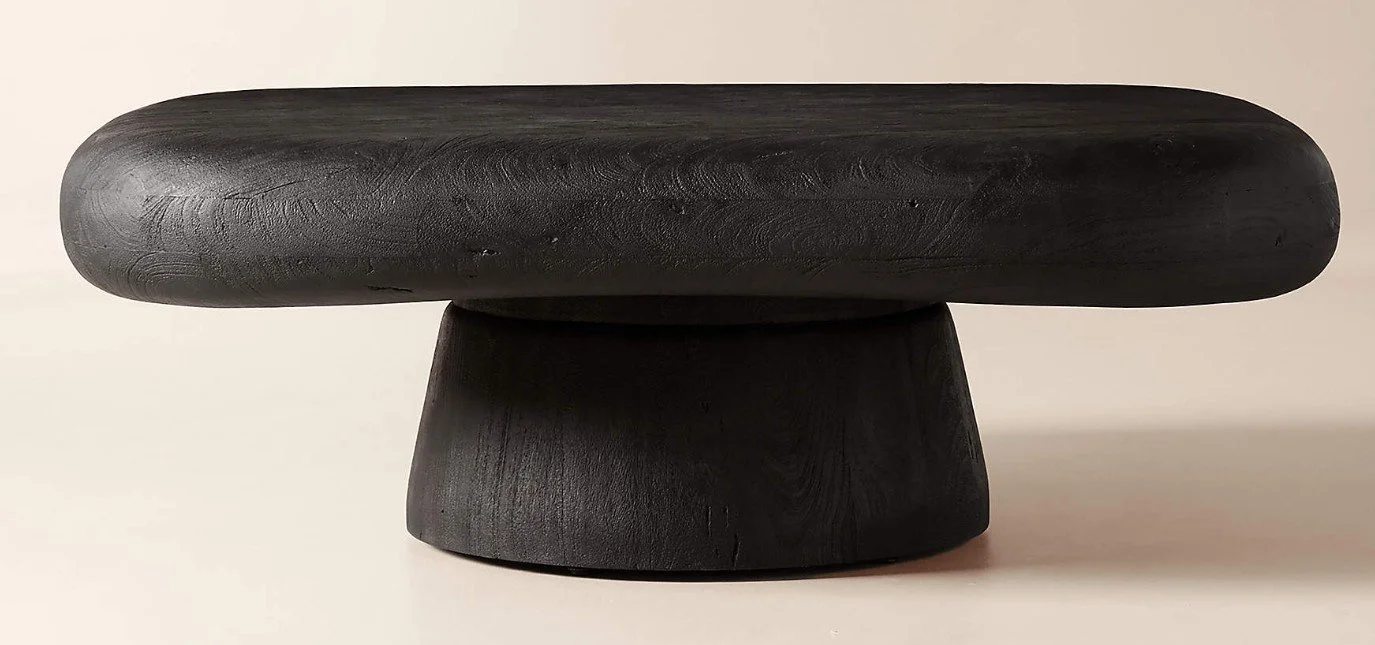
Black Stained Wood
3. Mix Light, Medium, and Dark Woods
Rooms feel more balanced when wood finishes vary in depth.
Instead of:
Light floor
Light table
Light chairs
Light shelves
Try:
Light floor
Medium wood dining table
Dark wood console
Black accents
Contrast adds visual interest and depth to the design. When the same tone is used over and over, the room is at risk of looking flat. Look at the image below and notice the ceiling stain, the wood on the chair, wood on the door that coordinates with the ceiling, and the black. We also took it a step further and added gray.
Quick Designer Formula
If you’re unsure where to start:
60% Primary wood tone
30% Secondary wood tone
10% Accent wood or black finish
Repeat each finish at least twice throughout the room, and balance everything with textiles, metal, and stone. Applying the 60/30/10 method to the image below, 60% is represented with the ceiling and the door, 30% is represented through the black side tables and the bench, and 10% is represented in the chair wood.
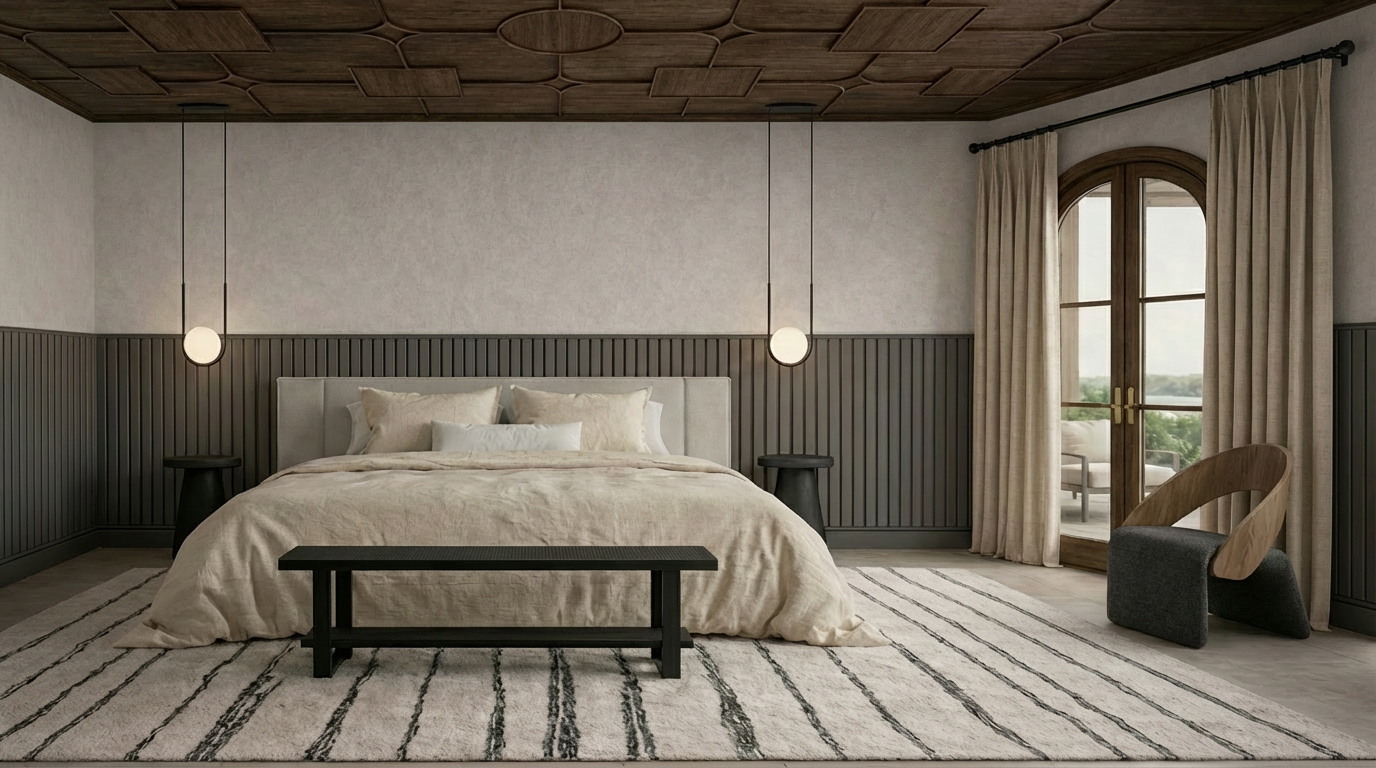
Mixed Wood Tones
A digital rendering showing a modern transitional bedroom design.
Repeat Each Wood Tone More Than Once
A single walnut piece can look accidental.
Instead:
Walnut dining table
↓
Walnut picture frame
↓
Walnut cutting board
↓
Walnut lamp
Repeating finishes helps the room feel intentional.
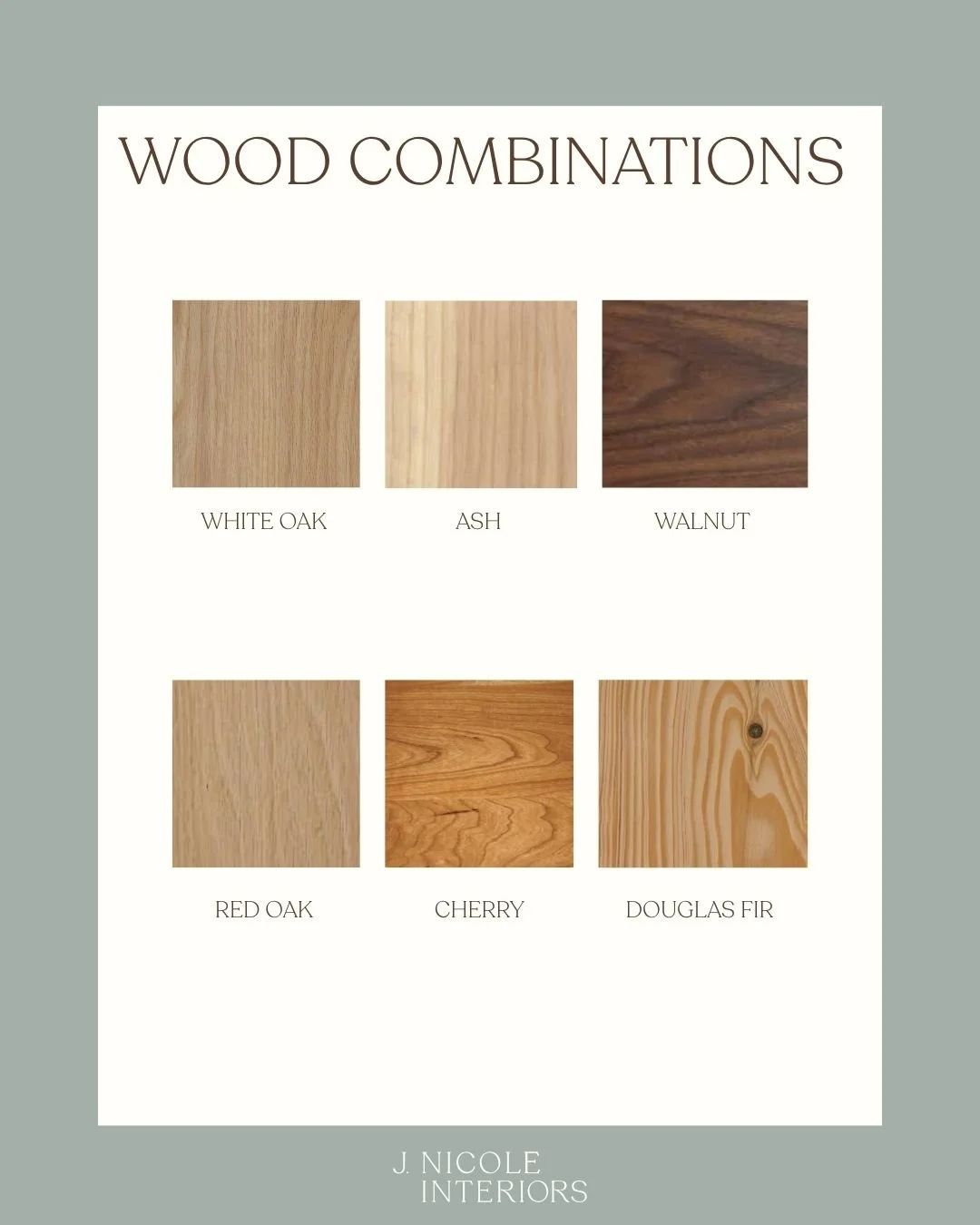
4. Pay Attention to the Undertones
This is where most people get into trouble.
Wood colors aren’t just “brown.”
They can have:
Yellow undertones
Orange undertones
Red undertones
Gray undertones
Neutral undertones
For example:
Good combination:
White oak
Walnut
Ash
Harder combination:
Red oak
Cherry
Douglas Fir
When possible, keep undertones similar even if the wood colors are different.
5. Match the Style Before You Match the Color
A rustic farmhouse table and an ultra-modern walnut media console may clash—not because of the wood color, but because of their design styles.
Consistent furniture style is often more important than perfectly matching wood tones.
Ask yourself:
Are the furniture lines similar?
Do the pieces feel like they belong in the same home?
Are the proportions consistent?
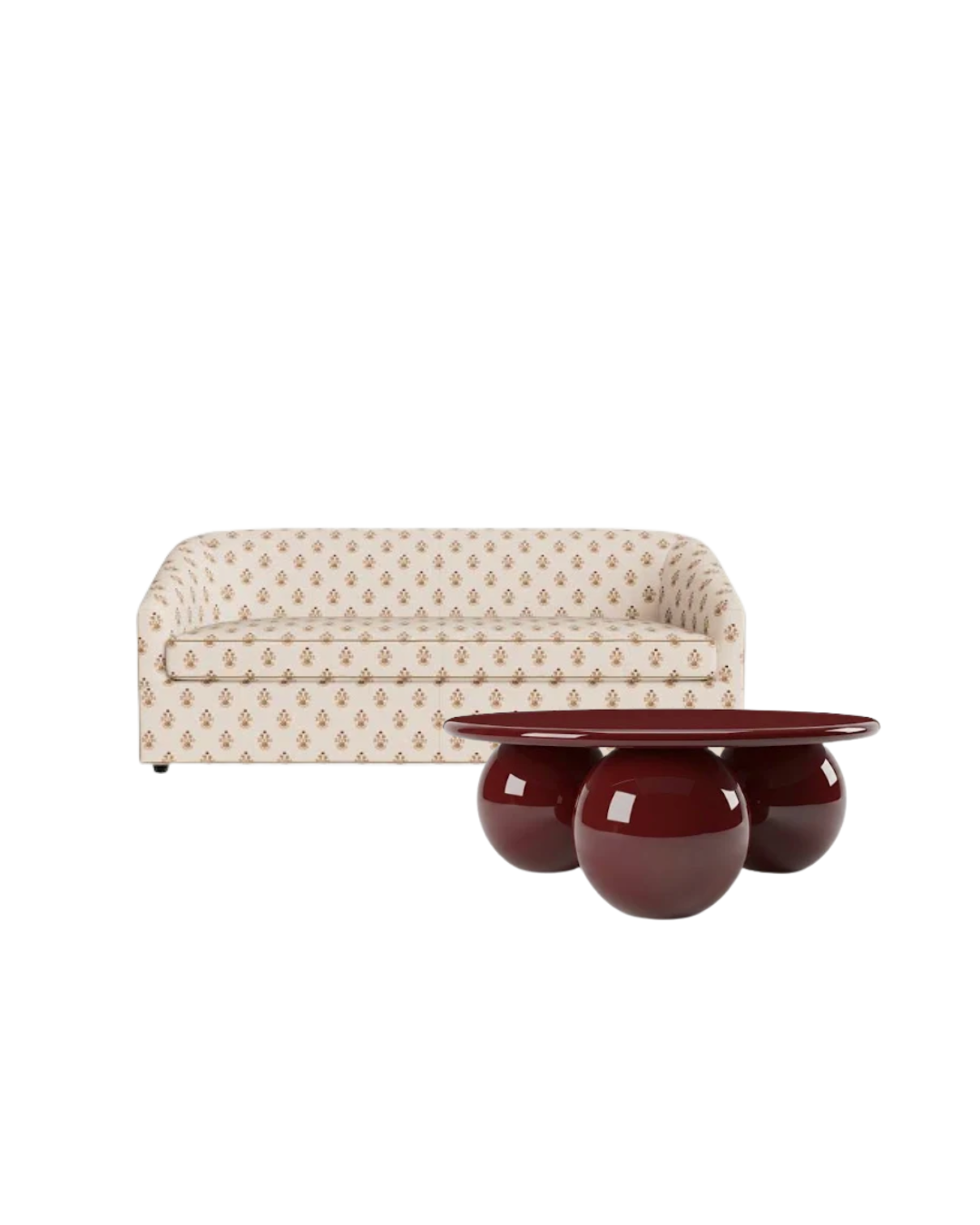
Mixed-Style Furniture
This is an example of pairing differing styles of furniture. The couch leans more cottage style and traditional while the coffee table is sleek and modern. Although the colors complement one another, the style contrasts. It is not necessarily wrong, but it is important to pay attention to.
9. Look at the Room as a Whole
Instead of comparing one piece to another, step back.
Designers view the room as a complete composition.
If the wood tones are balanced throughout the space, individual differences become much less noticeable.
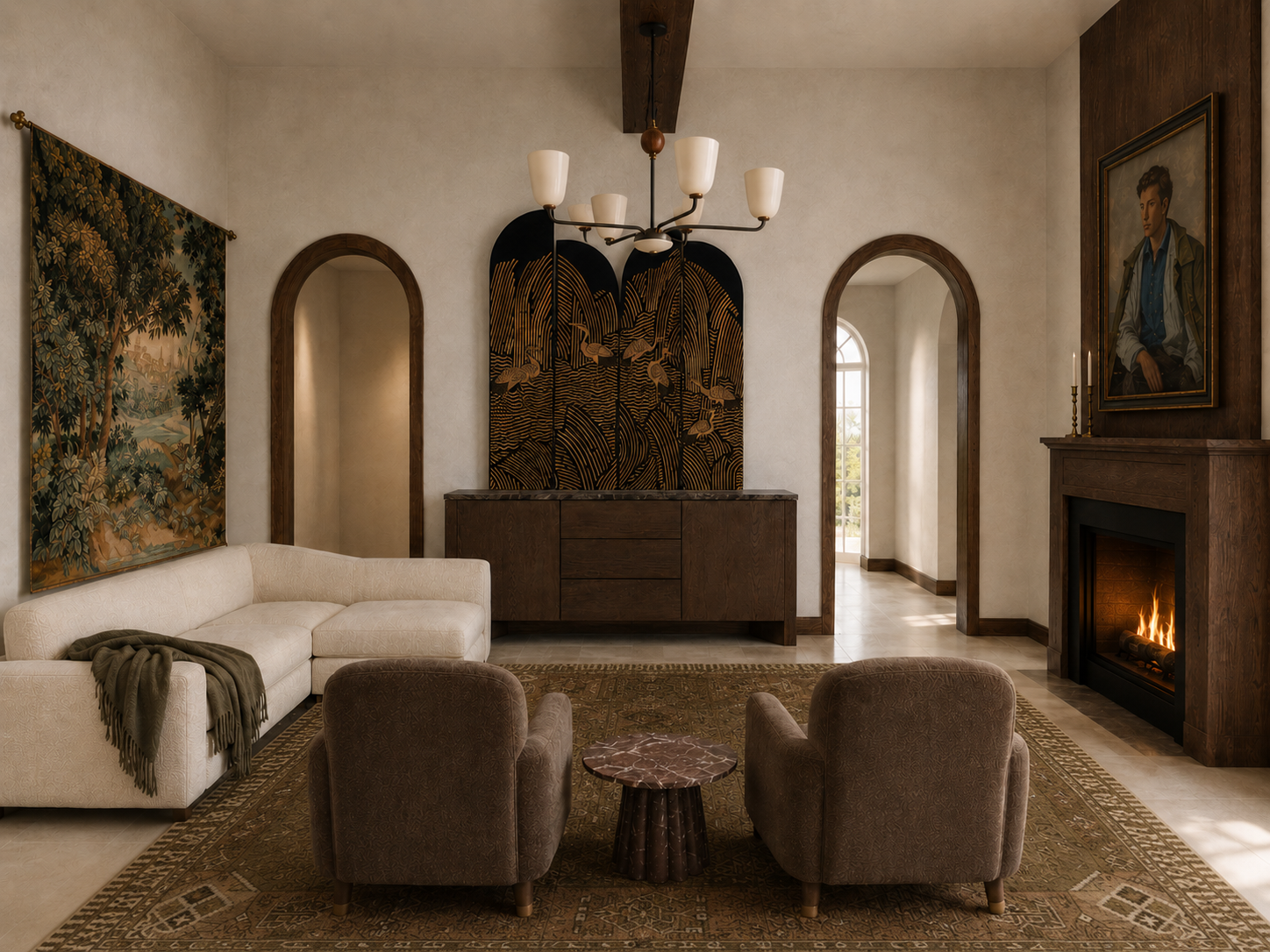
Balanced wood tones
We have chosen one overall wood tone for this design and you can see how it ties in with the other materials and the locations feel balanced. If we used a coffee table in this design, I would like to see it in a deeper color to contrast.
Common Mistakes to Avoid
Buying an entire matching furniture collection
Using five or six different wood finishes
Ignoring wood undertones
Having one random wood finish that appears nowhere else
Making every piece exactly the same color
Forgetting to add contrast with fabrics and metals
Conclusion
Mixing wood tones is one of the easiest ways to make a home feel layered, collected, and professionally designed. Instead of trying to match every finish perfectly, focus on balance, repetition, and contrast. When you choose a dominant wood, limit your palette, repeat finishes throughout the room, and pay attention to undertones, different woods can work together beautifully.
