
Introduction: Your Sofa Sets the Foundation for the Entire Room
The sofa is often the largest piece of furniture in a living room, and it’s usually the piece you’ll live with the longest. It affects how the room looks, how it functions, and how comfortable it feels day to day.
Many people fall in love with a sofa in a showroom or online, only to discover that it’s too large, too small, uncomfortable, or simply doesn’t fit the way they use their space.
As an interior designer, I rarely choose a sofa based on appearance first. I begin by understanding how the room needs to function, then determine the appropriate size, shape, and style before narrowing down the finishes and details.
AFFILIATE DISCLOSURE: This post contains affiliate links. If you purchase through these links, I may earn a small commission at no additional cost to you. I only recommend products I genuinely love or would use in my own designs. This post is not sponsored, and all opinions are my own.
RENDERING DISCLAIMER: The images in this post are digital renderings created to illustrate my original design concepts. They are intended for inspiration and visualization and may not represent exact dimensions, materials, or construction details. See my full Disclosure & Disclaimer Policy for more information.
Step 1: Start With Your Furniture Plan
Before you shop, create a furniture plan.
A furniture plan helps answer questions like:
Where will the sofa go?
How much space is available?
Where are the main walkways?
Will the room include chairs?
Will there be a sectional?
Where will the coffee table sit?
Is there a fireplace or TV?
Choosing a sofa before answering these questions often leads to buying something that’s simply too big—or too small.
For even more information on building your own furniture plan, check out my post on How to Create a Furniture Plan Before You Buy Anything.
“Designer Tip
The sofa shouldn’t dictate the room. It should support the furniture plan you’ve already created.”
Determine the Primary Function of the Room
Ask yourself:
Do you entertain often?
Is this where your family watches TV every night?
Do children play in this room?
Will people nap here?
Is it mostly a formal space?
The answers will influence nearly every decision you make.
For example:
A formal sitting room may prioritize appearance.
A family room may prioritize comfort and durability.
The best sofa for one home may be completely wrong for another.
You may have noticed by now that several of my blog posts on choosing the right piece of furniture start with the same first two steps. That is because they are vital to the selection process. If you don’t have a good idea of what you are working with (the furniture plan) and you don’t know why you need a new piece of furniture, finding the right piece if going to be quite difficult.
Step 3: Choose the Right Size
One of the biggest mistakes homeowners make is buying the largest sofa they can fit.
Instead, think about proportion.
The sofa should feel balanced within the room while leaving comfortable circulation around it.
Before buying:
Measure the room.
Tape the sofa footprint on the floor.
Walk around it.
Visualize nearby furniture.
Sometimes a slightly smaller sofa makes the entire room feel larger, but consider your needs before purchasing. I have also talked a lot about the painter’s tape method, and it still stands true for sofas. Go ahead and tape off the dimensions of the sofa you are thinking off purchasing on your floor. This will help you determine how the size of the piece feels in your space.
Step 4: Decide Between a Sofa, Sectional, or Multiple Sofas
Standard Sofa
Great for:
Most living rooms
Flexible layouts
Pairing with accent chairs
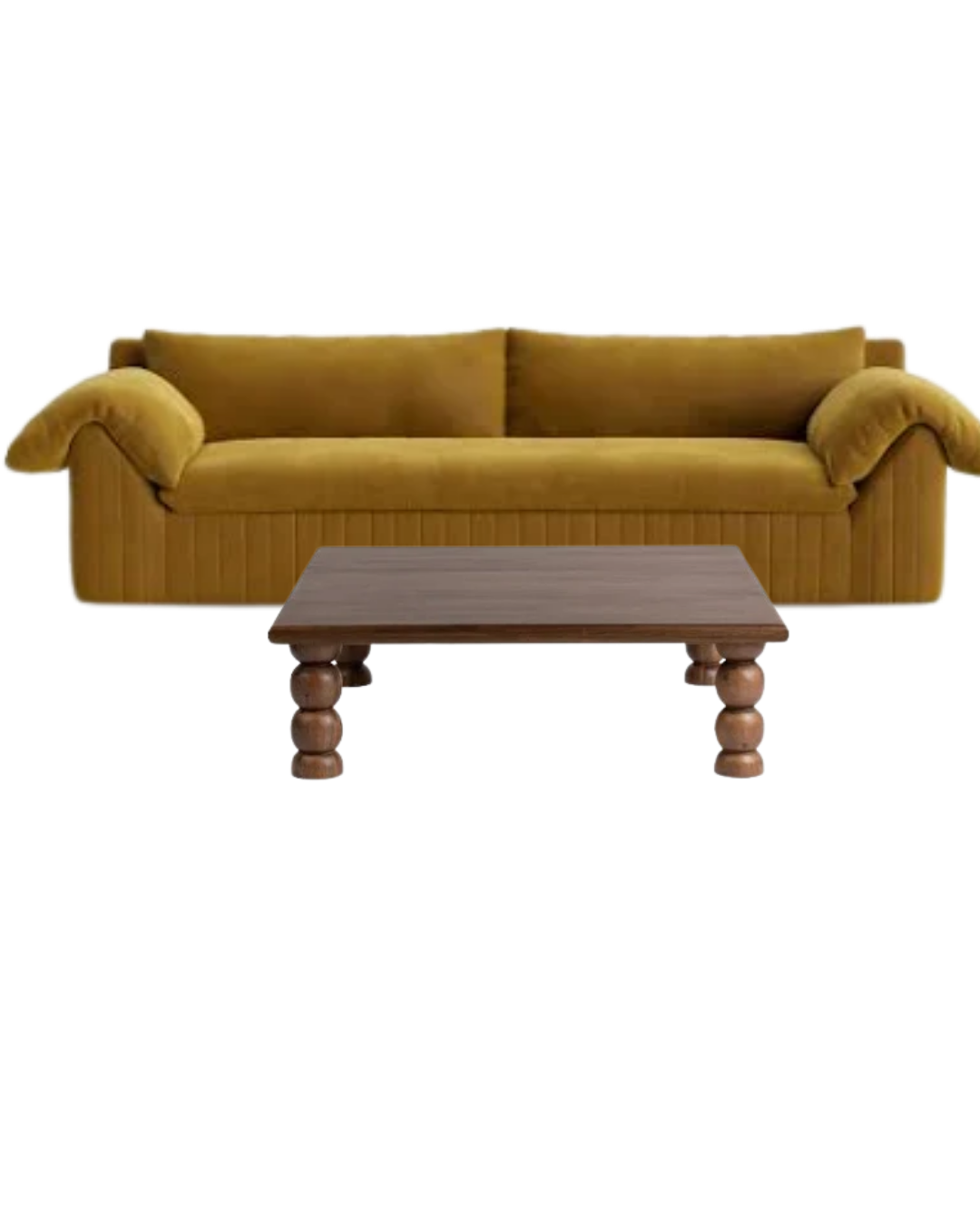
Standard Sofa:
An Image showing a mustard velvet upholstered sofa with a walnut coffee table.
Sectional
Best for:
Larger families
TV rooms
Open floor plans
Casual living
Keep in mind that sectionals are harder to rearrange if your needs change. You also need to take note of whether it is a left handed chaise or right and make sure that meets what you need.
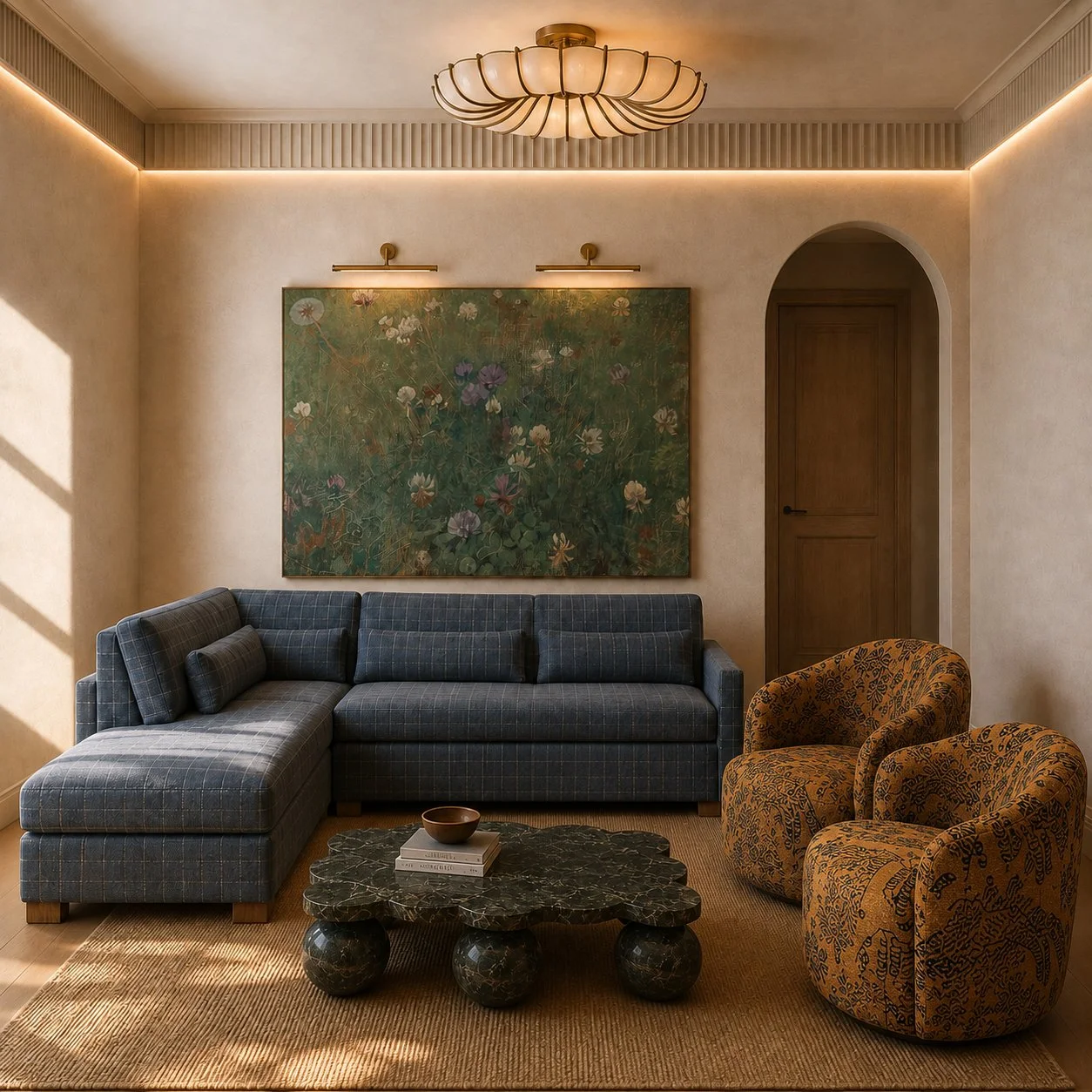
Sectional:
A digital rendering showing a small family room with a blue patterned sectional.
Two Sofas
Ideal for:
Formal living rooms
Large conversation areas
Symmetrical layouts
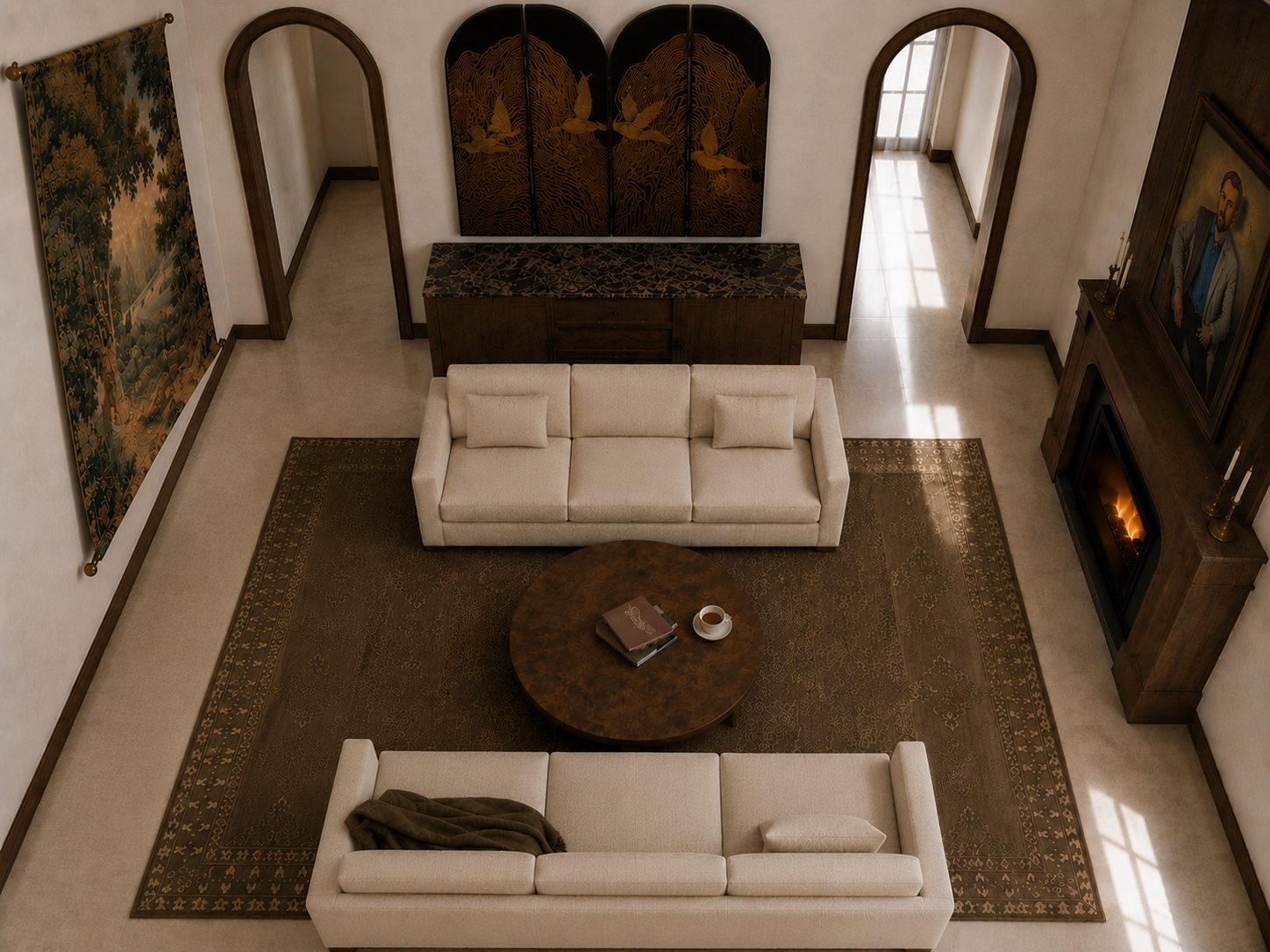
Two Sofas:
A digital rendering showing 2 sofas facing one another in a fireplace room.
Loveseat
Perfect when:
The room is smaller
Space is limited
You still want comfortable seating without overwhelming the room.
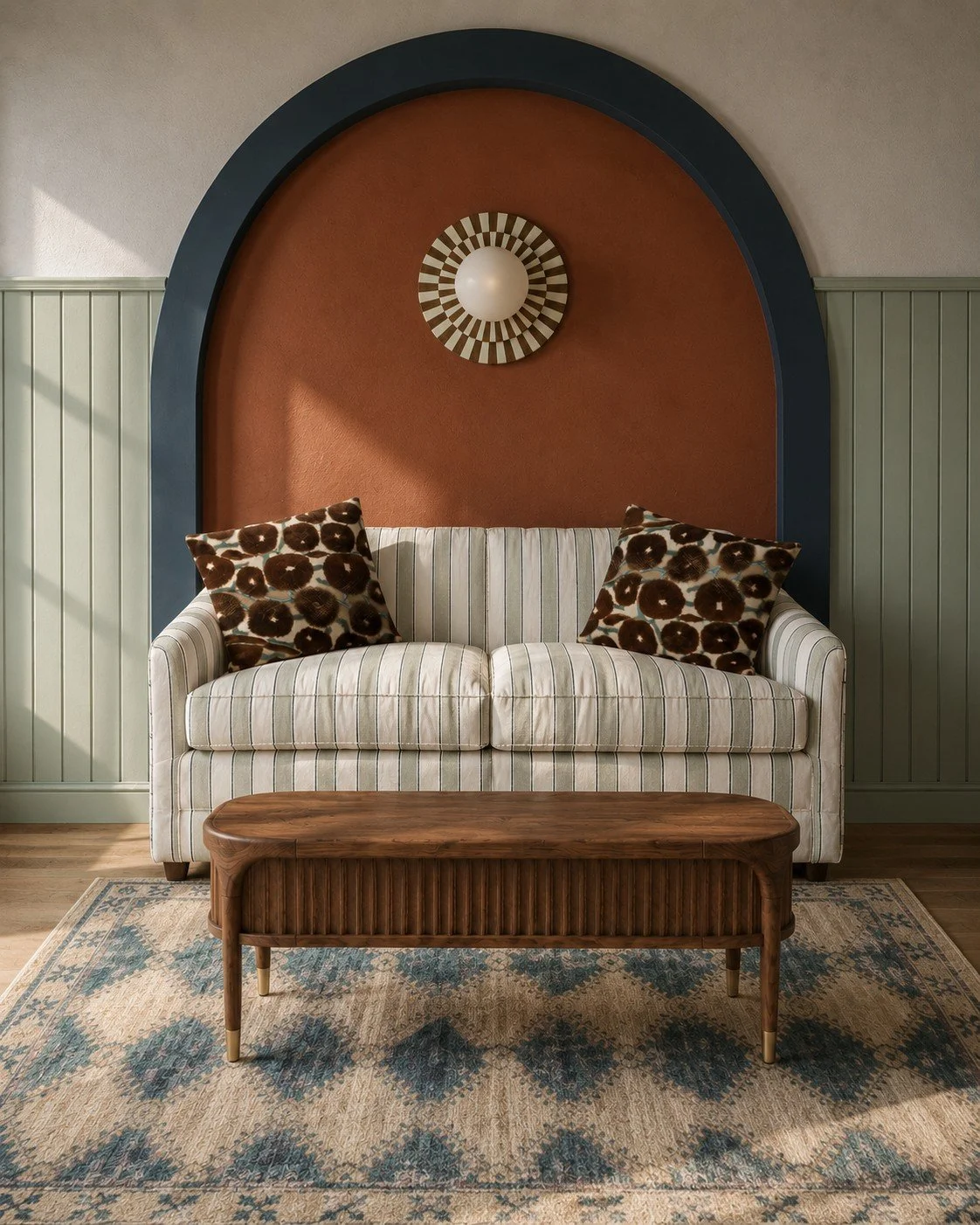
Loveseat
A digital rendering showing a colorful loveseat sitting area.
Step 5: Think About Seat Depth
Seat depth dramatically affects comfort.
Generally:
Shallow seats (20–22”)
Easier to sit upright
Better for formal rooms
Comfortable for shorter people
Deep seats (24”+)
Great for lounging
Comfortable for taller people
Perfect for movie nights
“Comfort is personal. If possible, sit on the sofa before purchasing rather than relying solely on dimensions.”
Step 6: Pay Attention to Seat Height
Seat height affects how easy the sofa is to get in and out of.
Lower sofas often feel:
Modern
Relaxed
Casual
Higher sofas often feel:
Traditional
Easier for older adults
More supportive
Choose the height that fits both your style and your household.
Step 7: Choose the Right Arm Style
The arms influence both appearance and usable seating space.
Popular options include:
Track Arms
Modern
Clean lines
Maximize seating width
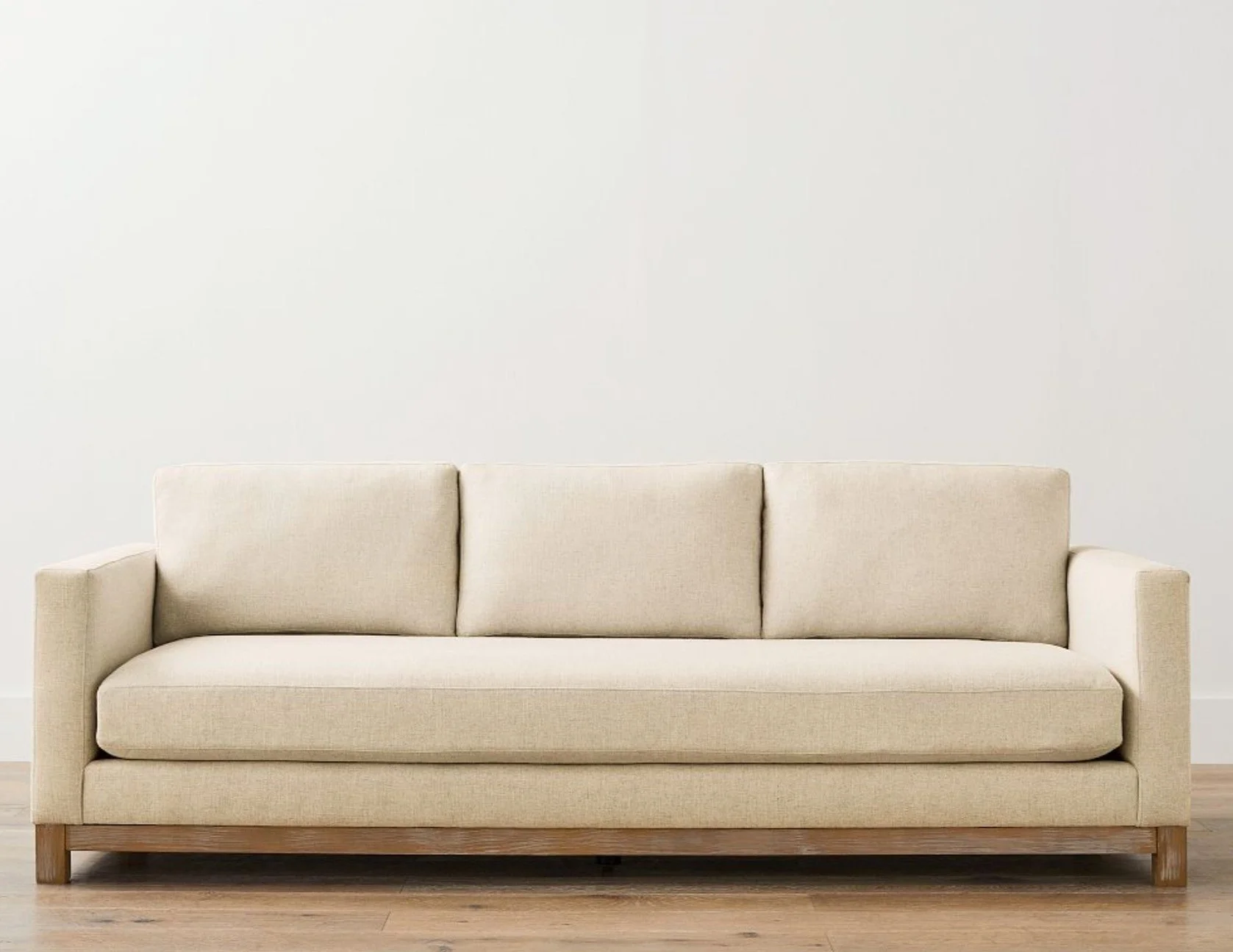
Track Arm Sofa:
Rolled Arms
Traditional
Comfortable
Softer appearance
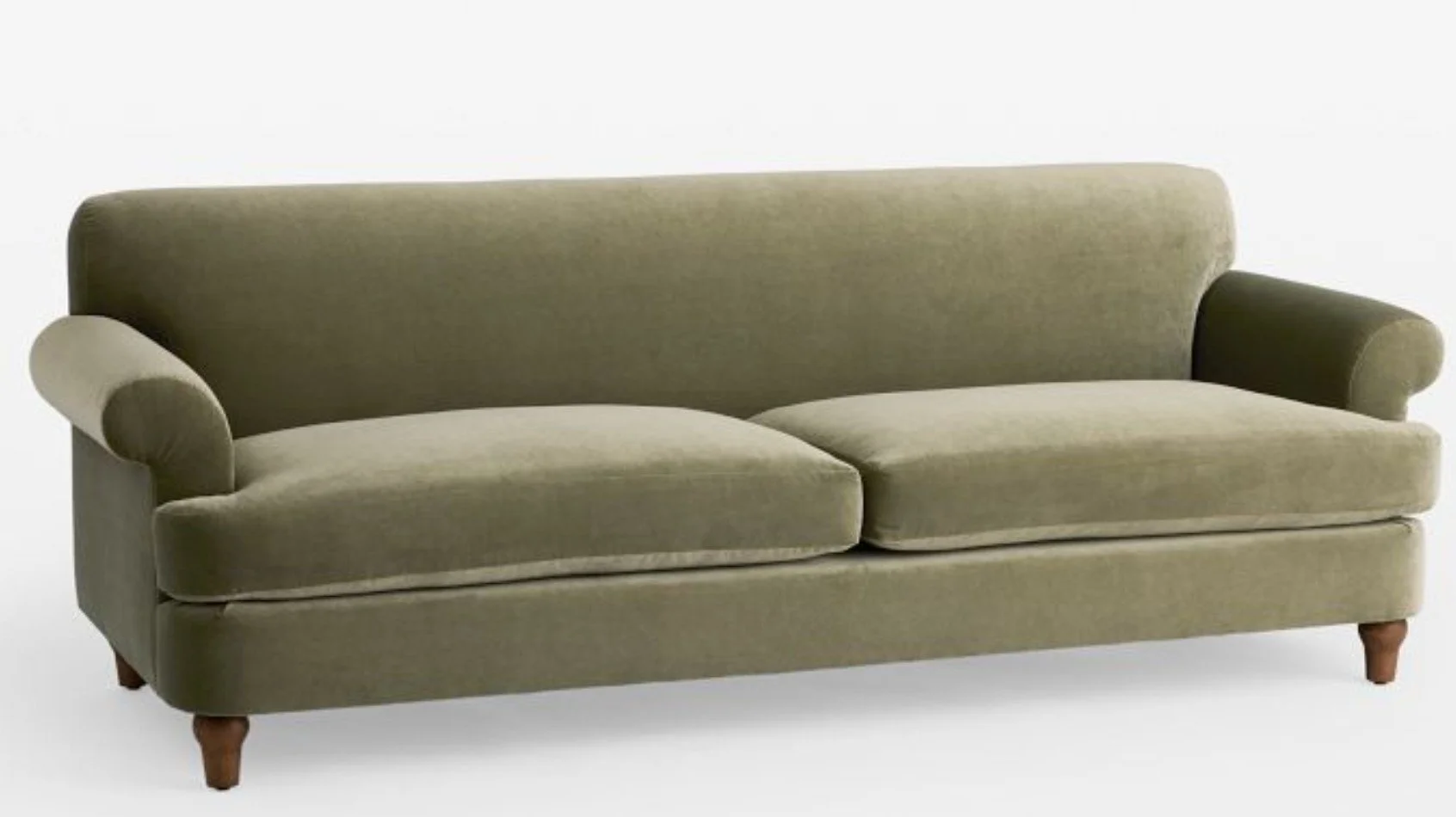
Rolled Arm Sofa:
Armless Sofas
Contemporary
Minimal
Best in certain layouts
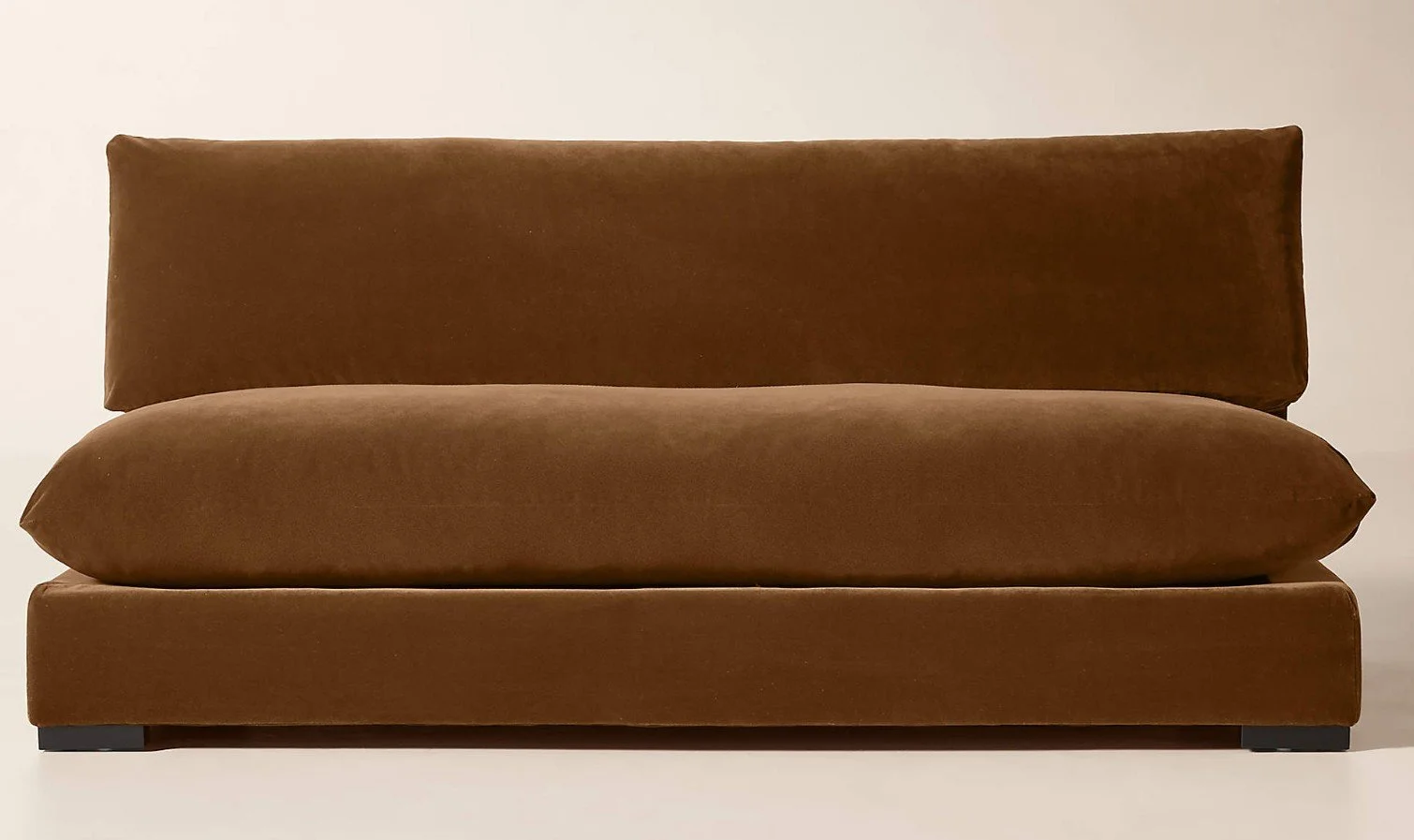
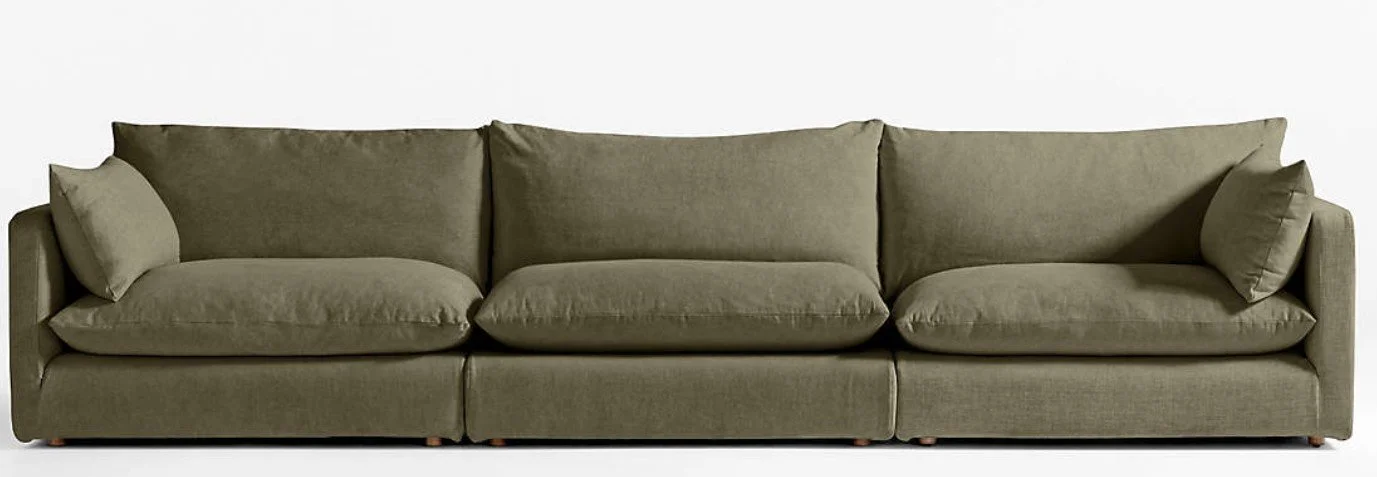
Step 8: Pick the Right Cushion Style
Bench Cushion
Clean appearance
Fewer seams
Contemporary
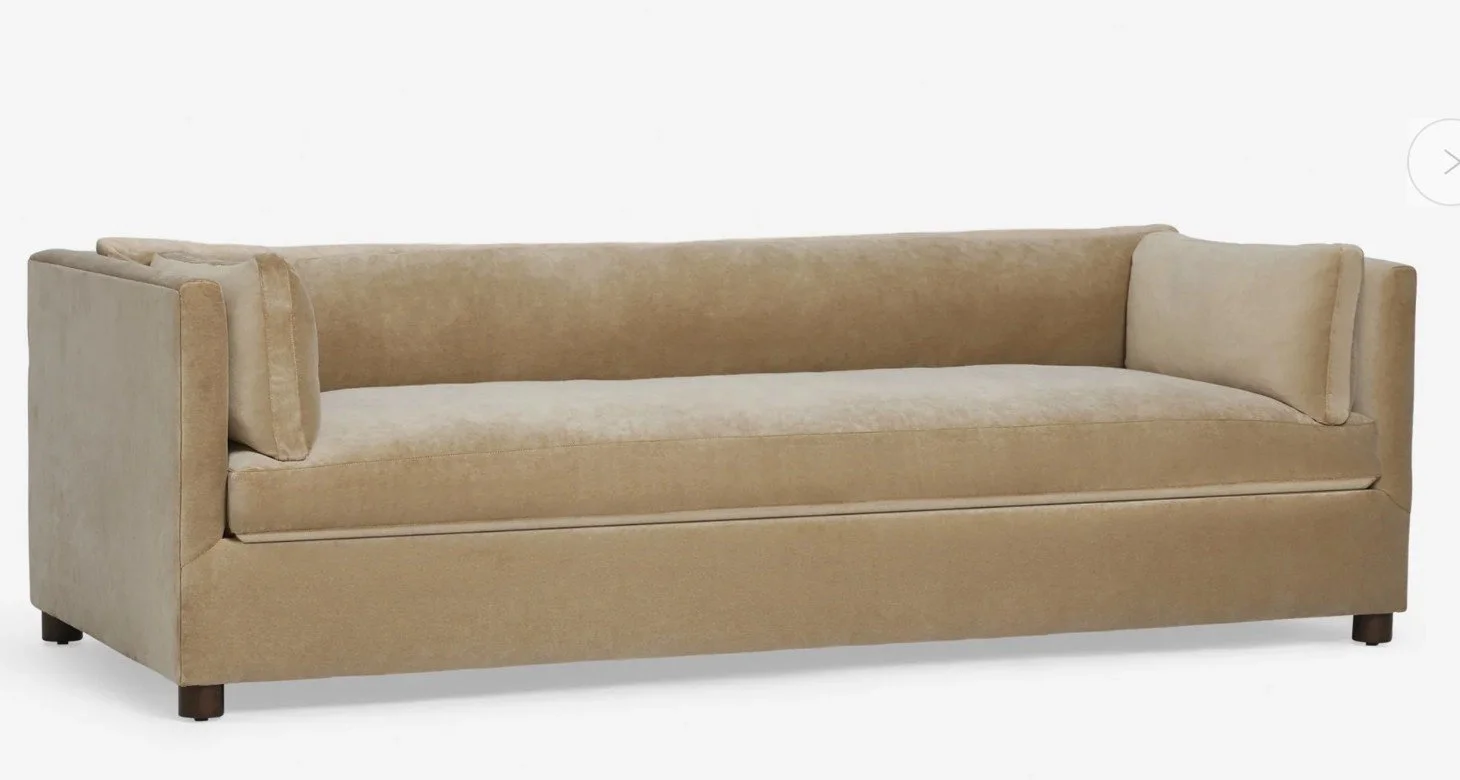
Bench Cushion:
Multiple Seat Cushions
Easier to rotate
Traditional look
Easier to replace individually
Back cushions also vary.
Some people prefer structured support.
Others love oversized down-filled cushions that feel relaxed.
Step 9: Choose Upholstery That Fits Your Lifestyle
Instead of choosing the prettiest fabric first, think about daily life.
Performance Fabric
Excellent for:
Families
Pets
Everyday living
Linen
Beautiful texture
Best for:
Formal rooms
Lower traffic spaces
Velvet
Adds warmth and richness.
Can work surprisingly well depending on the quality and color.
Leather
Durable (If you are comfortable with natural wear / patina)
Easy to clean
Develops character over time
Bouclé
Soft
Trendy
Adds texture
May not be ideal for homes with pets that snag fabric.
“The best fabric isn’t always the most expensive one—it’s the one that fits the way you live.
”
Step 12: Test Before You Buy
Whenever possible:
Sit.
Lean back.
Lie down.
Rest your arms.
Check seat depth.
Check cushion firmness.
Look at the sofa from every angle.
If ordering online, pay close attention to:
Return policies
Cushion fill
Fabric samples
Customer photos
Overall dimensions
Common Sofa Buying Mistakes
Buying without measuring.
Ignoring the furniture plan.
Choosing appearance over comfort.
Buying a sofa that’s too large.
Forgetting about delivery dimensions.
Choosing fabric that doesn’t fit your lifestyle.
Ignoring seat depth.
Buying trendy shapes without considering longevity.
Designer Tips
✓ Tape the footprint before buying.
✓ Always order fabric samples.
✓ Sit on the sofa if possible.
✓ Think about how you actually live—not just how the room will look.
✓ A beautiful sofa should still be comfortable enough that you want to spend time on it.
Conclusion: The Best Sofa Is the One That Fits Your Home
The right sofa isn’t simply the one that catches your eye in a showroom. It’s the one that fits your room, supports the way you live, and works with the rest of your furniture. By starting with a furniture plan, choosing the right size and proportions, considering comfort, and selecting materials that fit your lifestyle, you’ll be much more likely to invest in a sofa you’ll love for years to come.
