
How to Design a Bedroom That Helps You Relax
Introduction
AFFILIATE DISCLOSURE: This post contains affiliate links. If you purchase through these links, I may earn a small commission at no additional cost to you. I only recommend products I genuinely love or would use in my own designs. This post is not sponsored, and all opinions are my own.
RENDERING DISCLAIMER: The images in this post are digital renderings created to illustrate my original design concepts. They are intended for inspiration and visualization and may not represent exact dimensions, materials, or construction details. See my full Disclosure & Disclaimer Policy for more information.
Why Bedroom Design Affects How You Feel
Your bedroom is often the first space you see when you wake up and the last space you experience before going to sleep, which means its design can have a meaningful impact on how you begin and end each day. A bedroom that feels visually chaotic, overly bright, or uncomfortable can make it harder to fully settle in, while a thoughtfully designed space can create a greater sense of calm.
Everything from color and lighting to clutter and furniture placement contributes to the overall feeling of the room. Softer or more muted colors can create a restful backdrop, layered lighting allows you to transition from daytime to evening, and reducing visible clutter helps limit visual distractions. Even the layout matters—a bedroom with comfortable circulation and furniture that feels appropriately scaled tends to feel more peaceful and balanced.
Creating a relaxing bedroom also doesn’t require expensive furniture or luxury finishes. It’s much more about making intentional choices. A comfortable bed, warm lighting, soft textiles, thoughtful storage, and a cohesive color palette can completely change how a bedroom feels. The goal isn’t to create a hotel room—it’s to create a space that feels quiet, comfortable, and restorative to you.
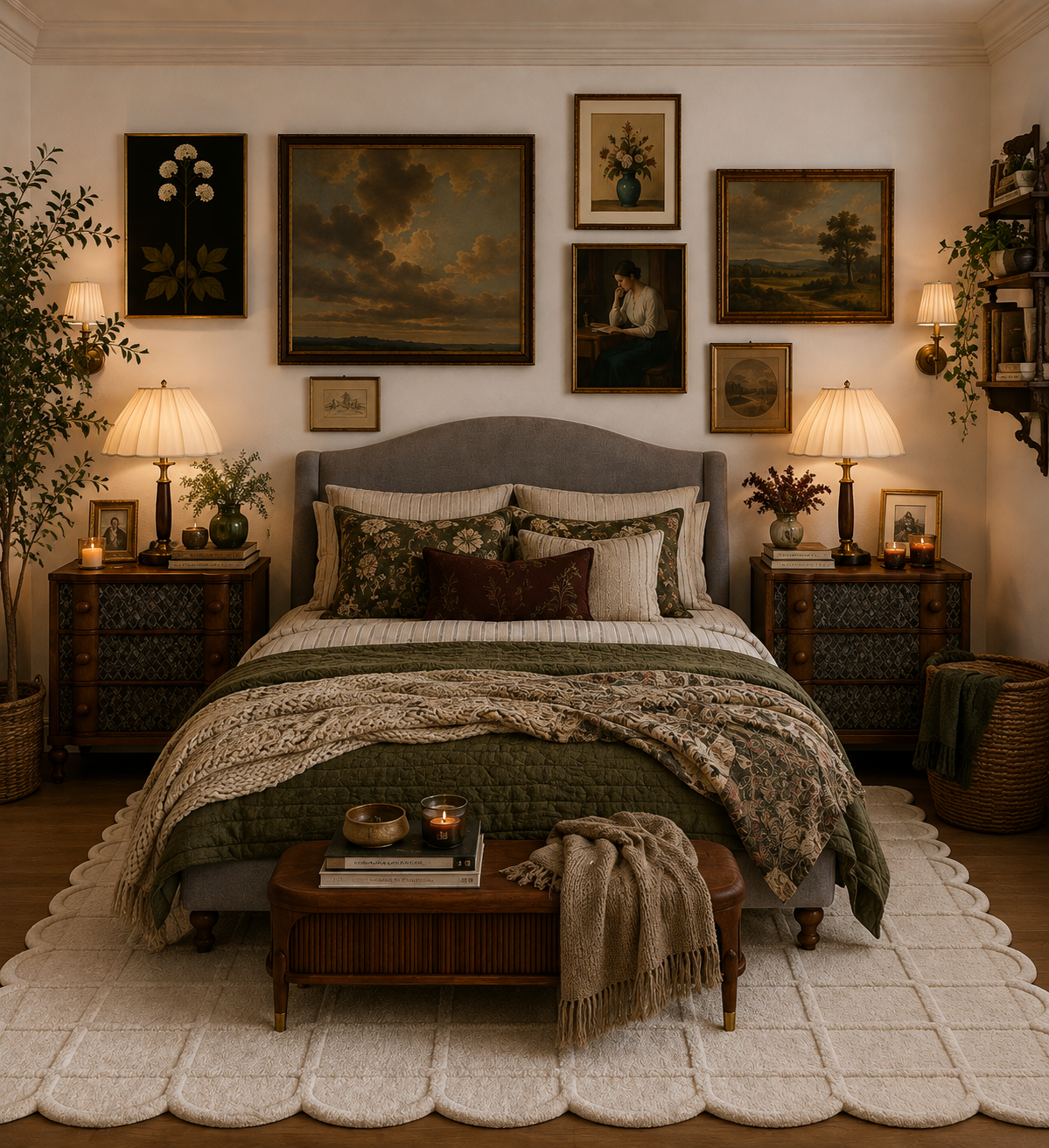
A More Maximal design that may feel cluttered to certain individuals
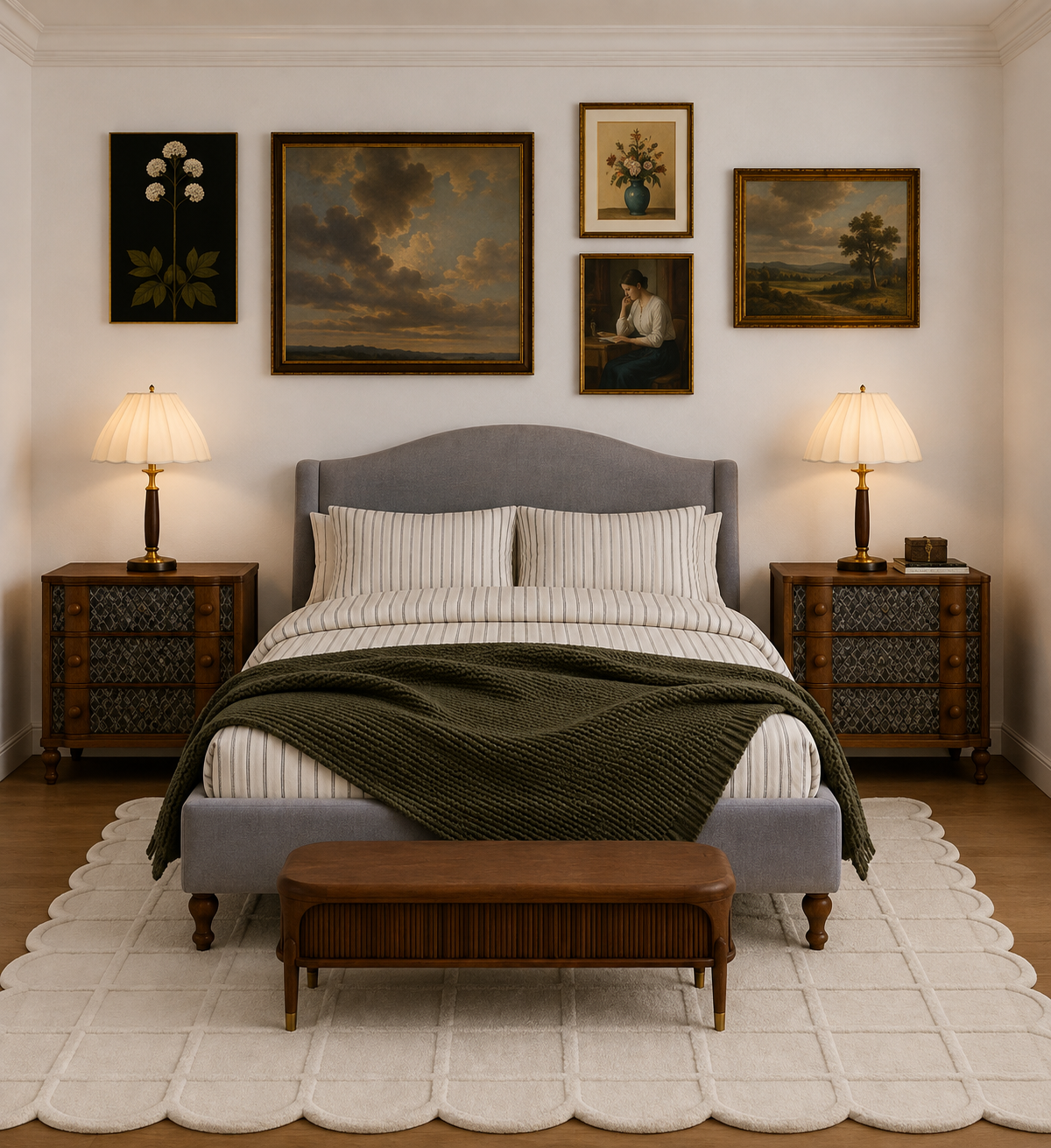
A digital rendering showing a cleaner design than the room above , while still allowing room for expression
Step 1: Start With a Calm Color Palette
Color has a major influence on how a bedroom feels. For a relaxing space, look for colors that feel soft, muted, and easy on the eyes rather than overly bright or stimulating.
Warm whites create a clean, airy backdrop without the starkness that can sometimes come with cooler whites. Look for whites with subtle cream, beige, or warm undertones to make the bedroom feel softer and more inviting.
Soft greiges are a great choice if you want a neutral room with a little more depth. Because they combine elements of gray and beige, they can create a sophisticated backdrop while still feeling warm and comfortable.
Light taupes bring additional warmth and earthiness to a bedroom. They work especially well when paired with natural wood, linen, wool, and other organic materials.
Muted greens can give a bedroom a peaceful, nature-inspired quality. Think sage, dusty olive, or soft gray-green rather than vivid emerald or grassy green.
Soft blues are another classic bedroom choice. Muted blue-gray, dusty blue, and other subdued shades can introduce color while maintaining the quiet feeling you want in a restful space.
Warm earth tones like clay, muted terracotta, warm beige, mushroom, and soft brown can make a bedroom feel particularly cozy and grounded. These shades are especially effective when layered with warm woods and natural textures.
This doesn't mean a relaxing bedroom has to be completely neutral. The key is often saturation. Highly saturated colors are intense and visually demanding, which can make them feel more energetic and stimulating. Bright red, electric blue, vivid yellow, or intense orange naturally command attention within a room.
For a bedroom, try taking those same color families and softening them. Instead of bright green, choose muted sage. Instead of cobalt blue, consider dusty blue. Instead of vivid orange, try a subdued terracotta.
You can still incorporate stronger colors through artwork, pillows, throws, or smaller accents, but keeping the room's dominant colors softer allows the overall space to remain visually quiet and restful.
Step 2: Choose Comfortable, Layered Bedding
Layer Your Bedding for Comfort and Texture
A relaxing bedroom should look inviting, but more importantly, it should feel comfortable to actually live and sleep in. One of the easiest ways to create that feeling is through thoughtfully layered bedding. Rather than relying on lots of decorative accessories, use the pieces you already need—sheets, duvets, quilts, blankets, and pillows—to add softness and dimension.
Start with quality sheets that feel good against your skin. You don't necessarily need the highest thread count or the most expensive set. Pay more attention to the material and how you prefer your sheets to feel. Crisp cotton percale can feel cool and breathable, while cotton sateen has a smoother, slightly heavier feel. Linen offers a relaxed texture and becomes softer over time.
Your top layer can also change the personality of the room. A duvet generally creates a fuller, softer, more enveloping look, making it a great choice for a cozy bedroom. A quilt or coverlet tends to sit flatter against the bed and creates a cleaner, more tailored appearance. You can also combine the two, using a quilt as the primary layer and folding a duvet across the foot of the bed for additional warmth and dimension.
Add a blanket or throw where it makes sense rather than simply adding one for decoration. A loosely folded knit, woven blanket, or lightweight throw at the foot of the bed introduces another material while also being easy to grab on a cool evening.
With throw pillows, a few intentional pieces are usually enough. You don't need a mountain of pillows that has to be removed every night. Instead, choose two or three that introduce a different texture, subtle pattern, or slightly deeper color than the rest of your bedding.
The secret is to create interest through texture rather than more stuff. Linen against smooth cotton, a quilted coverlet beneath a fluffy duvet, or a woven throw against crisp sheets creates subtle contrast even when everything falls within a similar color palette.
This is especially helpful in a relaxing bedroom because texture adds visual depth without adding visual clutter. Instead of introducing lots of competing colors, patterns, and decorative objects, you're allowing light and shadow to reveal the differences between materials. The room feels layered, warm, and finished while the overall palette can remain simple and quiet.
A bed doesn't need ten decorative pillows or five different patterns to look beautifully designed. Often, fewer pieces in a thoughtful mix of textures create a much more sophisticated—and much more restful—result.
Step 3: Design Around the Bed
Create a Balanced, Easy-to-Navigate Layout
A relaxing bedroom should feel open, balanced, and easy to move through. Even beautiful furniture can make a room feel uncomfortable if the pieces are crowded together or the layout creates awkward pathways. Before focusing on decor, make sure the furniture arrangement itself gives the room space to breathe.
When possible, center the bed on the main wall rather than pushing it toward one side. The bed is typically the visual focal point of a bedroom, and centering it creates a natural sense of symmetry and order. Ideally, you should also be able to comfortably access both sides of the bed.
Use balanced nightstands to reinforce that symmetry. They don't necessarily have to be identical, but they should feel appropriately scaled to the bed and visually balanced with one another. As a general guideline, the top of the nightstand should land somewhere around the height of the mattress so it's also comfortable to use.
Pay attention to walking space around the furniture. Aim for approximately 30–36 inches of clearance in primary pathways when the room allows. Around a bed, roughly 24–30 inches can be workable, although more space will generally feel more comfortable. Make sure dresser drawers, closet doors, and bedroom doors can open without colliding with other furniture.
Your rug placement can also make the entire layout feel more intentional. For most bedrooms, the rug should extend beyond the sides and foot of the bed rather than disappearing almost entirely underneath it. One common approach is to begin the rug around the lower two-thirds of the bed, leaving the nightstands directly on the flooring. This gives you softness where your feet actually land while allowing more of the rug to remain visible.
Finally, resist the temptation to fill every available wall or corner with furniture. If adding another chair, dresser, bench, or cabinet leaves you squeezing between pieces, the room will often feel more cramped than cozy. Leaving some negative space is part of the design.
A good bedroom layout should ultimately feel effortless to move through. You shouldn't have to navigate around furniture to get into bed or open a drawer. That physical sense of openness contributes to the visual calm you're trying to create.
Step 4: Layer Your Lighting
Lighting has a huge impact on how a bedroom feels, especially in the evening. One of the most common mistakes is relying on a single overhead fixture to light the entire room. While ceiling lighting is useful, it tends to provide broad, general illumination rather than the softer pools of light that make a bedroom feel warm and relaxing.
Instead, think about bedroom lighting in layers, with different fixtures serving different purposes throughout the day.
Ceiling lighting provides the room's primary source of general illumination. A chandelier, pendant, flush mount, or recessed lighting can make it easy to see when you're getting dressed, cleaning, or moving around the room. Choose a fixture that's appropriately scaled to the bedroom and avoid overly cool or harsh bulbs.
Bedside lamps provide softer, more localized lighting and are especially useful for reading or winding down before bed. They also allow you to turn off the overhead lights while still having enough illumination to comfortably use the room.
Wall sconces can serve the same purpose as bedside lamps while freeing up valuable nightstand space. They can also create a more intentional, built-in appearance around the bed. When possible, place the controls somewhere you can easily reach without getting out of bed.
Accent lighting introduces another softer layer. This might include a small lamp on a dresser, subtle lighting inside built-ins, a picture light over artwork, or concealed architectural lighting. These sources don't necessarily need to illuminate the entire room—their purpose is to create atmosphere and highlight specific areas.
Finally, put as many of your bedroom lights as practical on dimmers. The amount of light you need while getting ready in the morning is very different from what feels comfortable when you're preparing for sleep. Dimmers allow the same fixtures to transition with you throughout the day.
Multiple light sources are important because they give you control over both the amount and location of light. With only one overhead fixture, your choices are essentially bright or dark. Layered lighting lets you turn off the ceiling fixture in the evening and rely on bedside and accent lighting instead, instantly creating a softer, calmer atmosphere.
The goal is to have enough light when you need it without making the bedroom feel uniformly bright at all times. A combination of overhead, task, and accent lighting creates dimension, makes the room feel more thoughtfully designed, and allows the atmosphere to gradually shift from functional during the day to restful at night.
Step 5: Minimize Visual Clutter
A relaxing bedroom doesn't have to be perfectly minimal, but it should give your eyes somewhere to rest. When every surface is covered and everyday necessities are constantly visible, even a beautifully designed bedroom can start to feel busy. The goal isn't to remove everything from the room—it's to be more intentional about what stays visible and what gets tucked away.
Whenever possible, incorporate hidden storage for the things you need but don't necessarily want on display. A dresser with closed drawers, storage beneath the bed, a nightstand with drawers, or a storage bench can keep everyday belongings accessible without allowing them to become part of the visual landscape.
Pay particular attention to nightstand organization. Because the nightstand sits right beside your bed, it's one of the last areas you see at night. Keep the essentials—perhaps a lamp, book, water, or small decorative object—and give everything else a designated place inside a drawer or nearby storage.
The same principle applies to decorative restraint. You don't need to decorate every empty surface simply because it's there. A dresser might only need a lamp, a piece of art, and one or two thoughtfully chosen objects. Leaving intentional negative space around those pieces can actually make them feel more important.
Have a plan for laundry, too. An attractive hamper with a lid, a basket tucked into a closet, or built-in laundry storage prevents clothing from accumulating on chairs, benches, or the floor. If you know you're someone who tends to have clothes that aren't quite dirty enough for the hamper but aren't going back into the closet, give those items a designated basket or hook instead of letting them become clutter.
Finally, don't overlook cable management. Phone chargers, lamp cords, extension cords, and electronics can create surprising amounts of visual noise. Route cords behind furniture, use cable clips or cord covers where appropriate, and consider nightstands with built-in charging or concealed outlets.
Ultimately, a calmer bedroom often comes from simply having fewer things competing for your attention. Closed storage, clear surfaces, concealed cords, and a little negative space allow the larger elements—the bed, lighting, textiles, and architecture—to become the focus.
You don't need an empty bedroom. You just want the things you intentionally chose to see to stand out, rather than having them compete with all the things you simply haven't put away.
Step 6: Incorporate Soft, Natural Materials
A relaxing bedroom should feel soft, warm, and comfortable, and natural materials are one of the easiest ways to create that atmosphere. Rather than filling the room with lots of decorative objects, introduce interest through materials that have natural variation, softness, and texture.
Linen and cotton are ideal for bedding, curtains, and decorative pillows because they add softness without feeling overly formal. Linen's slightly irregular texture creates a relaxed, lived-in look, while cotton can range from crisp and tailored to soft and casual depending on the weave.
Wool is especially effective for rugs, blankets, and upholstered pieces. Its soft texture adds warmth underfoot and creates another tactile layer within the room.
Balance those softer textiles with natural wood. A wood bed, nightstand, dresser, bench, or even a few smaller accents can introduce warmth and organic variation, particularly in bedrooms with a predominantly neutral color palette.
Woven baskets are another way to bring in natural texture while adding practical storage. Use them for extra blankets, pillows, laundry, or other items you'd rather keep contained.
Harder natural materials can provide contrast, too. Natural stone on a nightstand, lamp, or decorative object adds subtle movement and variation, while ceramic lamps, vases, and accessories introduce an earthy, handcrafted quality.
Natural materials work so well in bedrooms because they tend to have subtle imperfections and variations in texture. Wood grain, woven fibers, rumpled linen, wool, stone veining, and handmade ceramics interact with light differently than perfectly smooth, synthetic surfaces. That variation gives a room depth and character without requiring bold colors or busy patterns.
The key is to layer soft and natural materials rather than simply adding more decor. A linen duvet, wool rug, wood nightstands, and ceramic lamps can make an otherwise simple bedroom feel incredibly warm and inviting while still maintaining the quiet, uncluttered atmosphere that makes the space feel restful.
Step 7: Choose Furniture That Fits the Room
A relaxing bedroom needs more than beautiful furniture—it needs furniture that fits the room comfortably. Pieces that are too large can quickly make a bedroom feel crowded, while furniture that's too small can make the space feel disconnected or unfinished. The goal is to choose pieces that feel substantial enough for the room while still leaving plenty of breathing space around them.
Start with the bed, since it will usually be the largest piece of furniture in the room. Choose the largest bed size that comfortably fits without sacrificing circulation or overwhelming the other furniture. A king bed may technically fit within the dimensions of a room, for example, but if it leaves barely enough space for nightstands or walking paths, a queen may create a much better overall layout.
Your nightstands should feel proportional to the bed. A large upholstered king bed generally needs more substantial nightstands than a simple queen or full-size bed. Pay attention to height as well—the top of the nightstand should generally be around the height of the mattress so it's comfortable to reach from bed.
When choosing a dresser, consider both its width and depth. A long dresser can help anchor an empty wall in a larger bedroom, while a narrower chest may work better when floor space is limited. Remember to account for the space required to comfortably open drawers and walk past the dresser.
A bench at the foot of the bed can add function and help visually finish the bed, but only when there is enough room for one. It should be slightly narrower than the bed and leave comfortable clearance between the bench and the opposite wall or furniture. If adding a bench creates a tight walkway, the room will usually feel better without it.
The same rule applies to reading chairs. A comfortable chair can turn an unused corner into a cozy reading area, but don't force one into the room simply because there's an empty corner. Make sure there's enough space around the chair for it to feel intentional rather than squeezed between other pieces.
Oversized furniture can make a bedroom feel crowded because it reduces both physical and visual breathing room. When large pieces sit too close together, pathways become tighter, more of the floor disappears, and the room can begin to feel filled from edge to edge.
And remember: just because a piece of furniture physically fits doesn't mean it fits well. A thoughtfully scaled room with fewer pieces will almost always feel calmer, more spacious, and more intentional than a bedroom filled with oversized furniture.
Step 8: Use Window Treatments to Your Advantage
Window treatments play an important role in creating a relaxing bedroom because they allow you to control natural light, create privacy, and introduce softness to the room. Even a beautifully designed bedroom can feel unfinished when the windows are left completely bare.
Blackout curtains or shades are especially useful in bedrooms because they can significantly reduce the amount of outside light entering the room at night or early in the morning. If you love the look of lighter drapery but still want a dark sleeping environment, consider using a blackout lining or pairing decorative curtains with a separate blackout shade.
Linen drapery is a great option for introducing softness and natural texture. Linen and linen-look fabrics gently filter daylight and create a relaxed, slightly organic appearance that works particularly well in calm, layered bedrooms.
For greater flexibility, consider layered window treatments. Pairing a woven shade, Roman shade, or blackout shade with curtain panels gives you multiple ways to control privacy and light throughout the day. The shade provides function, while the drapery adds softness and helps frame the window.
Curtain placement matters, too. Rather than mounting the rod directly above the window frame, hang curtains several inches higher when ceiling height allows. Extending the rod beyond the sides of the window can also allow the panels to sit mostly outside the glass when they're open. This makes the window appear larger, emphasizes ceiling height, and allows more daylight into the room.
Window treatments also help soften natural light. Direct sunlight can create harsh contrast and glare, while sheer or lightweight fabric diffuses that light before it enters the room. The result is a gentler, more flattering glow that can make the entire bedroom feel warmer.
Think of window treatments as both a functional and decorative layer. The right combination gives you darkness when you want to sleep, filtered daylight when you want the room to feel bright, and soft texture that makes the bedroom feel more comfortable and complete.
Step 9: Add Meaningful Decor
A relaxing bedroom doesn't need to be empty or overly minimal. In fact, a few personal, meaningful pieces can make the room feel warmer and more comforting. The key is choosing decor intentionally rather than filling every available wall, nightstand, and dresser surface.
Artwork is one of the best ways to give the bedroom personality. Choose pieces that you genuinely enjoy looking at and that complement the overall mood of the room. Softer colors, nature-inspired imagery, abstracts, or personally meaningful art can add interest without making the space feel overly busy.
Plants can introduce natural color, organic shapes, and another layer of texture. One larger plant or a small plant on a dresser may be all you need—you don't have to turn the bedroom into a greenhouse to get the effect.
Family photos can make a bedroom feel personal and familiar, but use them in moderation. Rather than displaying dozens of individual frames, consider a few favorite photographs in beautiful frames or a thoughtfully arranged grouping.
Books are another opportunity to decorate with something meaningful. Keep a few favorites on your nightstand, stack a small collection on a dresser, or incorporate them into built-in shelving. They add character while still serving a purpose.
Candles can contribute to the cozy atmosphere of a bedroom through both scent and soft light. Even when they aren't lit, beautiful candle vessels can act as simple decorative accents. Just be mindful of fire safety and avoid leaving candles unattended.
Finally, decorative trays are especially useful because they make everyday objects feel intentional. Use one to contain jewelry, perfume, a candle, or other small items on a dresser or nightstand. Grouping several small objects together visually reads as one arrangement rather than a collection of clutter.
The goal isn't to decorate every empty space. Every decorative item should contribute something to the peaceful environment you're creating—whether that's beauty, meaning, texture, warmth, or function.
If an object doesn't serve a purpose, hold personal meaning, or add something you genuinely enjoy seeing, you probably don't need it in the bedroom. A few thoughtfully selected pieces will create far more personality than filling the room with decor simply because there is space for it.
Step 10: Create a Bedroom That Supports Your Routine
A beautiful bedroom should also make your everyday routines easier. Instead of designing the room around what looks good in a photograph, think about how you actually use the space from the moment you wake up until you go to bed.
If you enjoy reading, create a comfortable place for it. This could be a reading chair with a small side table and floor lamp, or simply a well-designed bedside setup with an adjustable lamp or sconce. You don't necessarily need a dedicated reading nook—the goal is to make the activity comfortable wherever it naturally happens.
Think about where you get dressed each morning. Make sure you have enough space to comfortably access your closet and dresser, along with a full-length mirror in a practical location. If you frequently lay out clothing the night before, a bench or small chair might serve a genuine purpose rather than simply being decorative.
Create a designated place for charging devices so cords and electronics don't end up scattered across the room. A nightstand with concealed outlets, a charging drawer, or a simple cable-management system can keep everything accessible while reducing visual clutter.
Your everyday essentials should also have an obvious home. Glasses, jewelry, books, medications, hand cream, and other frequently used items can quickly clutter a nightstand or dresser when there isn't a designated place for them. Drawers, trays, baskets, and small organizers keep those necessities nearby without leaving everything on display.
Finally, consider how you like to relax before bed. Maybe you read, journal, pray, stretch, watch television, or simply want somewhere comfortable to sit that isn't your bed. Designing a small area around that routine can help the bedroom support how you naturally wind down in the evening.
The most successful bedroom isn't necessarily the one with the most furniture or the most elaborate design. It's the one that works effortlessly for the person who lives there. Pay attention to what you actually do in your bedroom, where clutter tends to accumulate, and what would make your daily routines more comfortable.
Instead of asking, “What should every bedroom have?” ask, “What does my bedroom need to make the way I live here easier and more relaxing?” That shift can lead to a space that feels both beautifully designed and genuinely personal.
Common Bedroom Design Mistakes
Include:
Too many decorative pillows
Harsh overhead lighting
Furniture that’s too large
Busy patterns everywhere
Excessive clutter
Poor rug placement
Too many contrasting colors
Ignoring storage
Hanging artwork too high
Designer Tips for a Relaxing Bedroom
Stick to a limited color palette.
Layer textures more than patterns.
Prioritize comfort over trends.
Keep surfaces mostly clear.
Use warm lighting whenever possible.
Choose furniture with breathing room around it.
Let the bedroom feel simpler than the rest of the house.
Conclusion
A relaxing bedroom isn’t created by buying more décor—it’s created by making thoughtful choices about color, lighting, furniture, materials, and organization. By focusing on comfort, simplicity, and functionality, you can transform your bedroom into a space that truly helps you unwind at the end of the day.
