
The Questions to Ask Before Making Any Home Design Decision
Introduction
AFFILIATE DISCLOSURE: This post contains affiliate links. If you purchase through these links, I may earn a small commission at no additional cost to you. I only recommend products I genuinely love or would use in my own designs. This post is not sponsored, and all opinions are my own.
RENDERING DISCLAIMER: The images in this post are digital renderings created to illustrate my original design concepts. They are intended for inspiration and visualization and may not represent exact dimensions, materials, or construction details. See my full Disclosure & Disclaimer Policy for more information.
Question 1: What Problem Am I Trying to Solve?
Before buying something for your home, ask yourself a simple question: What problem am I actually trying to solve?
It’s easy to approach design by looking at an empty corner, blank wall, or unfinished room and immediately thinking about what you could put there. But filling empty space isn’t necessarily the same thing as improving the room.
Instead, start by identifying what isn’t working.
Do you need more seating when people come over? Is there never enough storage for the things you actually use? Does the room feel dark because it needs better lighting? Do you need more privacy from a neighboring window? Or does the space technically function well but feel cold and need more softness, warmth, or layers to make it feel cozier?
Once you know the problem, it becomes much easier to determine what the room actually needs.
For example, an empty corner doesn’t automatically need another piece of furniture. If the room already has plenty of seating and storage but feels dark in the evening, a floor lamp may solve the problem better than an accent chair or cabinet.
The same idea applies to larger purchases. Before buying a new sofa, adding built-ins, replacing a light fixture, or purchasing another storage piece, consider what you expect that addition to improve.
Every purchase doesn’t need to serve a purely practical purpose—beauty matters in interior design, too. But even decorative pieces should contribute something, whether that’s adding color, creating contrast, introducing texture, establishing a focal point, or making the room feel more complete.
When you can clearly explain why something belongs in the room, you’re much less likely to buy pieces simply because there was an empty space to fill.
Question 2: How Will I Actually Use This Space?
Before making design decisions, think about how you actually use the space on a normal day. A room can look beautiful, but if it doesn’t support your routines and lifestyle, it probably won’t feel successful for very long.
Start with your daily routines. Think about what happens in the room from morning to night. Where do you naturally set things down? Which areas get the most use? What activities need to happen there? Your answers can influence everything from furniture placement and storage to lighting and material selections.
Consider how often you entertain, too. If you regularly have friends or family over, you may need additional seating, flexible furniture arrangements, or convenient surfaces for food and drinks. If you rarely entertain, you don’t necessarily need to sacrifice everyday comfort to accommodate a large group a few times a year.
Kids and pets can also change what makes sense for a room. Durability, cleanability, storage, safety, and even furniture placement may become more important. That doesn’t mean you have to sacrifice style—it simply means choosing materials and furnishings that can handle the way your household actually lives.
If you work from home, consider what you need to be comfortable and productive. A desk may technically fit into an empty corner, but that doesn’t necessarily make it a good workspace. Think about lighting, outlets, storage, privacy, acoustics, and what will be visible behind you during video calls.
Finally, consider your future needs. You don’t have to design around every possibility, but it can be helpful to think a few years ahead, particularly when making expensive or permanent decisions. A room that can adapt as your household, routines, or needs change may serve you much longer.
Beautiful spaces should support real life, not make everyday life more difficult. Design around how you actually live first, then find ways to make those functional choices beautiful.
Question 3: Does This Fit My Overall Vision?
Before committing to an individual piece, take a moment to zoom out and think about your home as a whole.
Start by considering your overall design style. Your home doesn’t need to fit neatly into one specific category, but there should be some consistency in the colors, materials, shapes, and details you choose. Think about whether the new addition supports the direction you want your home to take.
Your color palette can help create that connection from one space to another. You don’t need to use the exact same colors throughout your entire home, but repeating or coordinating certain tones can help individual rooms feel like they belong together.
Pay attention to the architectural character of your home, too. Ceiling heights, trim, windows, doors, flooring, and other permanent features provide a natural starting point for your design. You can certainly introduce contrast or mix styles, but it should feel intentional rather than accidental.
Existing finishes and materials also matter, particularly when you're not renovating everything at once. Before introducing a new wood tone, metal finish, countertop, flooring material, or other major element, look at what will remain in the space and consider how the new selection will work alongside it.
Finally, think about your long-term design goals. If you eventually want your home to feel warm, collected, and timeless, for example, ask whether the piece you're considering moves you closer to that vision or simply reflects something you happen to like right now.
Question 4: Is This the Right Size?
Proportion and scale are some of the most important elements of a well-designed room. Before buying anything, consider not only whether it physically fits, but whether it feels appropriately sized in relation to the room and everything around it.
Start with furniture scale. A large sectional can overwhelm a small living room, while a petite sofa may look lost in a large, open space. Furniture pieces should also relate well to one another. An oversized coffee table paired with a delicate sofa, for example, can make the entire arrangement feel unbalanced.
Rugs are another area where size makes a major difference. A rug that is too small can make a seating arrangement feel disconnected, while a properly sized rug helps visually anchor the furniture and define the space. For more information on rugs, check out this entire post about choosing the right rug.
Pay attention to the scale of lighting, too. A chandelier or pendant that is too small may disappear in the room, especially over a large dining table or in a space with high ceilings. On the other hand, an oversized fixture can interfere with sightlines or overwhelm a smaller room.
The same principle applies to artwork. A small piece centered above a large sofa or console can feel out of proportion, while appropriately scaled artwork helps fill the available wall space and creates a stronger visual relationship with the furniture below it.
Size also affects function. Maintain comfortable walkways and clearances around furniture so you can move through the room without squeezing between pieces. A piece technically fitting on the floor plan doesn’t necessarily mean there is enough room to use it comfortably.
Finally, consider ceiling height. Taller rooms can often support larger furniture, artwork, window treatments, and light fixtures, while rooms with lower ceilings may benefit from selections that work with their more intimate proportions.
When something feels wrong in a room, the problem isn’t always the style. Often, it's simply the scale. Getting the proportions right can make even relatively simple pieces feel much more intentional.
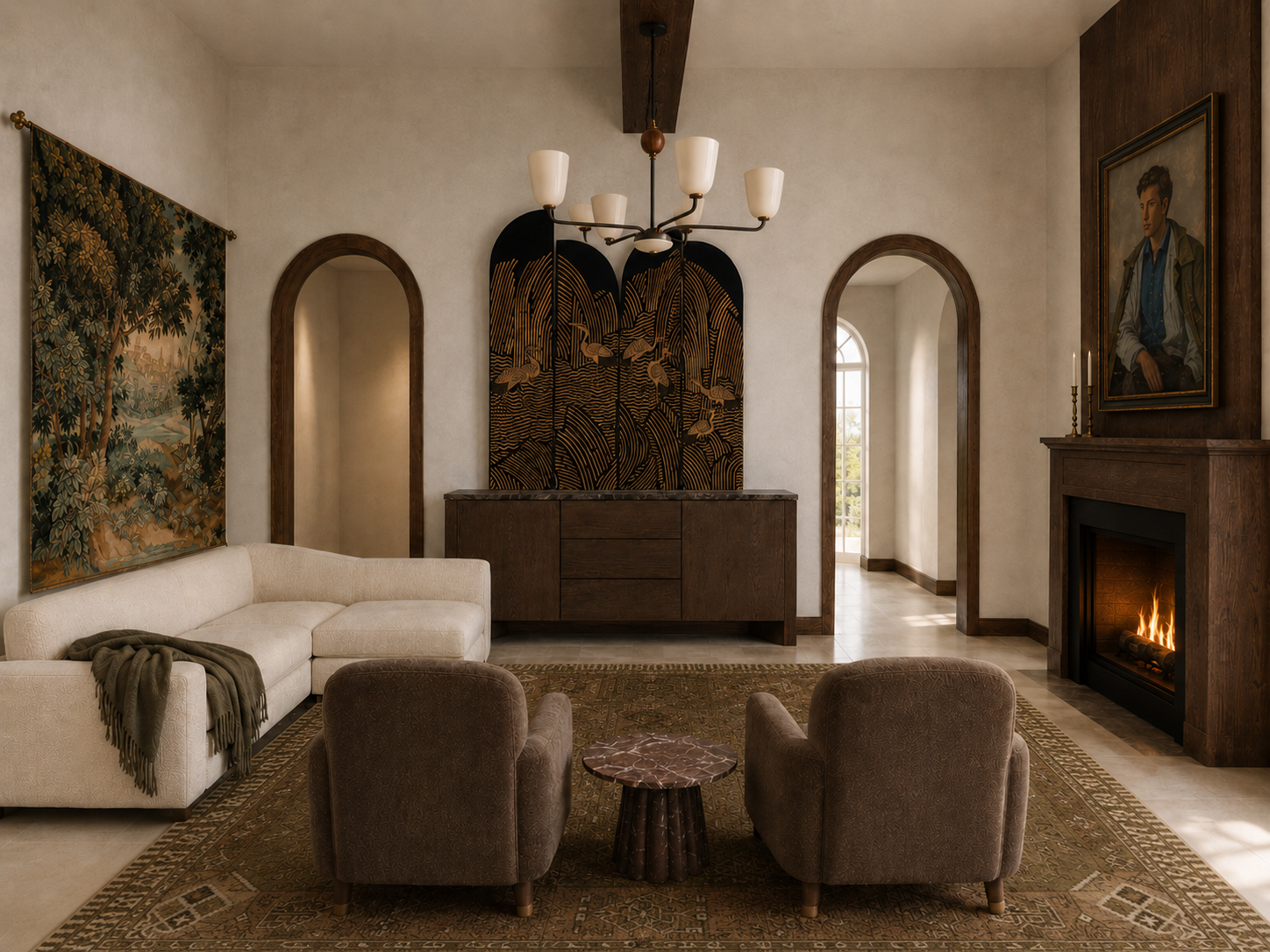
Question 5: Is This Good Quality for Its Purpose?
For everyday furniture, durability is especially important. Sofas, dining chairs, beds, and other pieces you use constantly need to withstand significantly more wear than a decorative side table in a guest room. Look beyond appearance and consider construction, materials, comfort, and how the piece is likely to age.
With upholstery, pay attention to both the furniture construction and the fabric itself. A beautiful fabric may not be the best choice for a heavily used sofa if it stains easily or can't withstand regular wear. Consider your household, lifestyle, pets, children, and maintenance preferences when deciding how durable a fabric needs to be.
You may have more flexibility with accent pieces. An occasional table, decorative chair, or accessory that receives very little wear doesn't necessarily require the same investment as your primary seating. These can be good places to save money or incorporate trend-driven pieces you may eventually want to change.
For more permanent elements like cabinetry, quality can have a much greater long-term impact. Cabinets are opened, closed, bumped, cleaned, and used every day, and replacing them can be expensive and disruptive. Construction, finishes, drawer systems, and hinges are worth evaluating carefully.
Even smaller details like hardware deserve some consideration. Cabinet pulls, knobs, door hardware, and other frequently touched elements should feel comfortable and substantial enough for their intended use. Spending a little more on something you interact with every day can sometimes make a noticeable difference.
With rugs, quality should relate to where the rug will be used. A rug in a busy living room or entryway needs to withstand much more traffic than one in a rarely used guest room. Construction, fiber, pile, cleanability, and maintenance requirements can all be more important than price alone.
The goal isn't to buy the most expensive option in every category. It's to invest more where durability and performance matter most and save where they don't.
Question 6: Does This Improve Function as Well as Appearance?
Some of the best design decisions are the ones that make your home look better and work better at the same time.
Before making a change or purchasing something new, ask yourself what it will actually improve. A beautiful addition is valuable, but when it also solves a functional problem, it can have a much greater impact on how you experience the room every day.
That might mean adding better storage that keeps everyday items accessible while reducing visible clutter. Built-ins, a well-designed media console, or a storage ottoman can contribute to the overall look of a room while giving everything a designated place.
When choosing seating, consider comfort alongside appearance. A sofa or chair may look perfect in the room, but if no one enjoys sitting in it, it isn't serving its purpose particularly well. Look for pieces that provide the style you want without sacrificing comfort or usability.
Furniture placement can improve traffic flow as well. Rearranging a room or choosing appropriately scaled pieces can create clearer walkways and make it easier to move through the space while also creating a more balanced furniture arrangement.
Lighting is another opportunity to accomplish both. A beautiful floor lamp, pendant, or pair of sconces can become part of the design while providing light exactly where you need it. Instead of treating lighting as decoration alone, consider what each fixture contributes to the way the room functions.
Even small improvements to organization can affect how a space looks. When frequently used items have intentional places to go, countertops stay clearer, visual clutter is reduced, and the room becomes easier to maintain.
Function and beauty don't have to compete with each other. When possible, look for solutions that accomplish both at once.
Common Decision-Making Mistakes
Include:
Buying before measuring
Following trends without considering your home
Shopping without a plan
Making decisions in isolation
Ignoring function
Purchasing everything at once
Trying to copy someone else’s home exactly
Designer Tips
Sleep on major purchases.
Always collect samples before committing.
Measure twice.
Create a mood board.
Prioritize function first.
Let your home evolve over time instead of rushing to finish it.
Conclusion
Great homes aren’t created by making perfect decisions—they’re created by making thoughtful ones. Asking these questions before every design choice helps you avoid costly mistakes, stay true to your vision, and build a home that feels cohesive, functional, and uniquely yours.
